Is Laser Eye Surgery Painful? What You Feel, and How Long
Is laser eye surgery painful? Expect pressure for minutes, then hours of stinging after SMILE, or days of soreness after LASEK. Your cornea decides which.

MS, Catholic Univ. College of Medicine · Ophthalmology specialist, Catholic Medical Center · Clinical Professor (Cornea & Cataract), Uijeongbu St. Mary's Hospital · 108th Korean Ophthalmological Society Research Award · KDCA epidemiology citation
Medically reviewed byDr. Kim Sun-young, Director· Medical Director
Edited by: Dr. Kim Sun-young
Contents
Is laser eye surgery painful enough to spoil the trip, with you alone in a Seoul hotel room on the first night and nobody nearby who knows your eyes? For most people the operation itself feels like pressure, not pain, for a few minutes. Afterward, SMILE and LASIK usually bring a few hours of stinging and watering, while LASEK, the surface method, can stay sore for two to four days.
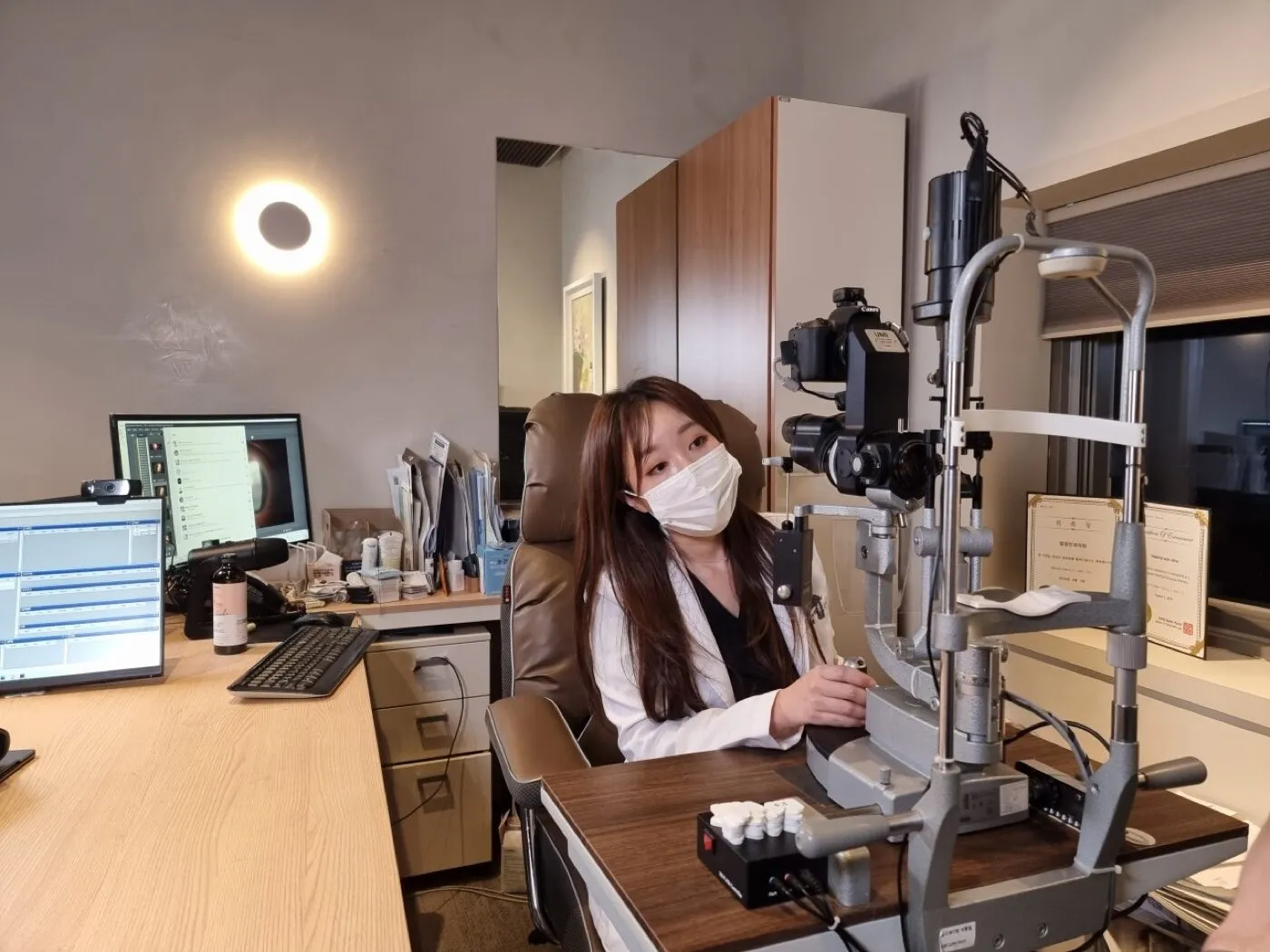
Hello, I'm Dr. Kim Sun-young, Medical Director of Healing Eye Clinic in Gangnam. My field is the cornea, which is exactly where the sting after laser surgery comes from: I trained as an ophthalmology specialist at the Catholic Medical Center and served as Clinical Professor (Cornea & Cataract) at Uijeongbu St. Mary's Hospital.
Here, one dedicated surgeon follows you from the exam to the operation to the check-ups, so the doctor you describe the sting to on day one already knows your scans. The consultation runs in English with an interpreter, at no extra charge, and international patients pay the same as Korean patients.
Which kind of evening you're in for depends on the method your eyes can take. Send a photo of your latest glasses prescription or eye-exam printout on WhatsApp, and ask whether your eyes look more like a SMILE case or a LASEK case. Asking on WhatsApp is part of the free consultation.
Is laser eye surgery painful while it's happening?
In most cases, no. Numbing drops go in a few minutes before you lie down, and they take effect on the corneal surface within seconds. What you notice is pressure, a small holder keeping your lids open, and a short stretch when the light you're looking at fades or blurs.
With SMILE, a ring holds the eye by light suction while the laser works inside the cornea. That suction is the firmest pressure you'll feel, and it usually lasts less than a minute per eye. LASIK uses a similar step to make its opening, then a second laser reshapes the tissue. LASEK needs no suction ring, so the time on the table is often the easiest of the three; its soreness comes later.
At Healing Eye, Clear SMILE is done with the Ziemer FEMTO LDV Z8 laser and takes about 10 minutes for both eyes. The thing that helps most on the table is to keep looking at the target light even when it dims, because that keeps your eye where the laser expects it. The full sequence, from check-in to the last drop, is in this step-by-step look at SMILE surgery in Korea.
Ask whether this applies to your eyes, which dates are open, and about the English interpreter.
Ask us on WhatsAppThe first evening after SMILE or LASIK
Once the numbing wears off, often within an hour, expect your eyes to sting, water and feel as if an eyelash is caught in them. Light will feel too bright. For most people this peaks in the first few hours and has eased to a dry, scratchy feeling by the next morning.
The U.S. Food and Drug Administration describes the same picture after LASIK: burning, itching or a something-in-the-eye feeling, sometimes mild pain, for which a doctor may suggest a mild pain reliever. A sharp pain that keeps rising, rather than a sting that fades, is not part of that picture. That is a reason to call the clinic the same evening.
One request people often make, and shouldn't: a bottle of the numbing drops to take back to the hotel. Surgeons don't send those home with you, because repeated use slows the healing of the corneal surface and can damage it. What works is duller. Use the drops you're prescribed on schedule, wear sunglasses for the walk back, wear a protective shield at night if you're given one so you don't rub in your sleep, and go to bed early. Sleep is the strongest pain relief that first evening.
Why does LASEK hurt for days when SMILE usually doesn't?
Because LASEK works on the surface. The thin outer skin of the cornea, the epithelium, is moved aside so the laser can reshape the tissue below, and it has to grow back over the next few days. That layer is packed with nerve endings, so until it closes, the eye aches.
SMILE reaches the tissue through one small incision, and LASIK through a thin lifted layer. Both leave most of the surface skin in place, which is why their discomfort is counted in hours rather than days.
| Method | On the table | Afterward |
|---|---|---|
| SMILE | Firm pressure from the suction ring, briefly | Stinging for a few hours, scratchy the next day |
| LASIK | Pressure during the first laser step | Stinging for a few hours, scratchy the next day |
| LASEK | Little pressure, no suction ring | Aching and light sensitivity, often for two to four days, with a bandage contact lens |
The differences go well beyond pain, and the LASEK vs LASIK comparison covers them. The method also decides which row of the price list applies; this guide to laser eye surgery prices in Korea shows how that works.
Say you're 46, flying in from Perth, with a prescription around minus 5 and a cornea that measures on the thin side. If the thickness leaves enough tissue after the correction SMILE needs, your sore stretch is likely to be one evening. If it doesn't, the laser that fits may be LASEK, and the plan changes: a few uncomfortable days, a bandage lens, and no flight until the surface has closed.
A lens-based option, ICL, avoids reshaping the cornea at all, but it means surgery inside the eye, with its own small risks such as raised eye pressure or, rarely, infection. At 46 there's one more limit to know: none of these will stop the near-focus change that starts in your 40s, so reading glasses are likely to come back either way.
Your days in Seoul, planned around the sore part
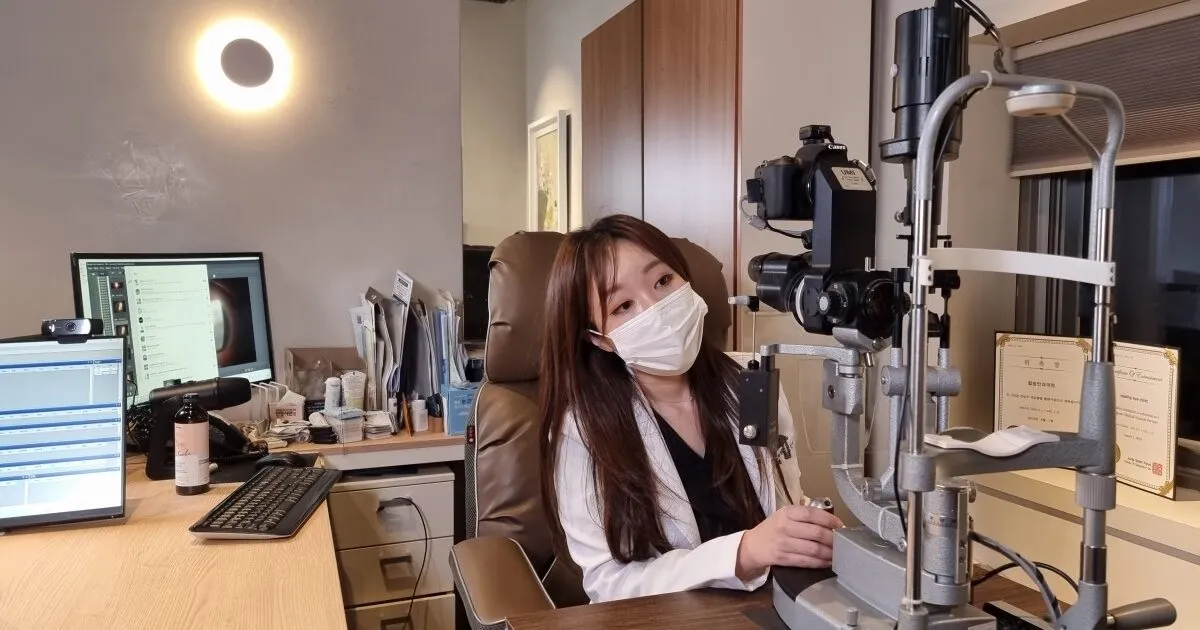
Picture a Thursday landing at Incheon. The clinic is about 70 minutes from the airport and a one-minute walk from Sinnonhyeon Station, and its partner hotel is O'Cloud Hotel in Seocho-gu, if you'd rather not hunt for a room with healing eyes.
Friday is the exam in the morning and, if the results allow it, SMILE in the afternoon. You leave with stinging eyes and sunglasses on, so keep the evening for the hotel rather than a dinner reservation. Saturday morning is the next-day check-up; Saturday hours are 10:00 to 14:00. By then most people are past the sharp phase and into the scratchy one.
That makes two days the shortest version. The clinic suggests two to three days for a more relaxed trip, and the exact schedule is fitted to your flights in the consultation. If the exam points to LASEK instead, the stay grows with the healing days, so wait for that answer before buying a non-refundable return ticket.
One calendar detail is easy to miss. The clinic is closed on Sundays and Korean public holidays, so avoid having surgery on the day before one: the next-day check-up needs an open day. Healing Eye Clinic's English homepage lists the weekday hours, including Friday evenings until 21:00. There's also a Korean-language page on Clear SMILE at the main Seoul clinic, useful if you'd like to compare the procedure description in Korean.
Dry eye, night halos and the rarer problems
Pain is the short-lived part. What lasts longer is dryness: a gritty, tired feeling toward evening that can go on for weeks to a few months while the corneal nerves recover. SMILE leaves more of those nerves intact than standard LASIK, so dry eye after it is relatively less likely, though not absent. Halos and starbursts around lights at night are also common early on and usually fade over the first months.
Less often, the correction lands slightly off target or drifts over time, or the surface heals unevenly. Rarely, an infection or inflammation under the cornea needs prompt treatment. That's why a pain that gets worse instead of better is never something to sleep off. How long each of these lasts differs from person to person, and your own exam numbers tell you more than any average.
After you fly home, the clinic keeps following your progress by video call or messenger, with the same surgeon who examined you. If your vision suddenly drops, or pain and redness build, see a local ophthalmologist that day, and keep your surgery details on your phone so they know exactly what was done.
Who should hold off on laser surgery for now?
Some eyes are better left alone for a while, whatever the pain question:
- a prescription that is still changing from year to year
- a thin or irregular cornea, or keratoconus that is progressing
- severe dry eye that hasn't been treated yet
- pregnancy or breastfeeding, when the prescription can shift
- conditions or medicines that slow wound healing
For a thin cornea or a very high prescription, SMILE or ICL may be worth comparing with LASIK. For dry eye, the clinic's Dry-Eye Clinic can treat the surface first, and the laser question is looked at again once the tear film is steady. The three laser routes in Korea, and when to skip each one go into this in more depth.
So which laser would hurt least for your eyes?
A good result starts in the exam room, not on the surgery table, and pain is no exception. The evening you'll have is set weeks earlier by a measurement. I would much rather tell you before you book flights that your cornea points to LASEK than have you discover three sore days in a hotel room.
The number that settles it for you is how much corneal tissue you have, measured against how much your prescription needs removed. So send that same photo of your latest prescription or eye-exam printout on WhatsApp, with the question of whether your eyes look more like a SMILE case or a LASEK case. That first consultation on WhatsApp is free. The clinic is at 470 Gangnam-daero, 10–11F, Gangnam-gu, Seoul.
— Dr. Kim Sun-young, Medical Director
Frequently asked questions
Will I be awake during laser eye surgery?
Yes. You're awake and lying down, and numbing drops do the work; general anesthesia isn't normally used for these procedures. Being awake actually helps, because looking at the target light keeps your eye lined up. Many people say the hardest part is the urge to blink, which the lid holder takes care of.
Does the second eye feel different from the first?
Many people find the second eye a little more noticeable, mostly because they now know what the pressure feels like and tense up. The procedure is the same. Breathing out slowly as the pressure starts helps, and so does telling the team you're nervous before the drops go in.
Is the stinging worse if my eyes are already dry?
It can last longer. A tear film that's already thin gives the healing surface less cushion, so the gritty phase may stretch past the first day. That is one reason dryness is looked at before surgery, and why treating it first at the Dry-Eye Clinic is sometimes the better order.
Which painkillers can I take after laser eye surgery?
After SMILE or LASIK, a mild over-the-counter pain reliever is usually enough for the first evening, if your surgeon agrees. After LASEK the first days are harder, so ask what to take. Check which ones are fine with your other medicines before you travel, so you aren't shopping for them with streaming eyes.
Will the flight home make my eyes hurt more?
Cabin air is dry, so eyes that are still healing can feel scratchy on a long flight. Use the lubricating drops you were given regularly, avoid a sleep mask that presses on the eyes, and don't rub them if you doze. Confirm your flight day with your surgeon at the check-up.
Questions about your own case or available dates? English interpreter on site.
Ask us on WhatsAppMessage us on official LINE / WhatsApp for a special offer
Your exact candidacy and cost are confirmed in a free 1:1 consultation.