Is LASIK Safe for Astigmatism? Shape Matters More Than Size
Is LASIK safe for astigmatism? Usually yes when it's regular and the cornea is thick and even; irregular or thin corneas change the answer.

MS, Catholic Univ. College of Medicine · Ophthalmology specialist, Catholic Medical Center · Clinical Professor (Cornea & Cataract), Uijeongbu St. Mary's Hospital · 108th Korean Ophthalmological Society Research Award · KDCA epidemiology citation
Medically reviewed byDr. Kim Sun-young, Director· Medical Director
Edited by: Dr. Kim Sun-young
Contents
Is LASIK safe for astigmatism when your prescription carries that second number your optometrist calls "a bit high," and you'd be flying home from Seoul a few days after surgery? For regular astigmatism on a cornea that is thick enough and evenly shaped, laser correction is a well-established treatment, with the same risks any LASIK patient accepts. The danger sits in corneas that are irregular, thin or quietly weakening, and a topography scan shows that where your glasses prescription can't.
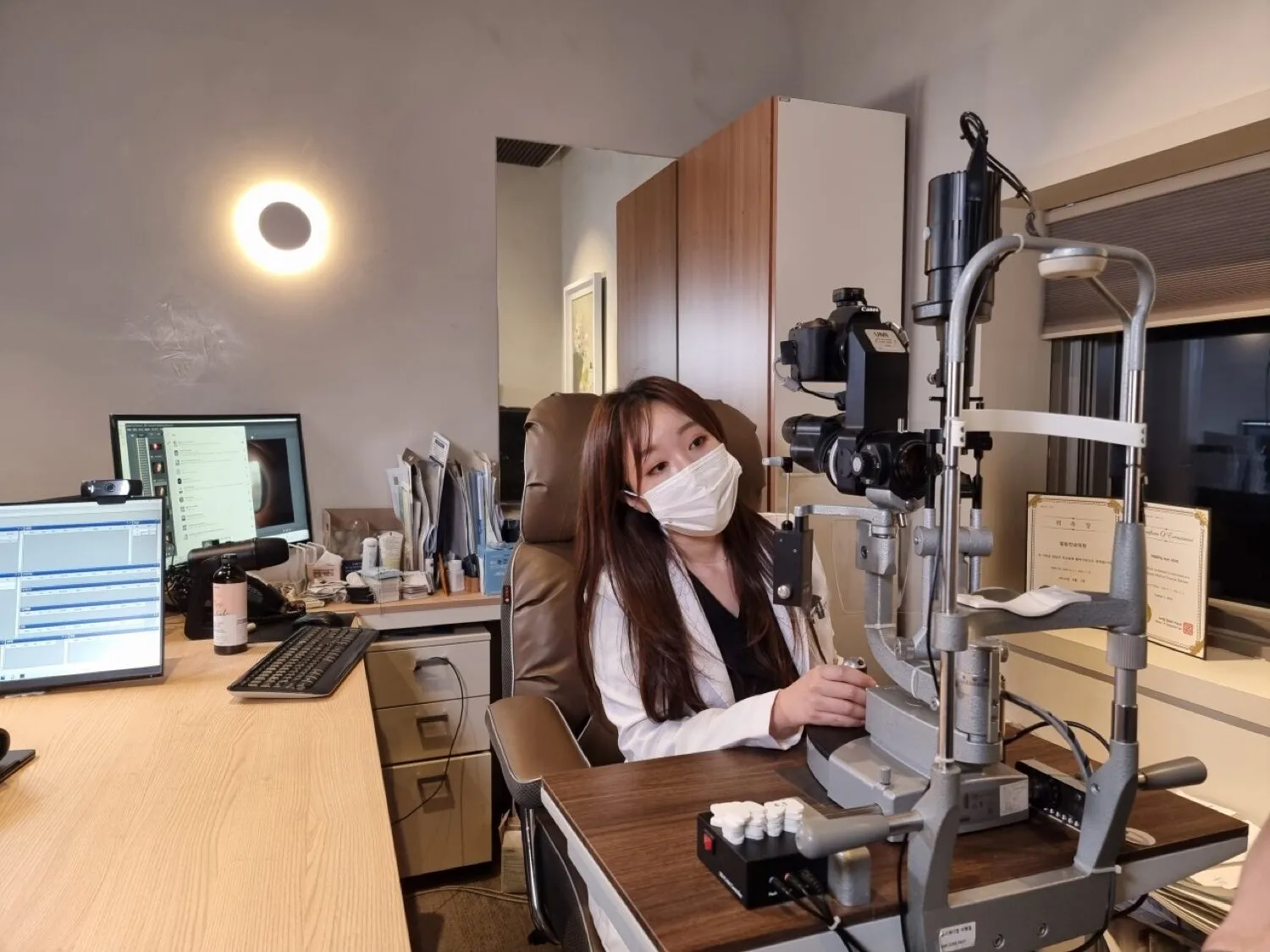
Hello, I'm Dr. Kim Sun-young, Medical Director at Healing Eye Clinic in Gangnam. My field is the cornea, and I've served as Clinical Professor (Cornea & Cataract) at Uijeongbu St. Mary's Hospital, which matters here because astigmatism is a question about corneal shape. One dedicated surgeon takes you from the exam through surgery to follow-up, whether the answer turns out to be Clear SMILE LASIK or another method, and we go through your results together with a medical interpreter for your language at no extra charge.
If you have your latest glasses prescription or eye-exam printout, the one with the cylinder and axis numbers on it, send a photo of it on WhatsApp and ask whether your astigmatism looks like the regular kind laser correction is built for. The consultation on WhatsApp is free, and our Clear SMILE page notes that from the records you send we can give a first opinion on suitability by video or online consultation.
What does the second number on your prescription mean?
A prescription such as -3.00 -1.75 x 170 has three parts. The first is your nearsightedness. The second, the cylinder, is how much astigmatism you have in diopters. The third is the axis: the angle, in degrees, along which that correction is lined up.
Under about 1.00 D, plenty of people never notice their astigmatism. Between 1 and 3 D is common and well within what laser correction treats. But the number tells you how much, and nothing about what kind.
Regular astigmatism means the cornea is steeper along one meridian and flatter at right angles to it, evenly, so the topography map shows a symmetrical bow tie. Irregular astigmatism looks lopsided on the map: steeper toward the bottom, a skewed bow tie, or a patch from an old scar. Laser treatments are designed for the regular pattern. A lopsided map can be an early sign of keratoconus, a condition in which the cornea thins and bulges, and removing tissue from a cornea like that can make it worse.
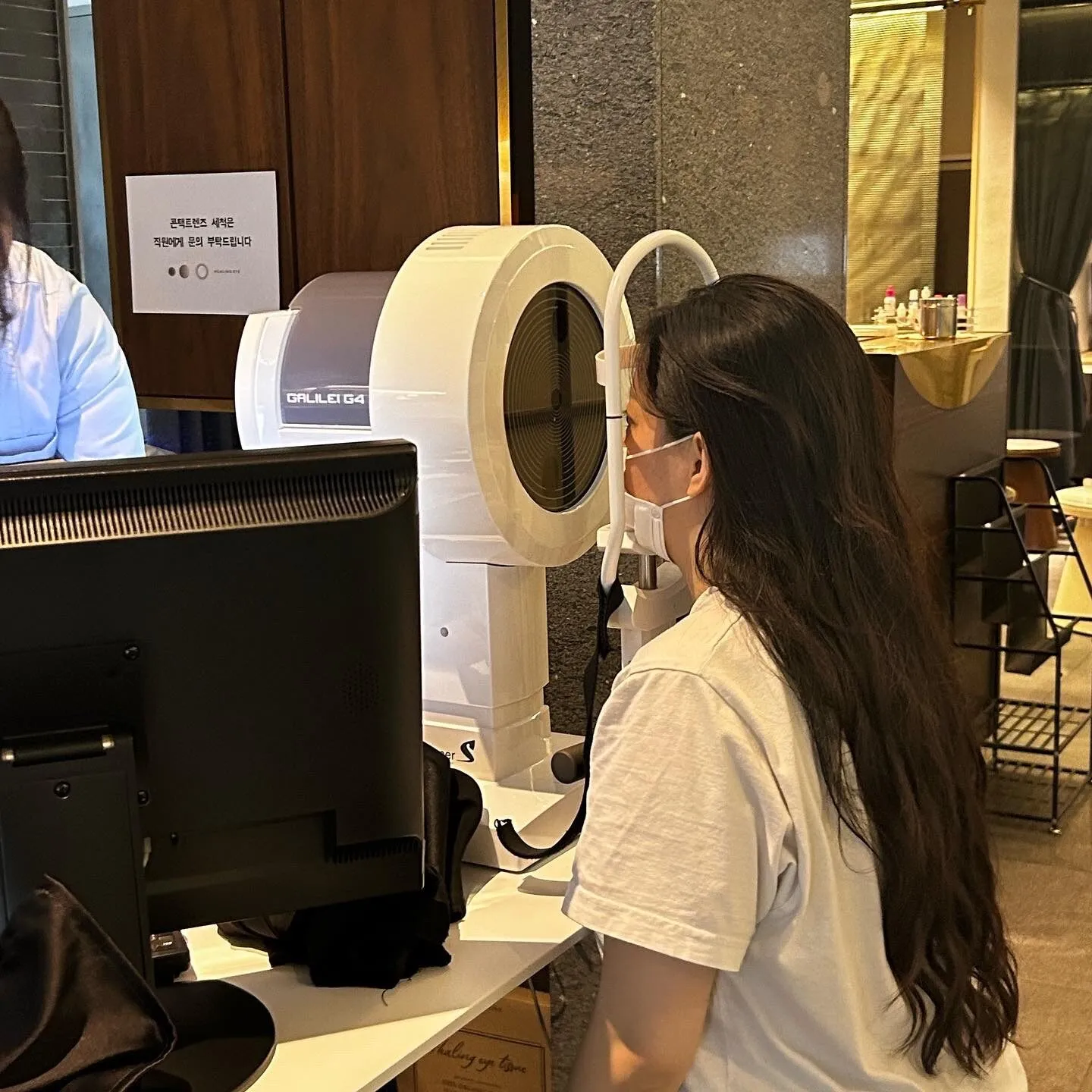
One detail that's easy to miss: soft toric contact lenses worn daily for years can temporarily change the shape of the cornea, enough to blur the map. If you wear them, the days you leave them out before the exam matter as much as the exam itself.
Ask whether this applies to your eyes, which dates are open, and about the English interpreter.
Ask us on WhatsAppIs LASIK safe for astigmatism above 3 diopters?
In short, it can be, with two extra things to weigh. Correcting astigmatism means removing more tissue along the steep meridian than the flat one, so a higher cylinder uses up more of your corneal thickness. If your cornea starts on the thin side, that is the trade I care about most, because the tissue left behind is what keeps the cornea stable for the rest of your life.
The second is alignment. When you lie down under a laser, your eye usually rotates a few degrees in its socket. With a small cylinder that hardly matters. With a large one it does: an axis off by about 10 degrees leaves roughly a third of the astigmatism uncorrected. Wherever you have surgery, ask how the axis measured while you sit at the exam is matched to your eye lying down on the treatment bed.
Up to about 3 D, laser correction is familiar territory. That combination has its own post on what I check before saying yes to high myopia with astigmatism.
When should you skip laser correction for astigmatism?
To be honest, the cylinder number on its own rarely makes me say no. The map, the thickness and your history do. These are the situations where I'd suggest waiting or choosing something else:
- An irregular or asymmetric pattern on topography, or other warning signs of keratoconus
- A cornea too thin for the amount of correction you need
- Astigmatism that has kept changing over the past year (two dated prescriptions are enough to see a trend)
- Severe dry eye, which we may treat first
- Pregnancy or breastfeeding, when the prescription can shift
If laser correction isn't right for your eyes, I'll say so clearly and explain the alternatives. For a regular map on a thinner cornea, Perfect Healing LASEK works on the corneal surface and leaves more depth in reserve. For high cylinder, or a cornea I'd rather not remove tissue from at all, a lens with the astigmatism built into it may suit better; I've written about how Toric ICL treats astigmatism and who it suits. Lens implants carry their own rare risks, including raised eye pressure and earlier cataract, so they are a trade too.
Undercorrection, night glare and ectasia: the risks that rise with astigmatism
Most people have some dryness and see glare, halos or starbursts around lights at night in the first weeks, and for many these fade over the following months. The US FDA warns that for some people those night-vision symptoms don't go away, which is one reason pupil size and tear film belong in the exam.
With astigmatism, the risk to plan around is residual correction: a small amount left over, or an axis that settles slightly off, which can blur distance or night vision. When enough corneal thickness remains, a small enhancement can often correct it, and we run a dedicated center for LASIK and LASEK revision.
The rare serious risks are infection and corneal ectasia, a gradual bulging of a weakened cornea. Ectasia is why irregular astigmatism worries me more than high astigmatism: an eye that already has early keratoconus is the one most at risk, and the pre-op map is where that gets caught. How any one eye heals varies, so the plan is set eye by eye after the full exam.
Once you're home, you aren't left on your own. Before you leave, we prescribe enough post-op medication to take with you and explain the ingredients so you can find equivalents locally; you can check in with us by email or video call; and if you need to be seen in person, we provide a referral letter for your eye doctor at home. I've laid out the broader checks in the four numbers I look at before LASIK in Korea.
Which method fits your astigmatism?
| Method | How it corrects astigmatism | Where it tends to fit |
|---|---|---|
| Personal Custom LASIK | The laser reshapes the cornea, with the design adding your eye's higher-order aberrations | Regular astigmatism, enough thickness, concern about night vision |
| Clear SMILE LASIK | A thin lenticule shaped to your prescription is removed through one small incision | Regular astigmatism, an active life, some dryness already |
| Perfect Healing LASEK | The laser works on the surface of the cornea | A regular map on a thinner cornea |
| Toric ICL | A lens with astigmatism built in sits inside the eye; no corneal tissue is removed | High cylinder, thin cornea, or high myopia alongside it |
I don't recommend a method for its own sake. I choose with you, from your exam data, the one that fits your eyes and the life you'll go back to. If you'd like to see the order of a treatment day, I've walked through SMILE eye surgery in Korea step by step.
What should you ask any clinic about your astigmatism?
Put these four to every clinic on your list, us included, and choose the one whose answers you can follow. Under each is how we answer for ourselves.
- Is the doctor who reads my map the one who operates? Here one dedicated surgeon stays with you from the exam to surgery to aftercare.
- If laser correction isn't right, what else is on the table? We offer Personal Custom LASIK, Clear SMILE LASIK, Perfect Healing LASEK and ICL, including toric lenses, so a no to one method doesn't end the conversation.
- How many days before the exam do I stop my toric contacts? We confirm that number with you at the consultation, based on the lenses you wear.
Where I stand on astigmatism and laser correction
Astigmatism by itself is a normal part of many laser corrections, and a high cylinder is a reason to look closer rather than a reason to panic. What I won't do is fit a laser plan onto a cornea whose map argues against it, or recommend more treatment than your eyes need. In a healthy adult eye astigmatism tends to stay fairly stable, so taking a few extra weeks to get a proper exam costs you very little; this is a decision you can make slowly.
What decides this for you is whether your corneal map shows the regular, symmetrical pattern laser correction is made for, and how much thickness remains once the correction is planned. We're at 470 Gangnam-daero, 10–11F, one minute on foot from Sinnonhyeon Station.
So start with what you already have: a photo of that prescription or exam printout with the cylinder and axis, sent on WhatsApp, along with your question about whether it looks regular enough to plan laser correction around. The consultation is free, and you can ask before committing to anything.
— Dr. Kim Sun-young, Medical Director
Frequently asked questions
Can astigmatism come back after laser correction?
A small amount can return, a little more often after higher corrections and mostly in the first months while the cornea settles. If a meaningful amount comes back and enough corneal thickness remains, an enhancement is usually possible. A prescription change from another cause, such as a cataract many years later, is a different thing from regression.
Is Clear SMILE LASIK an option if I have astigmatism?
It treats myopia and myopic astigmatism by removing a lenticule shaped to your prescription through one small incision. It keeps more of the corneal structure and nerves, so dry eye after surgery is relatively less likely. Whether it suits your eyes is decided from your exam data.
What if only one of my eyes has astigmatism?
Each eye is measured and planned on its own, so the eye without astigmatism is corrected for its nearsightedness alone. What matters is that both eyes pass the same corneal checks, because a thin or irregular map in either eye changes the plan for that eye.
How soon can I fly after Clear SMILE LASIK?
Flying is allowed from the day after surgery, once the next-day check-up confirms everything is fine. Cabin air is dry, so use artificial tears often during the flight.
Questions about your own case or available dates? English interpreter on site.
Ask us on WhatsAppMessage us on official LINE / WhatsApp for a special offer
Your exact candidacy and cost are confirmed in a free 1:1 consultation.