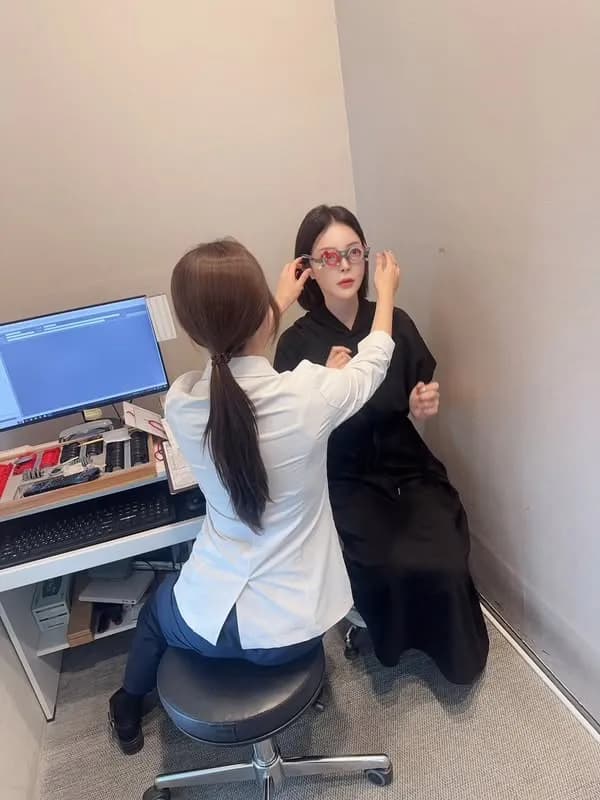
Korea SMILE LASIK Candidate Qualifications: Do You Fit?
Korea SMILE LASIK candidate qualifications: a stable prescription, enough healthy cornea, no severe dry eye. If you fit, plan 2–3 days in Seoul.

Medically reviewed byDr. Kim Sun-young, Director· Medical Director
Edited by: Dr. Kim Sun-young
Contents
Korea SMILE LASIK candidate qualifications: at 45, with your phone already drifting out to arm's length, do your eyes still meet them, and how many days of a Seoul trip does recovery take? Age on its own doesn't rule you out. You fit when your prescription has held steady for about a year, the exam finds a cornea thick and even enough with no sign of keratoconus, and any dry eye is mild. If you fit, the shortest plan is two days in Seoul, and I'd book two to three.
Hello, I'm Dr. Kim Sun-young, Medical Director at Healing Eye Clinic in Gangnam. My fields are cornea, glaucoma and cataract, which is why your corneal map matters more to me than the number on your glasses. For Clear SMILE LASIK, the same surgeon handles your exam, surgery and follow-up, an English interpreter joins the results talk at no extra charge, and international patients pay exactly what Korean patients pay.
If you have a recent glasses prescription or an old eye-exam printout, send a photo of it on WhatsApp with your age and the weeks you could travel. The consultation there is free, and with records like these the clinic can give a first opinion on suitability by video or online consultation, so you know where you stand before you buy a ticket.
Which exam numbers decide whether SMILE fits your eyes?
On our treatment page, the Korea SMILE LASIK candidate qualifications take up four short lines. Behind each line is a measurement from the roughly 20 tests done before surgery, and those measurements matter more than the lines themselves.
Start with the mechanism. SMILE uses a femtosecond laser to shape a thin, lens-shaped piece of tissue inside the cornea, then removes it through one small incision. The review by Reinstein and colleagues in Eye and Vision describes this as the core of the technique. The stronger your prescription, the thicker that piece of tissue, and the less cornea is left behind. So I read corneal thickness against the prescription, never on its own.
The corneal map, or topography, comes next. A cornea that steepens unevenly, or shows early signs of keratoconus, is a reason to stop and think, because removing tissue from a weak cornea can make it weaker. With a thin or irregular cornea, LASEK or an implantable lens (ICL) may be the safer route. If the prescription is very high, ICL may simply suit you better, because it corrects vision without reshaping the cornea.
Then stability and the tear film. Your prescription should have stayed about the same for roughly a year. Pregnancy, breastfeeding or a prescription that is still moving are reasons to wait, and the FDA's patient guidance on when LASIK is not a good idea lists the same kinds of conditions. Severe dry eye is usually treated first, and the clinic runs a dedicated dry-eye clinic for exactly that.
One thing that trips up many travelers: contact lenses. The FDA notes that contacts change the shape of the cornea for up to several weeks after you stop wearing them, which can throw off the measurements. How long you should leave yours out depends on the lens type, so ask on WhatsApp before you plan your last day in lenses.
Turning 40 changes what SMILE can do for you
The American Academy of Ophthalmology describes presbyopia as a normal age change in the eye's own lens, and it usually starts to show in the 40s. SMILE reshapes the cornea to correct myopia and astigmatism. It does not bring back the lens's focusing range for close work.
Say you're 46, about -3.50 in both eyes, stable for three years, and you read your phone with your glasses pushed up on your forehead. That trick works because short-sighted eyes still focus up close. Once SMILE corrects your distance vision, the trick goes away, and reading glasses for menus and labels become likely. Some people are glad to make that trade. Others find it costs them more than wearing glasses for driving.
That choice belongs to you, and I'd want you to make it before the exam, not after the surgery.
At this age I also look past the cornea to the lens behind it. If the natural lens is starting to cloud, reshaping the cornea now may be the wrong order, because cataract surgery later replaces the lens and can correct the prescription at the same time. The clinic's menu also lists a presbyopic version of Clear SMILE LASIK. Whether it fits your eyes is a question for the exam room.
How many days does SMILE recovery take out of a Seoul trip?
If the exam clears you, the days run like this, based on the clinic's own recovery notes.
| When | What to expect | What you can do |
|---|---|---|
| Day 0, morning | Around 20 tests, then the results and plan with an interpreter | Keep the morning clear |
| Day 0, afternoon | Surgery, about 10 minutes for both eyes under numbing drops; vision starts recovering right away, with some grittiness and light sensitivity | Rest at the hotel |
| Day 1 | First check-up | Normal indoor activities; flying is allowed after the check-up |
| Days 2–3 | Vision is mostly stable | Light outings |
| Week 1 | Most daily routines are back | Follow your surgeon's advice for the rest |
| Month 1 | Vision and cornea enter a stable phase | Usual activities |
So the shortest plan is one night and two days, and two to three days gives you room to breathe. The exam results can change that plan, and the exact schedule is fitted to your flights in the free consultation. Cabin air is dry, so keep artificial tears in your carry-on and use them often on the flight home.
The clinic's hours shape your calendar more than you might expect. It is closed on Sundays and Korean public holidays, and Saturday hours are 10:00 to 14:00, so surgery on a Saturday would push the next-day check-up to Monday. A Thursday exam and surgery puts the check-up on Friday, when the clinic stays open until 21:00. A Friday surgery puts the check-up on Saturday morning. Lunch runs from 13:00 to 14:00, so ask what time your exam should start.
On the evening of surgery, a dim hotel room is worth more than a city view.
Once you have rough dates, send your arrival and departure times on WhatsApp, along with the day you plan to take your contacts out for good, and ask which days would leave room for the check-up.
What if the exam says SMILE isn't the right fit?
In short, this happens, and it isn't a wasted trip. LASEK works on the surface of the cornea and takes no tissue from deep inside it, which can make it a better fit for a thinner cornea. The AAO's EyeWiki notes that surface procedures usually mean a few more days of discomfort and slower early vision. ICL places a lens inside the eye and leaves the cornea untouched.
The FDA lists its main risks as raised eye pressure, cataract and loss of cells on the inner surface of the cornea, so it has its own checks before anyone says yes.
The names can be confusing too, and what each SMILE name actually means is covered in another post.
What can go wrong after SMILE, and who helps once you're home?
Risks and side effects to know
The common reactions are temporary. A gritty, foreign-body feeling and sensitivity to light on the first day usually settle quickly, and dryness can last longer, which is why the eye drops matter. Glare or halos around lights at night can show up early on. Less often, the correction lands a little under or over target. Rarely, there's an infection or inflammation that needs prompt treatment. How fast each eye settles differs from person to person, which is why the check-up after surgery matters.
The people who should wait are the ones already mentioned: a prescription that is still changing, pregnancy or breastfeeding, severe dry eye that hasn't been treated, and a cornea that is thin or shows signs of keratoconus.
Once you're home, you aren't on your own. Before you leave, the clinic prescribes enough post-op medication to take home and explains the ingredients, so a local pharmacy can find an equivalent if needed. You can check in with the clinic by email or video call, and if you need to be seen locally, the clinic provides a referral letter for your eye doctor at home. If you notice pain with redness or a sudden drop in vision, see a local eye doctor that day and bring the referral letter.
Before you book the flight
Gather what you already have: your current glasses prescription, any older prescriptions that show stability, and records of any past eye surgery. If you've had LASIK or LASEK elsewhere, mention it in your first message, because the clinic runs a dedicated revision center for eyes that changed after surgery. If you're curious what exam day looks like, there is a post on what happens inside the clinic, room by room. If you're already comparing quotes, how to compare SMILE quotes line by line covers what each one should include.
Treatment pages and doctor profiles are on Healing Eye Clinic's English site.
Your first WhatsApp message can be one photo of your prescription, plus any old corneal thickness or topography printout if you have one, and one question: at my age and with these numbers, is SMILE still on the table, or is another route more sensible? The consultation there is free. On exam day, the corneal map is the first thing I'll talk through with you, and then the lens behind it, before we pick a surgery date.
Frequently asked questions
Am I too old for SMILE at 50?
There is no single age that rules you out. What matters at 50 is the health of the natural lens and how you feel about reading glasses, since SMILE corrects distance vision but not presbyopia. If the lens is starting to cloud, cataract surgery later may be the better step.
Does SMILE hurt during the surgery?
Numbing drops are used, so there is little to no pain during the roughly 10 minutes it takes for both eyes. Afterward, a mild gritty feeling and light sensitivity are common and usually settle quickly.
Can I take a long-haul flight the day after SMILE?
Flying is allowed from the day after surgery, once your next-day check-up confirms everything is fine. Cabin air is dry, so use artificial tears often during the flight.
What if my eye drops run out after I get home?
You're given enough post-op medication to take home, and the clinic explains the ingredients so you can find an equivalent locally if you need more.
I had LASIK years ago and my vision has slipped. Can I still ask about SMILE?
Yes, mention it in your first message and include any old records. The clinic runs a dedicated LASIK/LASEK revision center, and which option suits an eye that has already had surgery is decided from a detailed exam.
Message us on official LINE / WhatsApp for a special offer
Your exact candidacy and cost are confirmed in a free 1:1 consultation.