LASEK in Korea: A Seoul Surgeon on Who It Really Suits
Considering LASEK in Korea? A Gangnam eye surgeon explains who surface laser suits, the honest first week, how long to stay in Seoul, and what it costs.

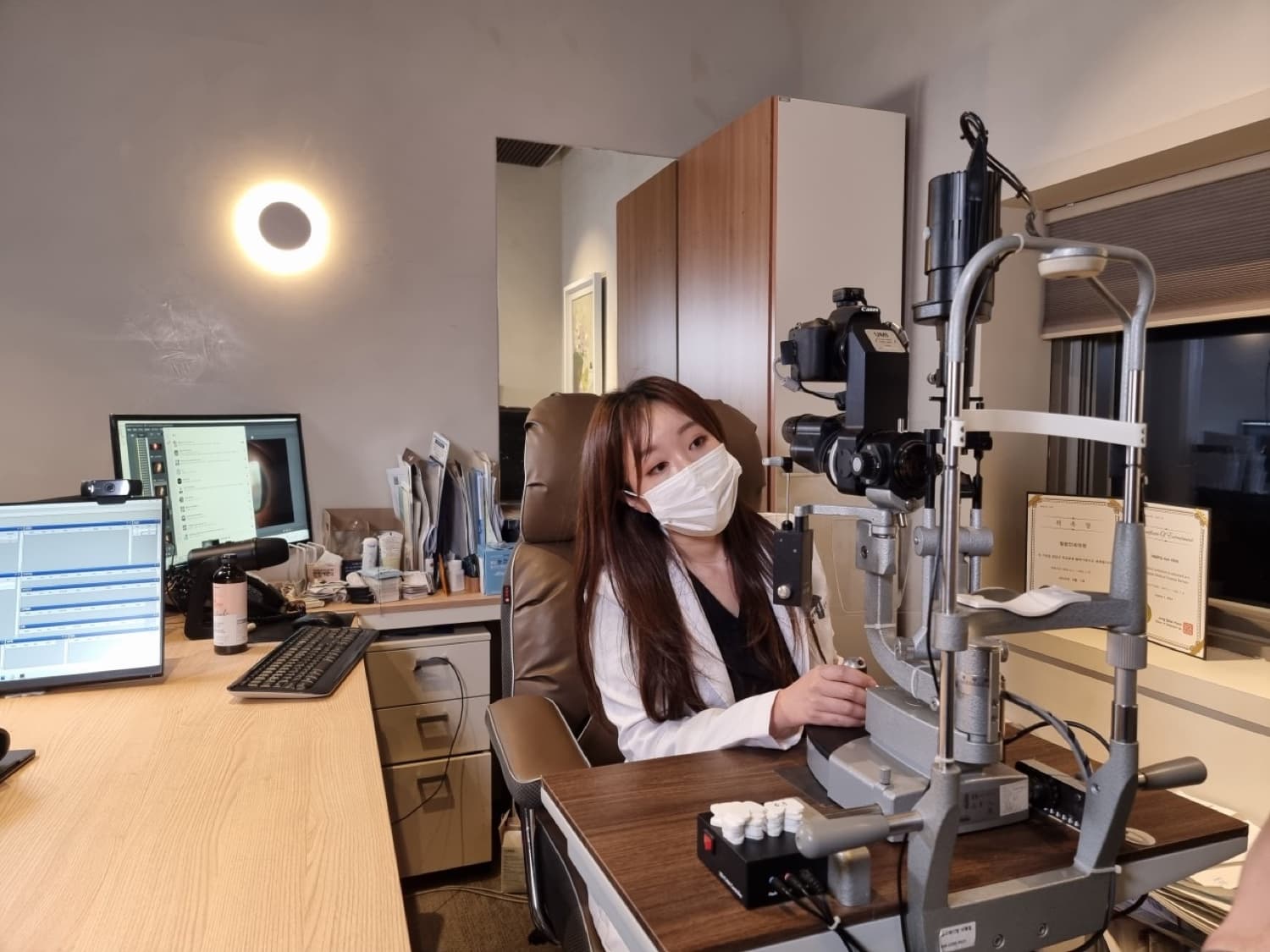
Dr. Kim Sun-young, Director
Cornea · Glaucoma · Cataract
Contents
I'm Dr. Kim Sun-young, medical director of Healing Eye Clinic in Sinnonhyeon, Gangnam, Seoul. I was a clinical professor of cornea and cataract surgery at Uijeongbu St. Mary's Hospital, and today I see international patients every week, with an English interpreter in the room from the first test to the consent form.
The message I get most often goes like this: "Dr. Kim, another clinic said my cornea is too thin for LASIK. Is LASEK the backup option?"
If you're searching lasek in korea, you may be asking the same thing. I understand — "the one you get when LASIK says no" doesn't sound like a first choice.
So let me be honest first: LASEK is not a consolation prize. For the right cornea, it's the most structurally stable laser correction we have — you just pay for it with a slower first week. Here's how I explain it in clinic, in the same order.
LASEK in Korea: what actually changes compared with LASIK
LASIK lifts a hinged flap and reshapes the tissue underneath. LASEK makes no flap at all.
Instead, only the thin epithelial layer on the surface is gently lifted. The excimer laser reshapes the surface directly, and a protective contact lens goes on while the epithelium grows back.
That one difference explains everything else. Three points matter most.
1. More cornea stays behind
For the same prescription, surface correction leaves more corneal thickness than a flap procedure.
Think of it like planing a wooden table: you can take the top layer off directly, or cut a lid, work underneath and close it. When the wood is already thin, you don't want to cut a lid. That's why thin corneas often point to LASEK.
2. No flap edge for life
A flap edge stays in the cornea permanently. Rarely, a strong blow can affect it.
With LASEK there is nothing to dislodge. For boxers, divers, soldiers or anyone whose job or hobby puts the eyes at risk, that matters more than a fast recovery.
3. The first days are the real cost
I won't soften this. The first three to five days, while the epithelium regrows, are the most uncomfortable part — stinging, watering, grittiness.
Vision then sharpens step by step over one to four weeks. It's slower than LASIK, but once it settles, the final result can be expected to match it.
LASEK trades a harder first week for more preserved cornea and no flap. If your cornea is thin or your eyes take impacts, that trade is usually worth it — the exam tells us whether you're in that group.
A side-by-side of the two methods is in LASEK vs LASIK: the real difference.
Why I plan LASEK around recovery, not just the laser
LASEK satisfaction is decided as much in the week after surgery as on the table.
So at our clinic, the doctor who examines you is the doctor who operates and the doctor who checks your epithelium each day afterwards. You're never handed to a stranger at the moment you feel worst. Our recovery-care program, prescribed drops and corneal-protection care are there to get you through that stretch more gently.
Two things you can check before trusting us. International patients pay exactly what Korean patients pay — no foreigner surcharge. And we hold 4.8 stars from 154 reviews on Google. I'm also a full member of the European Society of Cataract and Refractive Surgeons (ESCRS).
I'm not listing these to impress you. I'm listing them so you have something to verify.
So is LASEK right for me, or something else?
Use this as a rough map. The exam gives the real answer.
| If this sounds like you | Usually consider |
|---|---|
| Thin cornea, moderate prescription | Perfect Healing LASEK |
| Contact sports, military, police | LASEK |
| Very short trip, must be back at work in days | LASIK or SMILE |
| Very high prescription, not enough cornea | ICL |
Price. LASEK sits inside our Premium LASIK & LASEK package:
| Item | Price (KRW) |
|---|---|
| Full pre-op exam | ₩150,000 |
| Premium LASIK & LASEK (both eyes) | ₩1,990,000 (list ₩2,190,000) |
The package includes the basic procedure plus corneal cross-linking, autologous serum and SCOUT. How the quote is built is covered in PRK surgery cost in Korea, and the full list is on our price page.
When I don't recommend LASEK
No eye surgery is free of risk, and I'd rather you hear the limits from me.
- Very short stays. If you must fly home or drive within days, LASIK or SMILE may suit you better.
- Low tolerance for the first days. If stinging and glare during healing would be hard for you, we compare other options first.
- Keratoconus signs or an unstable prescription. Then the right answer is to wait or take a different route.
Possible after-effects include temporary dryness, night glare and halos while the surface smooths out, haze (which corneal-protection care is aimed at reducing), and some regression over time. Results and recovery vary between people. The Korean head office explains our LASEK protocol on its Perfect Healing LASEK page.
Planning a LASEK trip to Seoul
- About one week in Korea. You cannot fly before the protective lens comes out.
- Stop contact lenses first: at least one week for soft lenses, longer for rigid ones.
- Keep days three to five free — rest, drops, no sightseeing marathons.
- We're one minute from Sinnonhyeon Station, about 70 minutes from Incheon Airport.
- After you fly home, one-week, one-month and three-month checks can be done locally with the written record we give you.
What each day feels like is in LASEK recovery timeline.
Don't book the procedure yet — book the exam
If you take one thing from this page, let it be this: choose LASEK because your cornea needs it, not because it was the only name left.
It doesn't have to be our clinic. But choose a place where the surgeon who measured your cornea is the one who operates, and who will say "not this one" if that's the truth.
Send us your prescription, your age and how many days you can stay on WhatsApp. If LASEK isn't right for your eyes, I'll tell you plainly — and explain what is.
I hope to see you in Seoul.
— Dr. Kim Sun-young, Medical Director, Healing Eye Clinic (Sinnonhyeon, Gangnam, Seoul)
Frequently asked questions
What is LASEK?
LASEK is surface laser vision correction with no flap. Only the thin epithelium on the corneal surface is lifted, the excimer laser reshapes the surface directly, and a protective lens helps the epithelium grow back.
Who is LASEK in Korea a good fit for?
People told their cornea is too thin for LASIK, and people whose eyes take knocks — contact or water sports, military, police, firefighting. With no flap, more cornea is preserved and there is no flap edge to disturb later.
How long should I stay in Seoul for LASEK?
Plan about one week. The first three to five days while the epithelium heals are the most uncomfortable, and you should not fly before the protective lens comes out and I have checked the surface.
Is LASEK painful?
The surgery itself is done under numbing drops and takes about ten minutes for both eyes. The first three to five days afterwards can sting, water and feel gritty — that is the honest trade-off for having no flap.
How much does LASEK cost in Korea at your clinic?
Our Premium LASIK & LASEK package is ₩1,990,000 for both eyes (list price ₩2,190,000), including cross-linking, autologous serum and SCOUT. The full pre-op exam is ₩150,000, and international patients pay the same as Korean patients.
Is the final result worse than LASIK?
No — once vision settles, the final result can be expected to match LASIK. It simply gets there more gradually, sharpening over one to four weeks, and results vary from person to person.
Message us on official LINE / WhatsApp for a special offer
Your exact candidacy and cost are confirmed in a free 1:1 consultation.