Can You Get LASIK After Cataract Surgery? Not for Every Blur
Can you get LASIK after cataract surgery? Often, once the eye is stable and the blur is a focus error. A Seoul surgeon on what to check and when to call.

MS, Catholic Univ. College of Medicine · Ophthalmology specialist, Catholic Medical Center · Clinical Professor (Cornea & Cataract), Uijeongbu St. Mary's Hospital · 108th Korean Ophthalmological Society Research Award · KDCA epidemiology citation
Medically reviewed byDr. Kim Sun-young, Director· Medical Director
Edited by: Dr. Kim Sun-young
Contents
Can you get LASIK after cataract surgery once you're home again, the new lens is in, and distance still looks slightly soft? Often you can: once the eye has settled, a laser treatment on the cornea can fine-tune a leftover focus error, as long as the blur really is a focus error and not something laser can't reach.
Hello, I'm Dr. Kim Sun-young, Medical Director at Healing Eye Clinic in Gangnam. My fields are cornea, glaucoma and cataract, and I was a Clinical Professor (Cornea & Cataract) at Uijeongbu St. Mary's Hospital, so both halves of your question fall within my specialty. Here one surgeon handles your exam, your laser treatment (such as Clear LASIK) and your aftercare, and an English interpreter joins the consult at no extra charge.
If your lens surgery is already behind you and the sharpness never quite came, send a photo of your cataract surgery summary on WhatsApp. That's the page that names the implanted lens and its power. Add one question: is my blur the kind laser can fix? From records like these we can give a first opinion on suitability by video or online consultation, and the consultation on WhatsApp is free.
Is the blur after your lens implant a focus problem?
Not always, and that's the first thing to sort out. Four different problems can blur an eye after cataract surgery, and laser on the cornea fixes only one of them.
| Cause | How it tends to show up | What treats it |
|---|---|---|
| Leftover prescription (nearsighted, farsighted or astigmatism) | Steady blur that the right glasses clear up | Glasses, or laser on the cornea (LASIK or LASEK) |
| Haze in the capsule behind the implant | Haze or glare that creeps in months or years later | A short YAG laser that opens the capsule |
| Dry eye surface | Blur that clears for a moment after you blink | Treating the tear film |
| Swelling at the center of the retina | Dim or wavy central vision, often weeks after surgery | Treatment by a retina specialist |
People often mistake the second row for a returning cataract. So can you get cataracts after cataract surgery? Not in the lens itself, which is now artificial. But the thin capsule that holds it can haze over, and your vision can feel a lot like it did before the operation. Measuring a prescription through that haze gives a misleading number, so the haze is treated first, before anyone talks about LASIK.
Here's a test worth doing at home before you message anyone. Make a pinhole in a piece of card and read a distant sign through it with the operated eye. If the letters get clearly sharper, a focus error is probably part of your blur. If nothing changes, glasses won't help much, and neither will LASIK. The test doesn't replace an exam, but it tells you which question to bring.
Ask whether this applies to your eyes, which dates are open, and about the English interpreter.
Ask us on WhatsAppWhen is the eye ready for laser after cataract surgery?
When the prescription has stopped changing. The cornea has to heal around the cataract incisions and the implant has to settle in its capsule. Most surgeons wait until two measurements taken some weeks apart agree, which is commonly around three months after the lens surgery. Laser aimed at a number that's still moving is aimed at a target that keeps shifting.
The type of implant matters too. A small residual error that someone with a monofocal lens would barely notice can blur both distance and reading with a multifocal or extended-range implant, so a small laser touch-up comes up often with these lenses. Night halos with a multifocal usually come from the lens design itself, though, and laser won't remove them. Our Korean main site has a page on premium artificial lenses that describes these implant types.
Laser isn't the only way to correct a leftover number. Glasses for one task, such as driving, are the simplest. Some surgeons exchange the implant or add a second thin lens in front of it, which can make sense for larger errors. Those are operations inside the eye with their own risks, such as inflammation. If laser isn't right for your eye, I'll tell you clearly and explain the alternatives.
What I look at before saying yes to laser
Two groups of things: the cornea the laser will reshape, and the parts of the eye it can't reach.
For the cornea, I assess its thickness and shape, pupil size, the tear film and how much cornea would remain after treatment, and I look for any warning sign of keratoconus. Pupil size matters more than people expect, because a large pupil tends to show more glare in the dark, and that shapes how the treatment is designed. Cataract incisions can also leave a small astigmatism of their own, and the corneal map shows whether it's regular enough for laser.
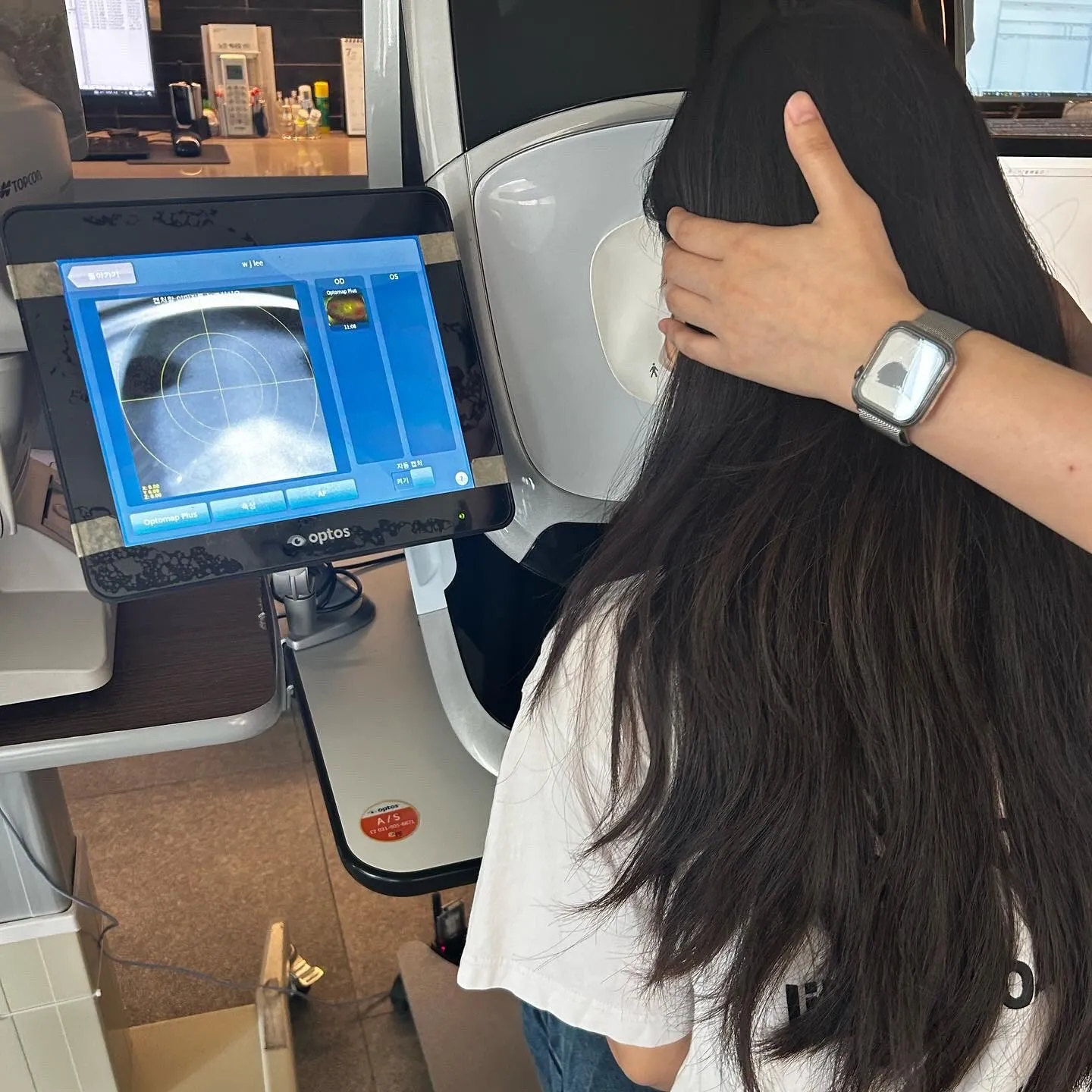
An eye that has had cataract surgery adds questions that a first-time LASIK eye never raises: is the implant centered, is the capsule clear, is the retina healthy. Then comes the choice of method. Eyes that had surgery recently are often drier. Perfect Healing LASEK works on the surface layer without cutting into the deeper cornea, which can suit a thinner or drier cornea, but the first few days are slower and more uncomfortable.
Most of what applies to getting LASIK with dry eyes applies even more to an eye that recently had a lens implant.
Can you have cataract surgery after LASIK?
Yes, and it's common. The hard part is the calculation. The formulas that choose an implant's power were built on corneas that had never been reshaped, so after LASIK the calculation needs extra care and extra data. Your pre-LASIK prescription and corneal measurements make it easier, if you still have them.
Ask your old LASIK clinic for those records now, while it's still open. Clinics close and files get lost, and a printout from many years ago can matter more at the cataract stage than any scan taken that day. If your LASIK result has drifted and you're thinking about a touch-up, we run a center dedicated to LASIK and LASEK revision. Once a cataract is forming, though, the lens surgery is usually the better point to correct the number.
My guide to cataract surgery in Korea covers that side of the decision.
How would the trip to Seoul run?
If your exam results allow Clear LASIK, the exam, the surgery and the next-day check-up can fit into two days. A surface treatment heals more slowly, and extra tests can change the plan, so confirm how long to stay at your consultation.
You land at Incheon, and the clinic is about 70 minutes away, a one-minute walk from Sinnonhyeon Station. We're registered with Korea's Ministry of Health and Welfare as a medical institution for international patients, and our partner hotel, O'Cloud Hotel, is in Seocho-gu. Check which day you land. We're open Monday to Thursday 10:00 to 18:30, Friday until 21:00 and Saturday 10:00 to 14:00, and closed on Sundays and public holidays. If you arrive on a Saturday evening, your exam will be on Monday.
On exam day, bring your cataract surgery summary, your current glasses and any old LASIK records. Dilating drops usually blur near vision for several hours, so keep the rest of that day free of reading. With Clear LASIK, the exam can be in the morning and the surgery in the afternoon. The treatment takes about ten minutes for both eyes. That evening, expect a gritty feeling and some sensitivity to light.
The next day is your first check-up. You can fly from the day after surgery once that check-up is done. Cabin air is dry, so use artificial tears often during the flight. Our English home page lists the treatments and the messenger links. If the person with the implant is your parent, the companion's guide to cataract surgery in Korea for parents covers the practical side of traveling together.
Glare, dryness, and the signs that mean you should call today
Most reactions after laser are temporary. A few signs need a doctor the same day, wherever you are.
In the first days, a gritty feeling, light sensitivity and watering are expected. Dryness can last weeks to months, and night glare or halos are more noticeable with large pupils or a multifocal implant. A small residual error can remain or creep back, and some eyes need a second, smaller treatment. Every eye heals at its own pace, which is why the exam sets the plan, not the calendar.
Laser is usually postponed or ruled out when:
- the prescription is still changing
- the capsule is hazy and hasn't been treated yet
- the cornea is thin or irregular, or shows signs of keratoconus
- dry eye is severe (it is often treated first)
- you're pregnant or breastfeeding
- the retina has an active problem
Once you're home, see a local eye doctor the same day if you have a sudden drop in vision, pain that gets worse instead of better, redness with discharge, or new flashes or a shadow moving across your vision. Before you leave Seoul, we prescribe enough post-op medication to take home and explain its ingredients, so a pharmacy at home can find an equivalent if needed. After that you can check in with us by email or video call.
If you need to be seen in person, we provide a referral letter for your eye doctor at home. The aftercare routine for laser eye surgery at home covers drops, screens and sleep in more detail.
Presbyopia and Cataract Surgery Together: Fixing Two Problems in One Operation go further into what usually comes next.
Four questions to ask any clinic, and how we answer them
Ask these of any clinic you're considering, including us.
- Is the doctor who examines me the one who operates and does the follow-up? Here, yes. One dedicated surgeon looks after you from the exam through the surgery and aftercare.
- Will I understand my results? We go through your exam results together in your own language, with an interpreter.
- What happens if something feels off after I fly home? You get take-home medication, check-ins by email or video, and a referral letter for your local eye doctor.
- If a residual error shows up later, who handles it? We run a center dedicated to LASIK and LASEK revision.
How a clinic answers these tells you more about it than its photos do.
My view is this: laser after cataract surgery is a fine-tuning step for an eye that is otherwise healthy and stable. I would rather confirm that first than put an eye through a second operation it doesn't need.
Can you get LASIK after cataract surgery in your case? The one thing that settles it is whether glasses can make your distance vision sharp today. If they can, your corneal thickness and tear film decide the rest.
The clinic is at 470 Gangnam-daero, 10–11F, Gangnam-gu, Seoul. Whether your cataract surgery was last month or years ago, send a photo of your surgery summary on WhatsApp with the same question, is my blur the kind laser can fix, and the consultation there is free.
— Dr. Kim Sun-young, Medical Director
Frequently asked questions
Can you get cataracts after cataract surgery?
The artificial lens itself can't cloud, but the capsule behind it can haze, sometimes months and sometimes years later. The YAG treatment for it is usually done in a few minutes with numbing drops, and the opening it makes generally stays open. If haze appears after you're home, a local eye doctor can treat it.
Will laser on my cornea affect the lens implant?
The laser works within the cornea, in front of the eye, and doesn't reach the implant sitting behind the iris. The bigger question is whether your cornea is thick, regular and moist enough for treatment, which is why the exam focuses on it.
My monofocal lens is set for distance. Can laser free me from reading glasses?
Laser can set one eye slightly nearsighted for reading, an approach called monovision. Some people adapt to it well and others find it uncomfortable, so trying it first with contact lenses or glasses is a common way to test it before any surgery.
What should I bring from my cataract surgeon?
The operative summary naming the implant model and its power, the measurement printout from before the cataract surgery, your latest glasses prescription, and any old LASIK or LASEK records. These papers are much easier to get from your own surgeon before you travel than afterward.
Can I have laser if my other eye hasn't had cataract surgery yet?
It can be done, but correcting one eye while the other still has its natural lens can leave the two eyes unbalanced once the second cataract is removed. Many surgeons prefer to plan around the second cataract surgery first, so bring that eye's records as well.
Questions about your own case or available dates? English interpreter on site.
Ask us on WhatsAppMessage us on official LINE / WhatsApp for a special offer
Your exact candidacy and cost are confirmed in a free 1:1 consultation.