How Long Can Cataract Surgery Be Postponed? Often for Years
How long can cataract surgery be postponed? Usually until vision limits daily life. Dr. Kim on the signs that end the wait and the recovery days in Seoul.

MS, Catholic Univ. College of Medicine · Ophthalmology specialist, Catholic Medical Center · Clinical Professor (Cornea & Cataract), Uijeongbu St. Mary's Hospital · 108th Korean Ophthalmological Society Research Award · KDCA epidemiology citation
Medically reviewed byDr. Kim Sun-young, Director· Medical Director
Edited by: Dr. Kim Sun-young
Contents
How long can cataract surgery be postponed when your leave days and your savings for a Seoul trip won't line up until next year? For most people, longer than they fear. A typical age-related cataract clouds slowly over years, and cataract surgery is usually advised once it starts limiting what you need to do, not on the day it's diagnosed. The exceptions are rising eye pressure, failing the driving vision standard, and a lens so dense your doctor can no longer see the retina behind it.
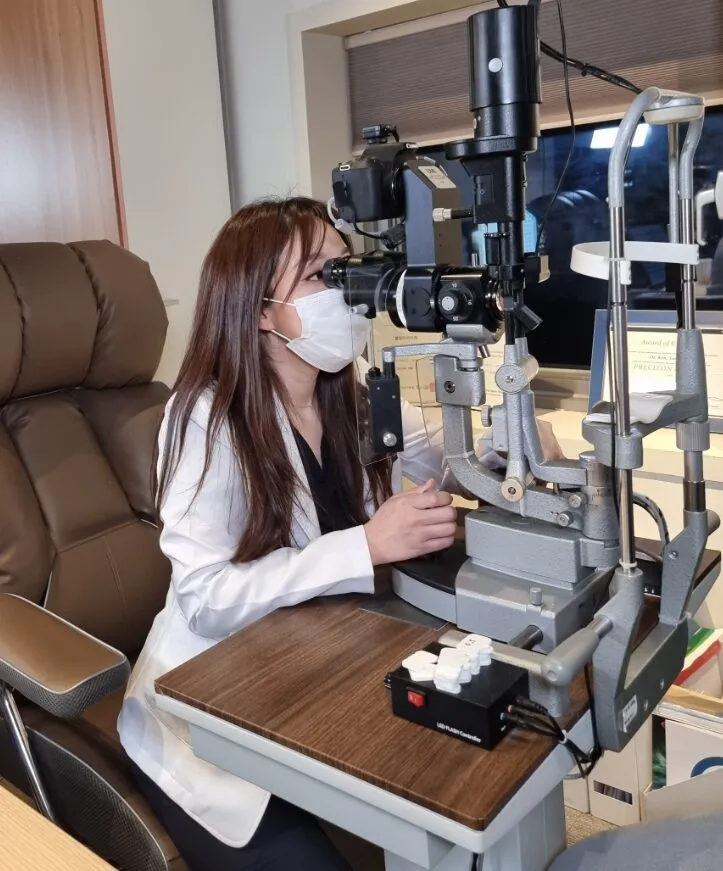
Hello, I'm Dr. Kim Sun-young, Medical Director at Healing Eye Clinic in Gangnam, Seoul. My field is cornea, glaucoma and cataract, and that combination matters for this question, because eye pressure is often what decides whether waiting is safe. The surgeon who examines you here is the one who operates and handles your aftercare, international patients pay exactly what Korean patients pay, and a medical interpreter joins your consultation at no extra charge.
If you're deciding whether to wait another season, send a photo of your most recent eye report on WhatsApp, ideally one that shows your vision and eye pressure, along with the months you could realistically travel. Asking on WhatsApp is free, and the question worth putting with it is simple: is there anything in this report that argues against waiting?
What happens to a cataract while you wait?
Usually not much from one month to the next. Most age-related cataracts thicken gradually, and a delay of a few months rarely changes the operation or the result. What changes is your daily life: glare from headlights at night, colors that look faded, and glasses that need updating more often than they used to.
Older advice said to wait until a cataract was 'ripe'. That made sense when surgeons removed the lens in one piece. Today the lens is broken up with ultrasound through a small incision, and a softer lens is the easier one to work with, so there's no medical reason to hold out for a cataract to mature. The US National Eye Institute puts the trigger the same way I do: surgery comes into the conversation when vision loss gets in the way of everyday things like driving or reading.
One quirk catches people off guard. Some cataracts shift the eye's focus toward nearsightedness, so for a while you may read without glasses better than you have in years. People sometimes take that as their eyes improving. It's the cataract changing the lens, and it usually comes with blurrier distance vision.
Ask whether this applies to your eyes, which dates are open, and about the English interpreter.
Ask us on WhatsAppSigns the wait should end
A few situations move cataract surgery from someday to soon, whatever the budget or the leave calendar says:
- Driving. You no longer meet your country's driving vision standard, or oncoming headlights at night blur into starbursts you can't see past.
- Falls. Curbs, stairs and dim rooms have become uncertain, especially if you live alone.
- Pressure. A thickening lens can crowd the eye's drainage angle and push pressure up. Sudden pain, a red eye, halos around lights, headache or nausea is an emergency for the nearest eye department today, not a reason to plan a trip.
- The retina disappears. A dense cataract can block the view your doctor needs to follow diabetic retinopathy, macular degeneration or glaucoma damage.
- A very advanced lens. When a cataract turns white or deep brown, the operation becomes more involved and the thin support around the lens is under more strain. Rarely, a lens that advanced leaks proteins that inflame the eye.
In my view, the grade written on a report matters less than how you're living with it. Two people with the same cataract score can be in very different places: one is fine, the other has quietly stopped driving after dark.
How long can cataract surgery be postponed if you also have glaucoma or diabetes?
Usually for a shorter time. With glaucoma or diabetes, the cataract is more than a vision problem; it also gets in the way of the checks that protect your sight.
In narrow-angle eyes, the natural lens keeps thickening with age and can narrow the drainage angle further. Removing it often opens that space, which is one reason surgeons treat cataract and angle-closure risk as one conversation. If you're on glaucoma drops or have been told your angles are narrow, I wouldn't treat the cataract as something to put off indefinitely.
With diabetes, the priority is a stable retina before surgery and a clear view of it afterward. A cataract that hides the retina makes it harder to catch macular swelling early, and blood sugar control around the time of surgery affects healing.
Buying time without surgery
If the cataract is mild and nothing above applies, the wait can be made easier. Get your glasses prescription rechecked first: because cataracts shift focus, an updated pair can sharpen things again for a while. Use bright, direct light for reading and cooking, a brimmed hat and sunglasses against daytime glare, and stop driving at night before you feel forced to.
One habit pays off later. At every check while you wait, photograph the printout that shows your vision and eye pressure. A doctor reading three reports a year apart can see which way things are moving; a single report only shows today. Many eye doctors suggest a check about once a year while a cataract is mild, sooner if something changes.
Your days in Seoul, once you decide to go
The first day is mostly travel. From Incheon Airport it's roughly 70 minutes to the clinic, which sits a minute's walk from Sinnonhyeon Station on Gangnam-daero. Our hours are Monday to Thursday 10:00–18:30, Friday until 21:00 and Saturday until 14:00, with lunch from 13:00 to 14:00; we're closed Sundays and public holidays. If you land on a Friday afternoon, the late hours may leave room for the exam that evening, so ask about it when you book.
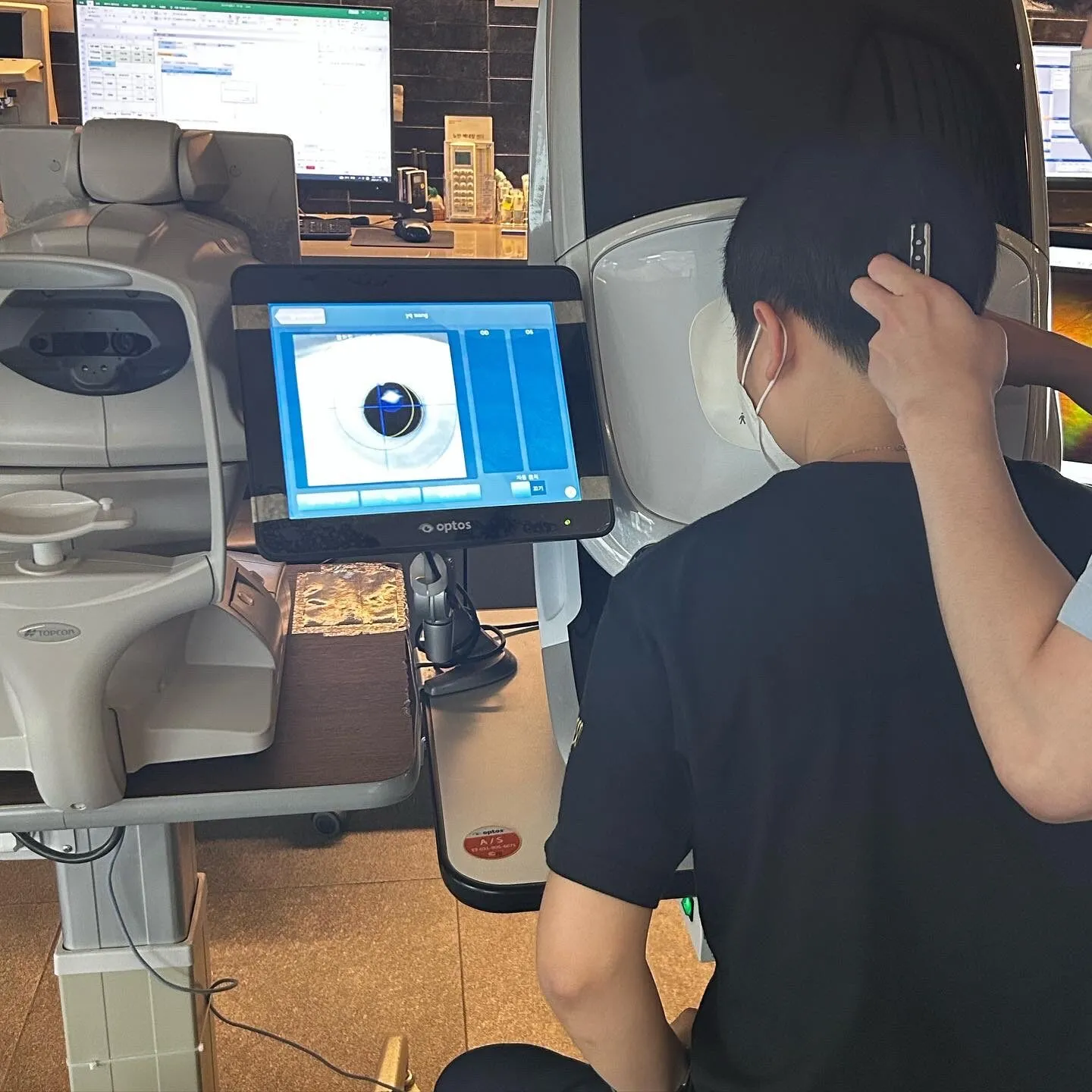
Exam day is long for your eyes. A cataract work-up usually includes dilating drops, and near vision stays blurry for several hours afterward, so leave the rest of the day empty and don't plan to drive or read anything important. We go through the results together, with the interpreter, before anything is scheduled.
On surgery day, the operation itself takes about 15 to 20 minutes per eye. You'll spend longer at the clinic than in the operating room, and that evening your vision is usually bright, hazy and a little watery. You'll sleep with a shield over the eye.
The morning after is the first check. Because we're closed on Sundays, a Saturday operation can't be followed by a Sunday check, so if your dates are tight, ask at booking how the days line up. Our partner hotel, O'Cloud Hotel, is in Seocho-gu if you'd rather not search for a place to stay near the clinic.
How many days you stay is set at the consultation, from your exam and from whether you're doing one eye or both. I've laid out typical shapes in how long to stay in Korea for cataract surgery, the one-eye-or-both question for a Seoul trip has its own post, and the wider planning is in my guide to cataract surgery in Korea. Hours, the map and treatment pages are on the Healing Eye Clinic English homepage.
This is where postponing touches the trip. Waiting a few months rarely changes what your stay looks like, but a lens left until it's white or deep brown can mean a more involved operation and closer watching afterward. That's the point at which waiting starts to cost you days in Seoul.
What is the first month like after surgery?
Daily life usually comes back within days, while the eye keeps settling for several weeks. The timeline below is the general pattern after an uncomplicated operation; your surgeon's instructions come first.
| When | What you'll usually notice | What to keep doing |
|---|---|---|
| Surgery evening | Bright, hazy vision, watering, a gritty feel | Shield at night, drops as prescribed |
| Day 1 | Clearer, often still soft at the edges | First check; no rubbing |
| Days 2–7 | Reading, walking and screens in moderation | Drops on schedule; no heavy lifting or bending low |
| Weeks 2–4 | Vision steadies; light sensitivity fades | No swimming or hot tubs for about two weeks |
| Around 1 month | The eye has largely settled | New glasses, if needed, are usually fitted now |
The lens you choose shapes this month too. A monofocal lens set for distance means reading glasses afterward, while multifocal and extended-range lenses reduce the need for glasses at the price of some halos at night. Our Korean-language page on premium artificial lenses covers the lens options, and lens type is also one of the things that changes the cost of cataract surgery in Korea.
Inflammation, pressure, a cloudy capsule: what can go wrong?
Most of what people feel in the first days is temporary: grittiness, watering, light sensitivity, mild redness, and blur that improves over a few days to a couple of weeks. Less often, eye pressure rises after surgery, or the cornea or the center of the retina swells; both are usually treated with drops and need to be caught early. Infection inside the eye and retinal detachment are rare but serious.
Months or years later, the capsule holding the new lens can turn cloudy, which feels like the cataract coming back. A short laser treatment clears it, and an eye doctor near home can do it.
Surgery is usually delayed while there's active inflammation or infection in or around the eye, while diabetes or blood pressure is poorly controlled, or until a condition like uncontrolled glaucoma has been stabilized. How each eye heals varies, which is why I explain the possible side effects and limits once I've seen your exam, not before.
Once you're home, the warning signs are pain that gets worse instead of better, vision that drops after it had improved, increasing redness, or new flashes, a shower of floaters or a shadow across your vision. Any of those means an eye doctor that day, wherever you are. Book a visit with an eye doctor at home for the weeks after you land before you fly out, and ask us which records you'll leave Seoul with so that doctor can see exactly what was done.
Presbyopia and Cataract Surgery Together: Fixing Two Problems in One Operation go further into what usually comes next.
Where I stand on waiting
A cataract that isn't getting in your way doesn't need a date yet, and I won't push more surgery than you need. What I'd ask is that you wait with your eyes open: a check every so often, pressure measured, and a line agreed in advance, whether that's night driving, a failed vision test or a doctor who can't see your retina. Take whatever time you need to plan the trip; a few months of thinking rarely costs your eyes anything.
What decides your timing in the end is how dense the lens has become, what the drainage angle looks like, and whether the retina behind it can still be seen clearly. We're at 470 Gangnam-daero, 10–11F, Gangnam-gu, Seoul, a minute from Sinnonhyeon Station.
Asking on WhatsApp is free. Send the photos of your last two or three eye reports and the month you're hoping to travel, and ask whether waiting until then looks sensible for your eyes; if you want to know how the deposit and payment work, add that to the same message, since both are settled after the consultation.
— Dr. Kim Sun-young, Medical Director
Frequently asked questions
Can a cataract make me go blind if I never have it removed?
Left alone for long enough, a cataract can reduce vision to little more than light and shadow. The blur from the cataract itself is usually reversible with surgery, but a very advanced lens can trigger glaucoma or inflammation that does lasting damage, which is why the wait should have an end point.
Will waiting longer limit which lens I can choose?
Usually not because of the cataract itself. It can if the wait lets something else progress: multifocal lenses need a healthy macula and a stable optic nerve, so worsening macular degeneration or glaucoma can make them a poorer fit and point toward a monofocal lens instead.
Can I have one eye done now and postpone the other?
Yes, many people do. The catch is that after one operation the two eyes can focus very differently, which can make your old glasses uncomfortable and depth judgment harder until the second eye is done, so plan the gap with that in mind.
Is it all right to fly home soon after cataract surgery?
After an uncomplicated operation, cabin pressure is generally not a problem for the eye, and many surgeons are comfortable with flying once the first check is done. Dry cabin air is the bigger nuisance, so keep lubricating drops in your carry-on and use them often during the flight.
If my vision gets cloudy again years later, is it a new cataract?
A cataract can't grow back once the lens is replaced. Cloudiness that appears months or years later is usually the capsule behind the new lens thickening, and it's cleared with a brief laser treatment that most eye clinics at home can do.
Questions about your own case or available dates? English interpreter on site.
Ask us on WhatsAppMessage us on official LINE / WhatsApp for a special offer
Your exact candidacy and cost are confirmed in a free 1:1 consultation.