What Does LASIK Do? The Myths, and What the Laser Changes
What does LASIK do? It reshapes the cornea so light lands on the retina. A Seoul cornea surgeon sorts common beliefs from fact and who it doesn't suit.

Dr. Kim Sun-young, Director
Cornea · Glaucoma · Cataract
Medically reviewed byDr. Kim Sun-young, Director· Medical Director
Edited by: Dr. Kim Sun-young
Contents
The plain answer to "what does LASIK do" is this: an excimer laser reshapes the cornea, the clear front of your eye, so light lands on the retina, correcting myopia and astigmatism. The lens inside is left alone, so reading glasses after 40 and cataracts are separate matters. If you're flying to Seoul, the usual worry is the flight home: at Healing Eye one dedicated surgeon handles your exam, surgery and next-day check, and most people resume daily life within one to two days.
I'm Dr. Kim Sun-young, Medical Director of Healing Eye Clinic in Seoul, and "should i do my lasik in thailand or korea" is a question I can only half answer from my side of the map.
If you have a recent glasses prescription or an eye exam printout, send a photo of it on WhatsApp.
What does LASIK do to the cornea, step by step?
LASIK lifts a thin layer of the cornea, reshapes the tissue underneath with an excimer laser, and lays the layer back down. Both eyes usually take about ten minutes. The change is in curvature: for myopia the centre is flattened slightly, and for astigmatism the uneven curve is evened out.
Here is the order on the day, as it runs for Clear LASIK at our clinic:
- Numbing eye drops go in. There is no injection.
- A laser creates a thin, uniform corneal flap, which is gently folded back.
- The excimer laser (ours is the AMARIS Red) reshapes the tissue beneath, following a profile built from your pre-op measurements.
- The flap goes back into place and adheres on its own, with no stitches.
- Your eyes are checked the same day, and again the next day.
The U.S. Food and Drug Administration describes the same sequence in its patient guide to what happens before, during and after LASIK, including the numbing drops and an eyelid holder that keeps you from blinking. You can read how the 4th-generation version is designed on our Clear LASIK treatment page, and the Korean-language LASIK overview on our Korean site covers the same procedure for local patients.
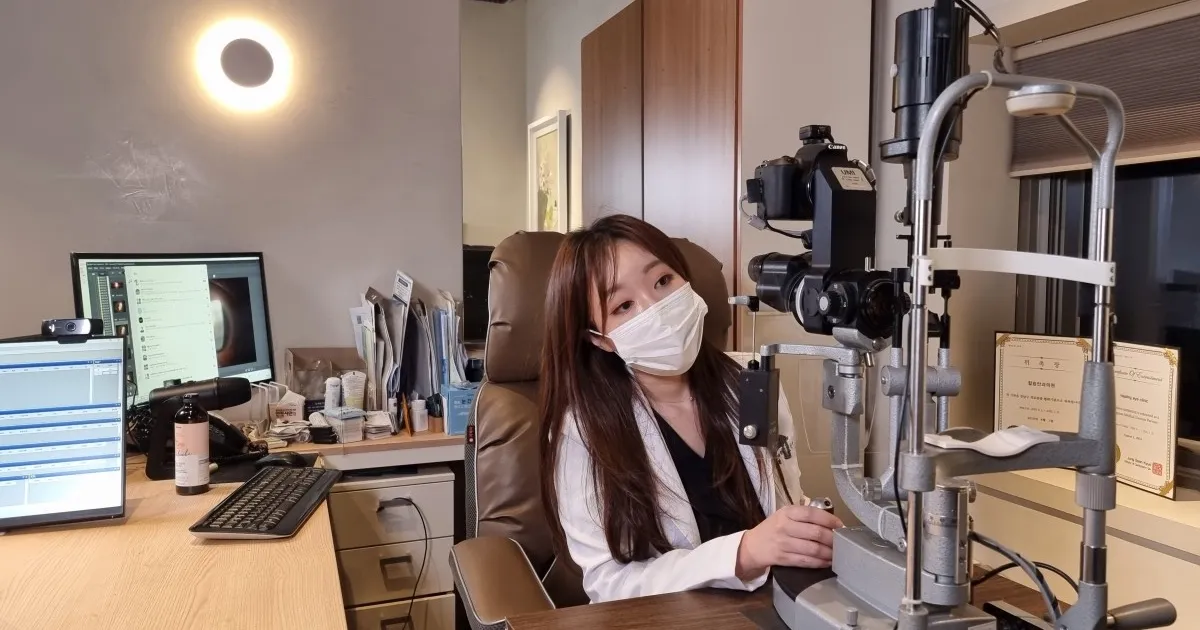
Myth one: the laser goes deep inside the eye
The laser stays in the cornea. The lens behind the pupil, the fluid inside the eye and the retina at the back are left alone. That fact explains most of what LASIK can and can't do.
In forum threads and family group chats, this belief usually shows up as a fear ("they're lasering near my retina") or as an overpromise ("it fixes your eyes for good"). Both come from picturing the surgery as working on the whole eye. In reality it changes one optical surface at the front. Your eye's focusing problem is corrected because the cornea does most of the eye's focusing, so reshaping it moves the point where light lands.
The National Eye Institute explains that astigmatism happens when the cornea or the lens has an uneven curve. When the cause is corneal, LASIK can address it. When the lens contributes, reshaping the cornea only partly helps, which is one reason the exam measures more than your prescription.
Will LASIK mean no reading glasses after 40?
No. Reading glasses after about 40 come from presbyopia, the lens inside the eye slowly losing its ability to change focus. LASIK reshapes the cornea and leaves that lens untouched, so the need for near help still arrives on its usual schedule.
This is the belief I most want readers in their 40s and 50s, or anyone arranging surgery for a parent, to hear before they book. Someone who is nearsighted and in their mid-40s may even notice that close work felt easier with their old myopia, because an uncorrected nearsighted eye is naturally focused up close. After distance correction, that built-in reading focus is gone.
There are options. A presbyopia-oriented LASIK design is discussed at the exam for some people.
Does the LASIK correction wear off over time?
What can change is the rest of the eye: a prescription that was still drifting before surgery can keep drifting after it, and some eyes show a small amount of regression. That is why a stable prescription over roughly the past year is part of being a good candidate.
When vision does slip, a second treatment is possible only if enough corneal tissue remains, which is something the original measurements and a new exam settle together. Healing Eye runs a dedicated LASIK/LASEK revision center for people whose vision declined or became uncomfortable after surgery, including surgery done elsewhere; the revision treatment page explains what it looks at.
For a longer view of what can persist years later, see LASIK side effects long term.
LASIK risks and side effects, and who shouldn't have it
LASIK is a real operation with real side effects. The common ones are temporary dryness and some glare or halos around lights at night in the first weeks. Less often, the eye ends up slightly under- or over-corrected.
The FDA's guidance on who should not have LASIK adds people whose prescription changed in the past year, people with conditions or medicines that affect healing, and people who play contact sports.
From our own candidacy criteria, these are the situations where I steer people away from flap-based LASIK or ask them to wait:
- a thin cornea, or a topography map with irregularity or signs that suggest keratoconus
- significant dry eye
- pregnancy or breastfeeding
- a prescription that hasn't stabilised
- frequent strong impact to the eyes, such as combat sports
What these share is the cornea's margin. LASIK removes tissue under the flap, so the question is whether enough healthy, evenly shaped cornea is left after the correction. On the topography map, one area steeper than the rest, often in the lower half, is the pattern that makes me stop and look again, because a weak cornea can bulge once tissue is removed.
The tear film matters for a different reason: an unstable tear layer blurs the measurements and makes post-op dryness harder. Pupil size in dim light gets checked too, since a wide pupil at night can pick up light from the edge of the treated zone. Candidacy is decided at the in-person exam, and when LASIK is the wrong fit, LASEK or an implantable lens (ICL) may be the better path; this guide to LASIK alternatives walks through them.
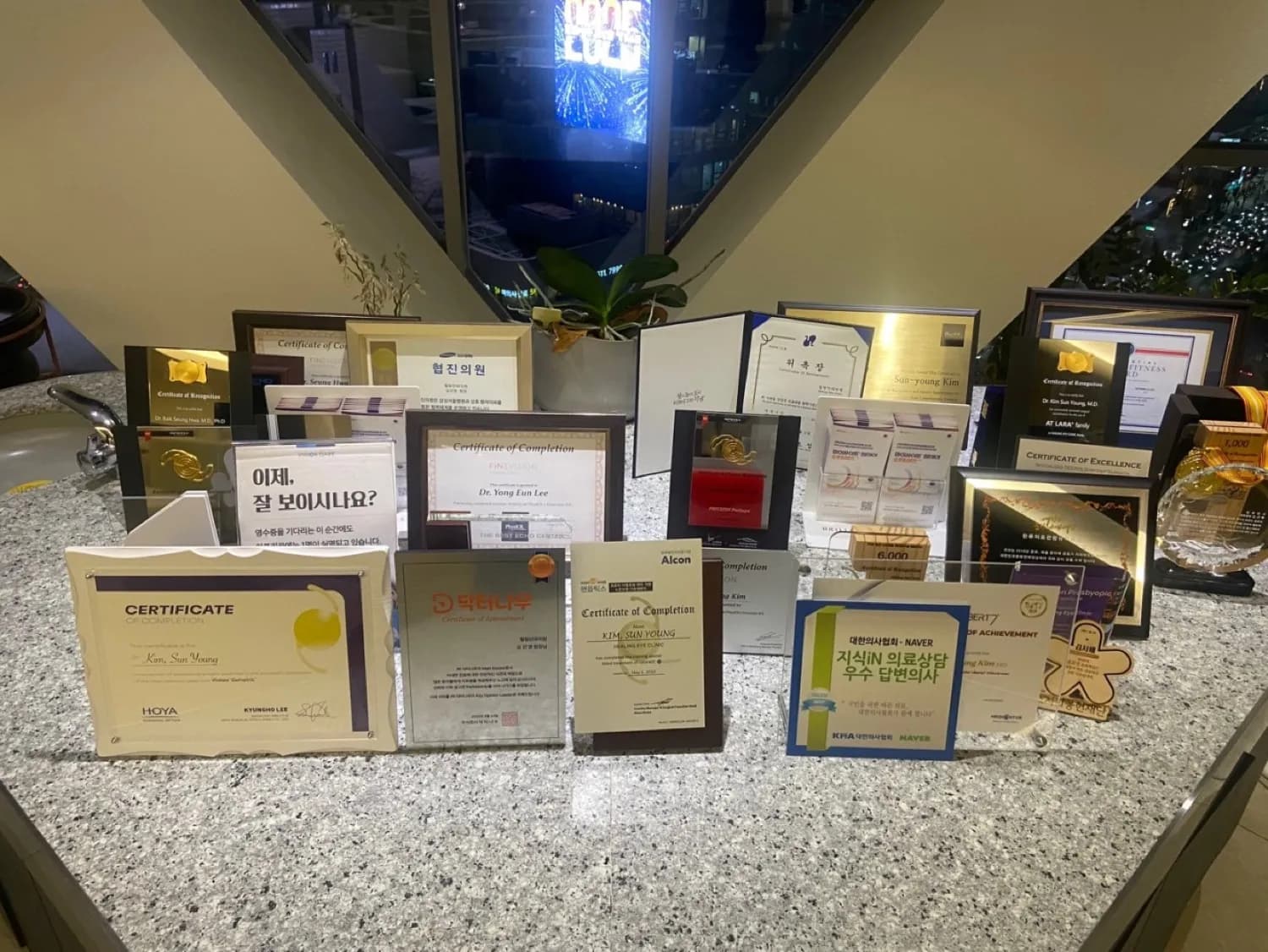
If an eye doctor at home has already mentioned thin corneas, dry eye or a changing prescription, send that report or a photo of it on WhatsApp. I review it and tell you whether LASIK, LASEK or ICL looks like the likelier direction, and what would change the plan, before you commit to flights.
Does it hurt, and what happens if I move?
Numbing drops mean most people feel pressure rather than pain during surgery. The laser part is brief, and an eyelid holder keeps the eye open so you don't have to fight the urge to blink. Afterwards, a few hours of dryness, watering or a gritty feeling is common and usually settles soon.
The fear of moving is reasonable, and it is one of the most repeated worries on forums. You're asked to look at a light, the treatment takes moments per eye, and the team talks you through each step. Interpreters for English, Japanese and Traditional Chinese work on site, so you understand those instructions in real time, along with your exam results and the surgical plan before you agree to anything.
What a LASIK trip to Seoul actually involves
The trip is built around three fixed points: the detailed exam, the surgery, and the next-day check with the same surgeon. Recovery from Clear LASIK is quick enough for a short visit, but allow a few days; how long to stop contact lenses beforehand and how many nights to stay are confirmed at consultation.
| When | What happens | What to avoid |
|---|---|---|
| Surgery day | Same-day check, then rest | Rubbing your eyes |
| First 1–2 weeks | Prescribed drops on schedule | Sauna, swimming, eye makeup |
The clinic is at 470 Gangnam-daero, 10–11F, one minute on foot from Sinnonhyeon Station and about 70 minutes from Incheon Airport. Fridays run late, until 21:00, which helps if you land on a Friday afternoon. The partner hotel is O'Cloud Hotel in Seocho-gu. Healing Eye is a Ministry of Health and Welfare registered institution for international patients, and the English home page lists hours and treatments. For a day-by-day picture of the first week, see LASIK in Korea recovery time.
So what does LASIK eye surgery do for you specifically? That comes down to four things on your report: corneal thickness, topography, tear film and pupil size. Send your travel dates together with a photo of your latest prescription on WhatsApp, and I'll look at both: whether the exam, surgery and next-day check fit those dates, and which direction your numbers point to before you book anything.
Frequently asked questions
How long does LASIK surgery take?
Both eyes usually take about ten minutes in the operating room. The detailed exam beforehand takes longer, because corneal thickness, topography, tear film and pupil size are all measured before a plan is made.
Can LASIK correct astigmatism?
Yes, when the astigmatism comes from an unevenly curved cornea and the cornea is healthy and thick enough. The laser evens out the curve. If part of the astigmatism comes from the lens inside the eye, the exam shows that, and the plan takes it into account.
Is LASEK the same thing as LASIK?
Both reshape the cornea with an excimer laser, but LASEK works on the surface without creating a flap. Recovery is slower and more uncomfortable, and it can suit people with thinner corneas or those whose work or sport involves knocks to the eyes.
Can I have cataract surgery after LASIK?
Yes. LASIK does not prevent cataracts, and having had it does not rule out cataract surgery later. Keep your LASIK records and tell your future cataract surgeon about the earlier surgery, because a reshaped cornea affects how the replacement lens power is calculated.
Can LASIK be done a second time if my vision drifts?
Sometimes. A second treatment needs enough healthy corneal tissue left after the first one, so it is decided by a new exam. Healing Eye runs a dedicated LASIK/LASEK revision center for these cases, including surgery originally done at another clinic.
Message us on official LINE / WhatsApp for a special offer
Your exact candidacy and cost are confirmed in a free 1:1 consultation.