What to Expect After Cataract Surgery: Watch Pain, Not Blur
What to expect after cataract surgery: blur and grit fade over weeks, but rising pain or falling vision needs a same-day check. Ask us on WhatsApp.

Medically reviewed byDr. Kim Sun-young, Director· Medical Director
Edited by: Dr. Kim Sun-young
Contents
Wondering what to expect after cataract surgery once you're home and the surgeon who operated is a long flight away? For most people the blur, grit and light sensitivity ease within days, and the eye keeps settling for about two months. The change that needs a same-day look is pain or vision that gets worse instead of better.
Hello, I'm Dr. Kim Sun-young, Medical Director at Healing Eye Clinic in Gangnam, and my specialty is cornea, glaucoma and cataract. We're also registered with Korea's health ministry (MOHW) for international patients, and a medical interpreter for your language is provided at no extra charge.
If you're still planning, send your latest eye report and the weeks you could travel on WhatsApp, and ask how the checkups would fit around your flight home. The consultation on WhatsApp is free, and you can ask before booking anything.
How does the eye usually feel in the first eight weeks?
Think of a new tile set in fresh grout. The tile, your new lens, does its job from the first day. The grout around it, a small self-sealing incision at the edge of the cornea plus some inflammation inside the eye, takes weeks to cure. The US National Eye Institute puts complete healing at about eight weeks, and that's the calendar I'd keep in mind, even on a first morning when vision already looks sharp.
Risks and side effects to know
Recovery rarely runs in a straight line. Vision is often hazy on day one, clearer by day two or three, and then a little uneven through the first week as swelling in the cornea settles. An ache, an itch or the feeling of an eyelash stuck in the eye is common for a few days and fades on its own.
| When | Usually part of healing | Get it checked the same day |
|---|---|---|
| First 2–3 days | Hazy or watery vision, scratchiness, light sensitivity, a red patch on the white of the eye | Pain the prescribed relief doesn't touch, vision turning darker |
| Weeks 1–2 | Vision clearing, some days sharper than others, mild glare | Spreading redness with ache, sticky discharge, new blur after clearer days |
| Weeks 3–8 | Glare and halos fading, prescription settling | A sudden shower of floaters, flashes, a shadow or curtain |
| Months later | Stable vision | Slow haze returning, like the old cataract |
If you've read about laser recovery, the pattern here is different. The SMILE recovery timeline is mostly about the corneal surface; cataract recovery is about calming inflammation inside the eye, which is why the drop course runs for weeks rather than days.

Ask whether this applies to your eyes, which dates are open, and about the English interpreter.
Ask us on WhatsAppWhat to do after cataract surgery before you leave Seoul
Most lists of what to do after cataract surgery stop at the clinic door. When home is a flight away, your last day in Seoul is where you set up the weeks that follow, and four small jobs make the difference.
Photograph the lens details. Ask for the name, model and power of the lens placed in each eye, plus the surgery date, and keep a photo on your phone. Any eye doctor who sees you later, for new glasses, a hazy film behind the lens or laser correction years from now, needs those numbers, and tracking them down across countries and languages is slow.
Photograph every drop bottle next to its schedule. Post-operative courses usually pair an antibiotic drop with an anti-inflammatory drop that tapers over several weeks. The mistake I'd most like you to avoid is stopping the anti-inflammatory early because the eye feels fine; inflammation can flare back. Check you have enough to finish the course, because the same medicine may carry a different name, or need a prescription, at home.
Book your local eye appointment now. A new-patient slot with an ophthalmologist at home can take weeks, so book one for roughly the first or second week after you land. The guide on how long to stay in Korea for cataract surgery covers the Seoul side of that calendar; your exact number of days is something to confirm at the consultation, because it depends on whether one or both eyes are done and how the first checks look.
Mind our calendar too. We're open Monday to Thursday until 18:30, Friday until 21:00 and Saturday until 14:00, and closed Sundays and public holidays, so ask where the next-day check lands before you fix the flight. Some of these habits overlap with aftercare at home after laser eye surgery, but after cataract surgery the drop course is longer and the warning signs sit deeper in the eye.
Pack the eye shield in your carry-on.
Which changes at home mean you should call someone today?
Three patterns need a same-day eye examination wherever you are: pain that keeps rising or ignores the pain relief you were told to use, vision that was clearing and then turns darker or foggier, and a new curtain, shadow or sudden burst of floaters and flashes. Everything else can usually wait for your planned check.
Direction matters more than any single symptom. A gritty, slightly red eye that is a little better each morning is healing. A similar eye that was better on day four and worse on day six is telling you something else, even if neither day feels dramatic.
A simple way to track direction: each morning, cover the other eye and look at the same thing across the room, a clock face or a calendar heading, and jot down sharper, same or worse. Two mornings of worse in a row deserve a doctor's look.
Redness and infection: what to watch for
Say you're 64, a retired accountant in Perth, home on day eight after your right eye was done. On day nine the eye that had been clearing looks milky, the redness has spread, and there's an ache behind it. I wouldn't want you to wait until Monday. That turn after an improving start is how the rare infection inside the eye, endophthalmitis, can show itself, and it's treated by whoever can examine you within hours. Go to an emergency department or eye casualty service that day with your lens and drop photos, and message us on WhatsApp with what's happening.
Now say the same eye is a little blurrier at night, with halos around headlights, and it has stayed that way for a week. That can wait for your booked appointment at home; it's common while the eye settles and the brain gets used to the new lens.

Infection, swelling and retinal tears: rare, but know the signs
Most of what you'll feel in the first days is temporary: grit, watering, light sensitivity, a red blotch from a burst surface vessel, and blur from corneal swelling. Eye pressure can rise briefly after surgery, which is one reason the next-day check exists, and it usually settles with drops.
Infection and redness: what to watch for
The less common problems each have a typical time and a typical sign. Infection inside the eye usually appears within the first week or two, as pain, redness and falling vision together. Fluid at the centre of the retina tends to show a few weeks in, as blur creeping back after a good start. A retinal tear or detachment can happen weeks to months later, as flashes, a burst of new floaters or a curtain from one side, and it's more likely in very short-sighted eyes.
If your cataract is still mild, how a surgeon decides the timing of cataract surgery may matter more to you right now than recovery.
How each eye heals varies from person to person, which is why the direction-of-change rule above beats any calendar. If one of these signs appears at home, go to local emergency eye care first, keep using your drops unless that doctor says otherwise, and send us the lens and drop photos with a short description on WhatsApp.
Why might things still look off a month later?
Your glasses prescription usually settles in about a month, and that's the time for new glasses, not week one. If only one eye has been done, the two eyes can feel badly matched in the meantime. A practical stopgap: an optician can take the lens out of your old glasses on the operated side, so the unoperated eye keeps its correction.
Halos and glare: what to watch for
Multifocal and extended-depth lenses can bring halos and glare at night that fade over months as the brain adapts; in a few people they never disappear completely, and that's a limit I'd rather you hear before choosing such a lens than after. Our Korean-language page on premium lens implants covers these lens types if anyone helping you plan reads Korean.
Months or years later, a haze can form on the thin capsule that holds the new lens. It feels like the cataract coming back, but the cataract itself cannot return. A short outpatient laser procedure usually clears it, and an eye clinic near home can do it with your lens record. Dryness after surgery is also common for a while, and we run a dry-eye clinic for people whose surface was dry to begin with.
Presbyopia and Cataract Surgery Together: Fixing Two Problems in One Operation go further into what usually comes next.
Questions to ask any clinic about the weeks after surgery
In short, it doesn't have to be us. Wherever you book, get these answered before you buy the ticket:
- Does the surgeon who examines you also operate and do the follow-up checks?
- Which drops will you go home with, for how long, and will there be enough to finish the course?
- Where are the lens name, model and power recorded for you to take home?
- How do you reach the clinic from home, and what should go straight to a local emergency service instead?
- Is an interpreter present at the exam and the checkups, and is it charged separately?
- Do international patients pay the same as local patients?
Our English page for Healing Eye Clinic lists the treatments and interpreter support if you want to compare those answers side by side.
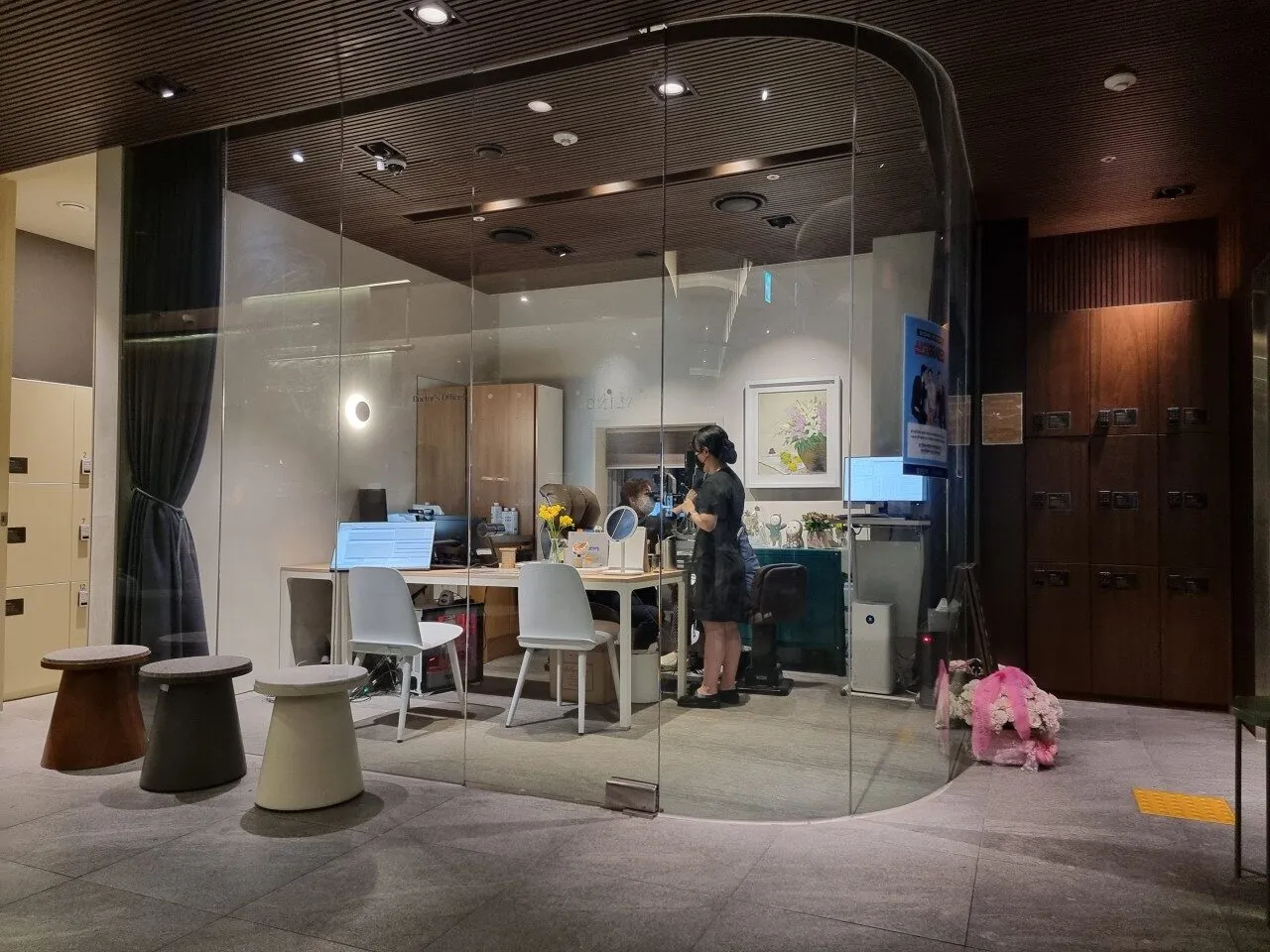
Where I stand on this: a good recovery abroad starts in the exam room, long before the plane. I don't recommend surgery for its own sake, and if your retina, your measurements or your travel window make the trip a poor fit, I'll tell you plainly and explain what else makes sense. Take whatever time you need to line up the follow-up at home first.
Send your most recent eye report, for one eye or both, and the weeks you'd fly on WhatsApp, and ask the question that's actually on your mind: who looks at this eye if something changes in week two at home? The consultation on WhatsApp is free. What shapes your plan is the health of the retina and the lens measurements, and we review those results together in your own language, with an interpreter, at Healing Eye Clinic, 470 Gangnam-daero, 10–11F, Gangnam-gu, Seoul, a minute's walk from Sinnonhyeon Station.
— Dr. Kim Sun-young, Medical Director
Frequently asked questions
Can I fly home the day after cataract surgery?
Routine cataract surgery doesn't leave a gas bubble in the eye, so cabin pressure isn't the concern it is after some retina operations. What matters is that the next-day check is done and looks normal; your surgeon sets the flight day after that. Leave a spare day in your plans in case swelling or eye pressure needs a second look.
When can I shower, wash my hair or swim?
Showering is usually fine from the next day if you keep water and soap out of the operated eye, for example by tilting your head back to rinse your hair. Pools, hot tubs and the sea are usually off for about two weeks because they carry bacteria; confirm the exact date with your surgeon.
When can I read, use screens and drive?
Reading and screens won't harm the healing eye, though they may tire it in the first days. Driving depends on the legal vision standard where you live and on the other eye; many people need the second eye done or updated glasses before they meet it. Arrange a lift home from the airport.
Can a cataract come back after surgery?
No, because the natural lens has been removed. What can appear months or years later is haze on the capsule holding the new lens. It's usually cleared with a short outpatient laser procedure that an eye clinic at home can do, so keep your lens record.
Does earlier LASIK change what to expect?
It doesn't rule out cataract surgery, but it makes the lens power calculation less predictable. Bring your old LASIK records, or the prescriptions from before it, to the exam. A small leftover prescription afterward is a bit more likely and is usually handled with glasses.
Questions about your own case or available dates? English interpreter on site.
Ask us on WhatsAppMessage us on official LINE / WhatsApp for a special offer
Your exact candidacy and cost are confirmed in a free 1:1 consultation.