What to Expect After LASIK: Dry Is Normal, Worse Is Not
Here's what to expect after LASIK once you're home: dryness and blur that improve, plus the signs to report. Send your surgery date on WhatsApp.

Medically reviewed byDr. Kim Sun-young, Director· Medical Director
Edited by: Dr. Kim Sun-young
Contents
Wondering what to expect after LASIK once you're back home, with your surgeon a long flight away? Dryness, light sensitivity and vision that drifts a little between morning and evening are normal for weeks, and they should keep improving. Pain that grows, or sight that gets worse instead of better, means contacting your surgeon that same day and seeing an eye doctor where you live.
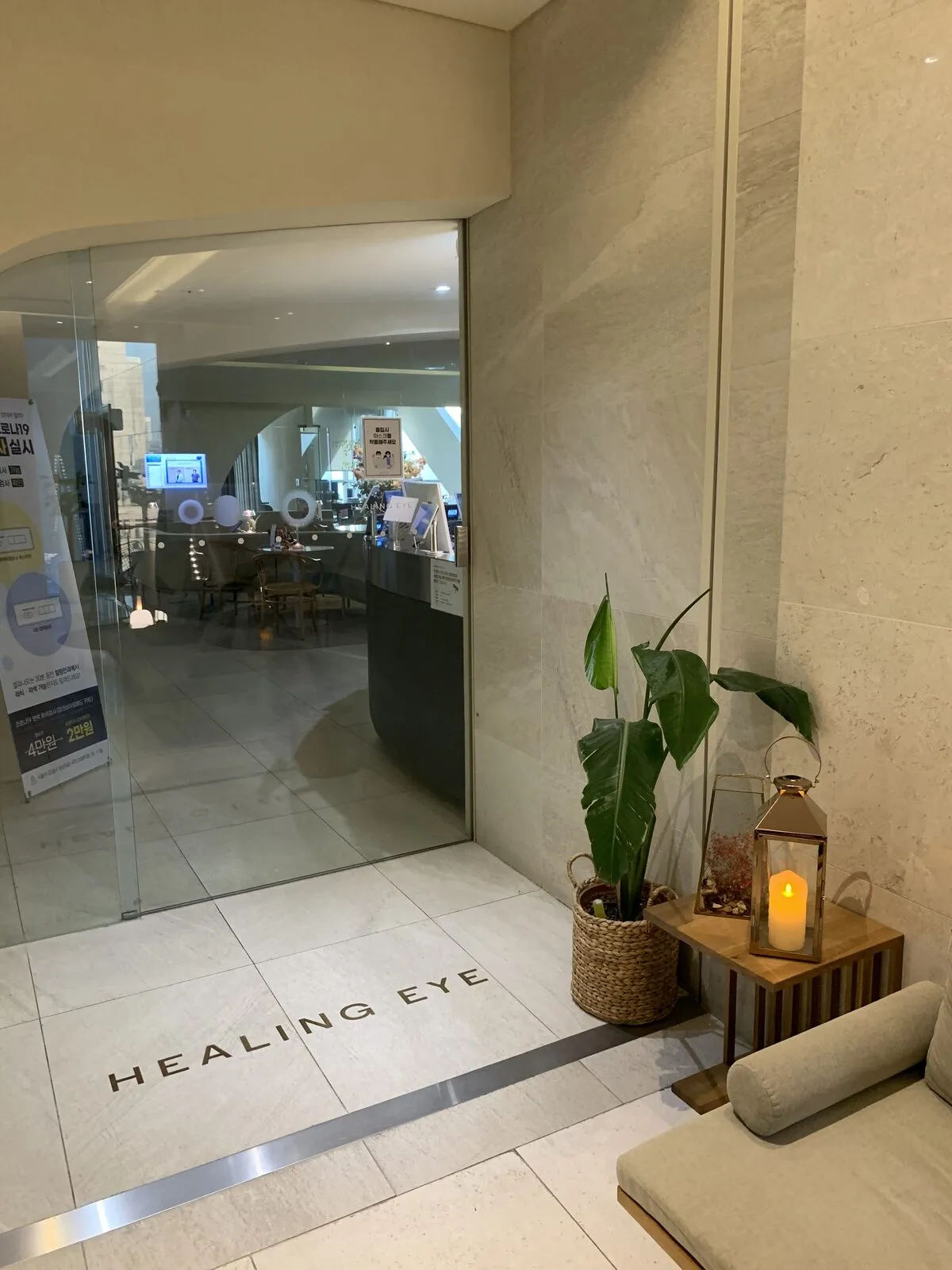
Hello, I'm Dr. Kim Sun-young, Medical Director at Healing Eye Clinic in Gangnam, and I have served as Clinical Professor (Cornea & Cataract) at Uijeongbu St. Mary's Hospital. Whether you have Clear SMILE LASIK or 1day LASIK with us, one dedicated surgeon follows you from the exam through aftercare, you leave Seoul with enough post-op medication to take home, and you can check in by email or video call once you land.
A medical interpreter for your language comes at no extra charge, so the discharge instructions are clear before you fly.
If you're still planning the trip, send your planned surgery date and return flight on WhatsApp, and ask how many days you'd have between the next-day check-up and boarding. That first conversation is part of our free consultation.
The first two days happen in Seoul
On surgery day, vision starts coming back within hours, along with a gritty, something-in-the-eye feeling and some sensitivity to light. Most surgeons ask you to go straight back to your hotel, rest your eyes and wear the clear shields to sleep. The next morning is your first check-up, and normal indoor activity is fine from there.
Flying is allowed from the day after surgery, once that check-up shows the eye is settling. The shortest plan is two days in Seoul: exam and surgery on the first, check-up on the second. I'd rather you had two to three days, because a rushed airport run on day two is when people forget drops or rub their eyes. Cabin air is dry, so keep artificial tears in your carry-on and use them often. The seat-and-cabin details are in our post on when flying after LASIK is safe.
Your exact days are confirmed in the consultation, since exam results can change the plan.
What's normal in the first month at home?
On days two and three, vision is mostly stable and light outings are fine. By the end of week one, most routines are back, screen work included. After 1day LASIK, eye makeup waits until about weeks two to three. Around month one, vision and cornea enter a stable phase. The US FDA's patient guidance adds that full stabilization can take three to six months, so small shifts in that window aren't a failure.
The symptom people least expect is dryness. Think of your tear film as the thin coat of water on a just-cleaned window: when it's even, the view is sharp, and when it dries in patches, things smear until you blink. The corneal nerves that tell you your eye is dry are themselves recovering, so you often won't feel thirsty eyes until the blur arrives. Set phone reminders for your lubricating drops for the first few weeks instead of waiting to notice.
A few other things are common early on. One eye can be a step ahead of the other for days. Lights at night can carry halos or starbursts. A small red blotch can appear on the white of the eye and fade over a couple of weeks. The full daily drop schedule and do's and don'ts are in our guide to aftercare at home.
Normal, or a same-day call: the signs side by side
| What you notice | Normal or not | What to do |
|---|---|---|
| Dryness, grittiness, blur that clears when you blink | Normal in the first weeks | Lubricating drops, more often than feels necessary |
| Halos or starbursts around lights at night | Common early | Note whether they ease over the weeks |
| Pain stronger than on the first day | Not normal | Contact us and see a local eye doctor that day |
| Vision getting worse instead of better | Not normal | Same day, without waiting for a planned check |
| Redness that grows, with discharge or rising light sensitivity | Not normal | Same day; infection has to be ruled out |
| A knock, poke or rub to the eye followed by new blur | Not normal | Same day, even if the pain is mild |
Who looks at your eyes once you're back home?
Two things carry you through the weeks at home. You can check in with us by email or video call, and if you need local care, we provide a referral letter for your eye doctor at home. Before you leave Seoul, we also explain the ingredients of your post-op medication, so a doctor or pharmacist abroad can find an equivalent if you run short.
Say you're 34, back in Chicago on day four after 1day LASIK. On day nine your left eye is blurrier by evening after a full day of spreadsheets, and it clears after drops and a night's sleep. That's the tear film, and the answer is more frequent drops and screen breaks; an email with the timeline is plenty. Now change one detail: on day nine the same eye is red, aches more than it did on day two, and the blur doesn't clear when you blink.
That's a same-day visit to an eye doctor at home, with the referral letter in hand.
The step most people skip is booking that local appointment before they fly to Seoul. Finding an ophthalmologist or optometrist who can see you in the second week is much easier calmly from home than on a worried evening. Our clinic contact details are listed on the Healing Eye English site, and our main Korean-language site has its own Clear SMILE LASIK page if you'd like the Korean description of the procedure to keep with your records.
Dry eye, night glare, infection: the risks to know
The common reactions after LASIK are temporary: dryness, glare and halos at night, and vision that fluctuates through the day. They usually ease over weeks to months. How quickly each settles differs from eye to eye, which is why the trend matters more than any single day. Less often, the correction lands slightly short or drifts back over the years. We run a dedicated LASIK/LASEK revision center for that situation, and a follow-up exam decides whether a second procedure makes sense.
Rare but serious problems include infection and inflammation under the surface of the cornea, which is why the same-day rule above exists. The longer-term picture is laid out in what I tell patients about long-term LASIK side effects.
Some people should wait or choose another method:
- Your prescription has changed within roughly the past year.
- Your cornea is thin, or the topography map shows irregularity or signs of keratoconus.
- You are pregnant or breastfeeding.
- You already have severe dry eye; we may treat it first at our dry-eye clinic.
If thin corneas or a high prescription rule laser out, LASEK or an implantable lens may be the safer path, and the reasoning is in what to do when LASIK is a no.
LASIK Revision Surgery in Korea: What the Exam Must Show go further into what usually comes next.
What should go in your carry-on?
Pack the things that matter in week two, when you're far from Seoul. Photograph every drop bottle and the instructions sheet before you leave the clinic, so a pharmacist at home can match the ingredients. Bring preservative-free lubricating drops in single-use vials, sunglasses for the airport, and the referral letter and surgery records in your hand luggage rather than your checked bag.
Save the clinic's Seoul hours in your phone with the time zone: Monday to Thursday 10:00 to 18:30, Friday until 21:00, Saturday 10:00 to 14:00, closed Sundays and holidays. The phone number is +82-2-566-1222.
Where I stand on this is simple. Most of what you feel in the first month is the eye healing slowly, and I would rather you send one unnecessary email than sit on a worsening eye for two days. None of this needs deciding this week. How easy your first month feels depends mostly on your tear film and corneal thickness, both measured in the pre-op exam in Seoul.
When you're ready, send your intended surgery date, your flight home and the city you live in on WhatsApp, and ask what you should set up locally before you travel; the consultation there is free.
— Dr. Kim Sun-young, Medical Director
Frequently asked questions
Is it normal for one eye to see better than the other in the first week?
Yes, early on. The two eyes often heal at slightly different speeds. If the gap is shrinking over the days, the slower eye is catching up; if the weaker eye is getting worse, report it the same day.
Can I buy eye drops at a pharmacy back home?
Lubricating drops, yes, and preservative-free single-use vials are gentler when you use them many times a day. The prescribed antibiotic and anti-inflammatory drops are different: finish the course you were given in Seoul, and if you run short, the ingredient explanation you received before leaving lets a local doctor or pharmacist find an equivalent.
When can I swim or use a hot tub after LASIK?
Most surgeons ask you to stay out of pools, hot tubs and the sea for at least the first one to two weeks, because the water can carry germs into a healing eye. Ask at your next-day check-up which date applies to you.
How long does night glare last after LASIK?
Halos and starbursts are common in the first weeks and tend to fade as the cornea settles over the first months. Pupil size, measured in the pre-op exam, affects how noticeable they are. Glare that is getting worse after the first month is worth an email.
What if my vision drifts a year or more after surgery?
Some regression can happen over time. A follow-up exam measures whether the cornea still has enough thickness for a touch-up, and we run a dedicated LASIK/LASEK revision center for exactly this question.
Message us on official LINE / WhatsApp for a special offer
Your exact candidacy and cost are confirmed in a free 1:1 consultation.