Can You Watch TV After Cataract Surgery? Yes, From Day One
Can you watch TV after cataract surgery? Yes, often that evening. A Seoul cornea and cataract surgeon on blur, dryness and care once you're home.

MS, Catholic Univ. College of Medicine · Ophthalmology specialist, Catholic Medical Center · Clinical Professor (Cornea & Cataract), Uijeongbu St. Mary's Hospital · 108th Korean Ophthalmological Society Research Award · KDCA epidemiology citation
Medically reviewed byDr. Kim Sun-young, Director· Medical Director
Edited by: Dr. Kim Sun-young
Contents
Can you watch TV after cataract surgery without slowing the healing, with a Seoul hotel room on the first night and a long flight home facing a seatback screen? Yes. Watching TV doesn't strain or damage the new lens, and most people turn the TV on the evening of surgery or the next day. What limits you in the first days is blur, glare and dryness, and short breaks with your eye drops take care of those.
Hello, I'm Dr. Kim Sun-young, Medical Director at Healing Eye Clinic in Gangnam. I'm an ophthalmology specialist (Catholic Medical Center) and Clinical Professor (Cornea & Cataract) at Uijeongbu St. Mary's Hospital, so the cornea and tear film that decide how a screen feels in week one are my own field. For cataract surgery here, the same surgeon handles your exam, your operation and your aftercare, and an English interpreter joins your consultation at no extra charge.
If your surgery date is set, or the operation is already behind you, send that date and your flight-home date on WhatsApp and ask when TV and your phone should feel comfortable on that schedule. The consultation on WhatsApp is free.
Does watching TV strain the new lens?
No. The implant is a small, fixed lens of acrylic or silicone sitting where your clouded lens used to be.
Think of the incision as a small cut on your fingertip. Looking at things never reopens it; rubbing it, pressing on it or getting dirty water in it can. The opening in cataract surgery is a few millimeters wide and usually seals on its own without stitches, which is why the rules for the first weeks are about touch and water rather than about what you watch.
What you'll notice on the first evening is a softer picture. Dilating drops keep the pupil wide for several hours, sometimes into the next morning, so a bright screen flares. The cornea can also be mildly swollen from the operation for a day or two.
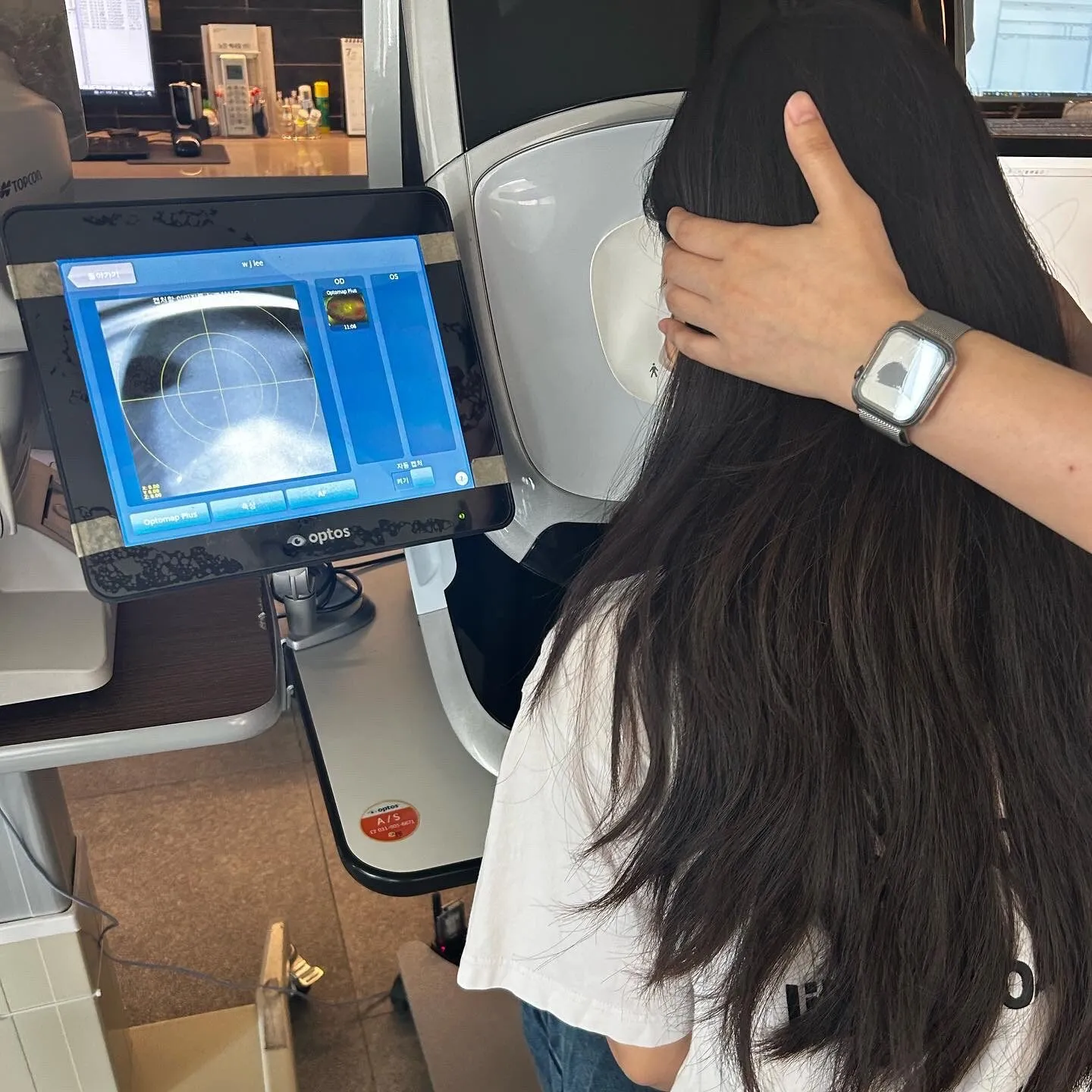
The part few people are warned about is dryness. We blink far less while following a story on screen, and an eye that has just been through surgery has a thinner tear film for a while. Forty minutes into a series the picture smears; you blink and it sharpens again. That is the tear film drying, not the lens moving.
Ask whether this applies to your eyes, which dates are open, and about the English interpreter.
Ask us on WhatsAppAfter cataract surgery, can you watch TV with only one eye done?
Yes, though the picture can feel lopsided until the second eye is done. If you were nearsighted, the operated eye may now see the TV across the room clearly without glasses, while the other eye still needs its strong lens. Put your old glasses on and the operated side over-corrects and blurs.
A trick many people use between surgeries: ask an optician at home to pop the lens out of the operated side of your old frames, or watch without glasses and let the clearer eye lead. Some people also notice the TV looks slightly larger through one eye than the other. That mismatch is about the gap between the two eyes, not a problem with the implant, and it fades once both are done.
If you're weighing both eyes in one visit, my first-time guide to cataract surgery in Korea covers the trip as a whole.
Why does the TV look bluer now?
A cataract is a lens that has turned cloudy and, over years, yellow-brown. It works like a tinted filter you never noticed putting on. Once it's gone, more blue light reaches the retina, so whites on screen can look bluish and colors brighter for the first weeks. Compare your eyes one at a time between surgeries and one will look warm, the other cool. For most people the brain adjusts and the blue cast stops being noticeable.
Don't reset your TV's color settings in the first week; wait until the second eye is done or a few weeks have passed.
Your days in Seoul, screen by screen
You land at Incheon, and Gangnam is about 70 minutes away; the clinic sits one minute from Sinnonhyeon Station, and our partner hotel is the O'Cloud Hotel in Seocho-gu. Download your shows at home before you fly, because hotel Wi-Fi and tired eyes don't mix well.
On surgery day the operation itself takes about 15 to 20 minutes per eye, though you'll be at the clinic longer for preparation and rest. Can you watch TV after cataract surgery that first night in the hotel? Yes, if it's comfortable. Sit back from the screen, turn the brightness down, keep a lamp on in the room, and pause for your drops on schedule. The shield goes on before sleep.
We're closed on Sundays and public holidays and open 10:00 to 14:00 on Saturdays, so pick a surgery date that doesn't push that check onto a closed day. How many days to stay is set from your exam at the consultation; how long to stay in Korea for cataract surgery walks through the days.

On the flight home, the seatback screen is fine. Cabin air is very dry, so keep artificial tears and the shield in your carry-on, use the drops more often than on the ground, and take an aisle seat so you can get up without bumping your face. Clinic hours, directions and the treatment list are on Healing Eye Clinic's English homepage.
Phones, laptops and the seatback screen: what changes with your lens?
The TV is usually the first thing to look sharp, because it sits at distance. Closer screens depend on the lens you choose. A monofocal lens is typically set for distance, while a multifocal lens, which we offer for presbyopia during cataract surgery, spreads focus across near, middle and far.
| Screen | Distance-set monofocal lens | Multifocal lens |
|---|---|---|
| TV across the room | Usually clear without glasses | Usually clear; some see halos around bright text in a dark room |
| Laptop at arm's length | Often needs light reading glasses | Often clear without glasses |
| Phone in your hand | Reading glasses | Often readable; very small print may still need good light |
| Seatback screen in a dark cabin | Reading glasses help | Usually readable; halos can show around bright icons |
Until your eyes settle, inexpensive drugstore readers are enough for the phone; a final glasses prescription usually waits about a month. Lens type also changes the bill, which the article on what changes cataract surgery cost in Korea explains without guesswork. Our Korean-language page on premium lens implants lists the lens types by name if you want to look them up before your consultation.
Infection, swelling, pressure and a clouded capsule
The common reactions in the first days are a gritty or scratchy feeling, watering, light sensitivity and blur. They usually ease within a few days, though dryness can linger for several weeks.
The rarer problems are the ones to know by name: infection inside the eye, a rise in eye pressure, swelling at the center of the retina (macular edema) that can appear a few weeks later, and retinal detachment. Months or years later, the capsule holding the implant can turn hazy; a short laser treatment clears it. How fast your eye settles differs from person to person, and that's why the next-day check exists.
Some eyes deserve extra care in planning: diabetes, glaucoma, a past LASIK or LASEK (it changes the lens calculation), very dry eyes, and high nearsightedness, which carries a higher risk of retinal detachment. Bring any records of these to the consultation.
Back home: drops, the night shield and when to get help the same day
Shift your drop schedule to home time the day you land, and set phone alarms so the intervals stay even. Keep the shield on at night for as long as you were told, often about a week. No rubbing, no swimming pools or hot tubs for the first couple of weeks, and nothing that presses on the eye.
For screens, look away every 20 minutes or so and blink fully, until you feel the lids touch. If the picture keeps smearing, use your artificial tears before you reach for the remote.
Go to an eye doctor or emergency department the same day if pain gets worse instead of better, vision drops, redness spreads, or you see a sudden shower of floaters, flashes of light or a shadow moving across your vision. Keep your discharge sheet with the lens type and drop names in your bag so a local doctor can read it, and ask for a referral letter before you leave Seoul. Since the same surgeon who operated also handles your aftercare, your records stay in one place.
If you're the adult child managing a parent's drops, the companion's guide to cataract surgery in Korea for parents covers that role.
Presbyopia and Cataract Surgery Together: Fixing Two Problems in One Operation go further into what usually comes next.
Where I stand on screens in the first week
I'd rather you watch a film on the first evening than sit in a dark hotel room worrying. Screens don't harm the implant; rubbing, dirty water and missed drops can. What decides how soon screens feel comfortable for you is the tear film you bring into surgery and the distance your lens is set for.
Healing Eye Clinic is at 470 Gangnam-daero, 10–11F, Gangnam-gu, Seoul. If you're already home and the blur at the screen hasn't eased by week two, or you're still planning, send your surgery date and your flight-home date on WhatsApp with your question about screens on that schedule. The consultation on WhatsApp is free.
— Dr. Kim Sun-young, Medical Director
Frequently asked questions
Can I watch TV lying down after cataract surgery?
Yes, lying on your back or propped on pillows is fine. For the first nights, avoid sleeping on the side of the operated eye, and keep the shield on so a pillow can't press on it.
Is blue light from screens harmful to the new lens?
There's no good evidence that screen light harms an implanted lens or the healing eye. Modern implants filter ultraviolet light. What bothers people is brightness, so lower it and keep a room light on.
Can I use a VR headset or 3D glasses after cataract surgery?
Regular 3D glasses that rest on the nose are usually fine once you're comfortable. A VR headset presses around the eyes, so leave it until your surgeon clears you, typically after the first couple of weeks.
Why do my eyes water when I watch TV in the first week?
A surface that is irritated or dry triggers reflex tearing, so the eye waters even though it is short on lubricating tears. Preservative-free artificial tears and regular screen breaks usually calm it.
When will I get new glasses for watching TV?
Most people wait about a month, until the eye has settled, before a final prescription. Many with a distance-set lens find they don't need glasses for TV at all.
Questions about your own case or available dates? English interpreter on site.
Ask us on WhatsAppMessage us on official LINE / WhatsApp for a special offer
Your exact candidacy and cost are confirmed in a free 1:1 consultation.