Can You Get Cataracts After Cataract Surgery? Misread Signs
Can you get cataracts after cataract surgery? The old cataract can't return, but the capsule behind the new lens can haze; here's what to watch at home.

MS, Catholic Univ. College of Medicine · Ophthalmology specialist, Catholic Medical Center · Clinical Professor (Cornea & Cataract), Uijeongbu St. Mary's Hospital · 108th Korean Ophthalmological Society Research Award · KDCA epidemiology citation
Medically reviewed byDr. Kim Sun-young, Director· Medical Director
Edited by: Dr. Kim Sun-young
Contents
Can you get cataracts after cataract surgery once you're back home, a long flight away from the surgeon who did it? The worry usually starts a year or two later, when headlights begin to glare and print needs more light again.
The cataract itself can't grow back, because the clouded natural lens was removed and replaced. What can cloud over, months or years later, is the thin capsule that holds the new lens, and a short laser treatment usually clears it.
Hello, I'm Dr. Kim Sun-young, Medical Director at Healing Eye Clinic in Gangnam. Cornea and cataract are my field (Clinical Professor, Cornea & Cataract, Uijeongbu St. Mary's Hospital). Here the same surgeon does your exam, your cataract surgery and your aftercare, so the doctor reading your eye later already knows what was implanted. A medical interpreter for your language joins the consultation at no extra charge.
If your vision has been drifting back toward foggy, whether your surgery was with us or somewhere else, send a photo of your surgery summary or lens implant card (date, which eye, lens name) on WhatsApp with one question: is this the kind of haze worth an exam now? The WhatsApp consultation is free.
What actually comes back after cataract surgery?
A cataract is the eye's own lens turning cloudy, most often with age. During surgery that lens is broken up and removed, and a clear artificial lens, called an intraocular lens or IOL, goes into the same space. The artificial lens very rarely clouds, so the original cataract has nothing to return to.
The surgeon deliberately leaves the back wall of the lens's natural pouch, the capsule, in place, because it holds the implant centered. Over time, leftover lens cells can spread across that membrane and turn it hazy. The medical name is posterior capsule opacification. Many people call it a secondary cataract or an after-cataract, which is exactly why it feels like the cataract came back. The US National Eye Institute describes this capsule clouding, and the laser that treats it, in its patient guidance on cataract surgery.
The symptoms feel familiar for a reason: glare around lights at night, colors a little washed out, text that needs a brighter lamp. What differs is where the haze sits, and that changes what fixes it.
Ask whether this applies to your eyes, which dates are open, and about the English interpreter.
Ask us on WhatsAppThree mistakes people make when the haze returns
Living with it because "the cataract is back"
Some people assume a returning cataract means a second operation, and they put it off for a year. Capsule haze is usually treated with a laser in a short outpatient visit, with no incision. What to do instead: book an exam with an ophthalmologist once the blur has crept up over weeks or months.
Ordering new glasses first
A new prescription sharpens focus. It can't see through a hazy membrane. If you're squinting more and the optician's new lenses barely help, that pattern itself points toward the capsule. Have the eye examined through a dilated pupil before you pay for glasses.
Treating a sudden change like the slow kind
Capsule haze builds gradually and doesn't hurt. Vision that drops over hours, new pain, redness that keeps rising, a burst of floaters, flashes, or a shadow creeping in from the side is a different problem. Those go to a local eye doctor or emergency department the same day, not into a message thread.
Is the laser for capsule haze a second operation?
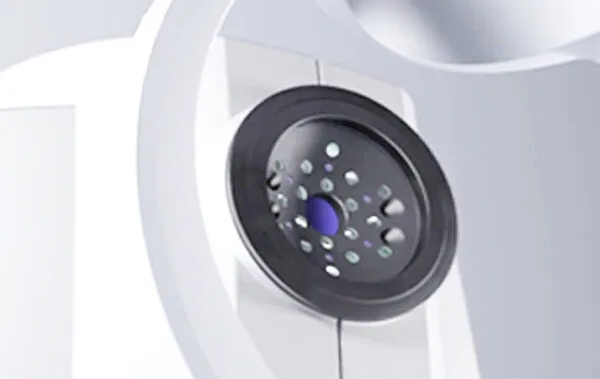
Not in the usual sense. The treatment is called a YAG laser capsulotomy. The eye is numbed with drops, you sit at a machine much like the one used for a routine eye exam, and the laser opens a small window in the cloudy capsule behind the lens. It takes a few minutes, and many people notice clearer vision within a day or two.
It carries its own small risks. Eye pressure can rise for a short time, new floaters are common for a few weeks, and in rare cases the retina detaches, which is why the pressure and the back of the eye are checked afterward. YAG capsulotomy is a standard treatment in ophthalmology, so an eye doctor where you live can usually discuss it with you.
Detachment, infection and pressure rise: the signs that can't wait
In the first weeks after cataract surgery, a gritty feeling, mild light sensitivity and vision that sharpens and softens through the day are common, and they fade as the eye heals. Dryness can linger for a few months. Capsule haze belongs to the months and years after that.
The rarer problems look different. An infection inside the eye usually shows within the first days to two weeks as pain, redness and blur that get worse instead of better. Swelling at the center of the retina, called macular edema, can blur reading vision a few weeks after surgery. A retinal detachment shows as flashes, a shower of new floaters or a curtain over part of your view, and it can happen months or years later. A rise in eye pressure can bring an ache and colored halos.
Some eyes deserve closer watching for these signs:
- strong nearsightedness or a long eyeball, which raises the chance of retinal detachment
- diabetes, which makes macular swelling more likely
- glaucoma or high eye pressure
- earlier eye surgery or an eye injury
How likely any of this is differs from one eye to the next, and only an exam of your own eye can say where you stand. Once you're home, any of the urgent signs means same-day care with a local eye doctor; tell them your surgery date and the lens you received. For the slow kind of blur, the same surgeon who examined and operated on you is the one who follows your eye afterward, so a WhatsApp message with your surgery details is a reasonable first step.
Planning cataract surgery in Seoul: what should the trip include?
If you haven't had surgery yet, plan the trip with the years afterward in mind. Most long-haul flights land at Incheon, about 70 minutes from the clinic, which is a one-minute walk from Sinnonhyeon Station. Our partner hotel is O'Cloud Hotel in Seocho-gu. If you're arranging this for a mother or father, the companion's guide to cataract surgery in Korea for parents covers the trip from their side.
On exam day, expect dilating drops that blur near vision for a few hours, so leave the afternoon free of anything that needs reading. Weekday hours run 10:00 to 18:30 with a lunch break from 13:00 to 14:00, Friday goes until 21:00, and Saturday is 10:00 to 14:00. Sundays and public holidays are closed, which matters if your flight home is on a Monday morning. The surgery itself takes about 15 to 20 minutes per eye, and daily life usually returns within days.
How many days to stay before flying is something to confirm at the consultation, and the reasoning is laid out in how long to stay in Korea after cataract surgery. Lens choice moves both the plan and the fee; what changes the price of cataract surgery in Korea goes through those factors, and my overview of cataract surgery in Korea covers the rest of the decision.
One step people skip: photograph your lens implant card and surgery summary on your phone before the flight home. Years later, when a local doctor is deciding whether that haze is the capsule, the lens model and surgery date are the first things they'll want. The Korean-language page on premium artificial lenses at our main clinic site lists lens types by name, which helps if you need to match the name on your card.

What should you ask any clinic about follow-up?
The operation takes minutes, and the follow-up spans years. Wherever you have surgery, these four questions tell you how the later years will go, and under each is how we answer it.
- Will the doctor who examines you also operate and follow you afterward? Here, yes: the same surgeon does your exam, surgery and aftercare.
- Can you go through your results in your own language? A medical interpreter for your language joins the consultation at no extra charge, with English, Japanese and Traditional Chinese interpreters on site.
- How does contact work once you're home? Our vision-correction pages describe check-ins by email or video call and a referral letter for your eye doctor at home; ask on WhatsApp how that applies to cataract follow-up.
- Is the clinic registered for international patients? Healing Eye is a MOHW-registered medical institution for international patients, and international patients pay the same price as Korean patients.
The treatment list and the messenger buttons are on Healing Eye's English homepage.
Presbyopia and Cataract Surgery Together: Fixing Two Problems in One Operation go further into what usually comes next.
Where I stand on haze after cataract surgery
A hazy view after cataract surgery is one of the most fixable problems I see, and on its own it's rarely a reason for alarm. What I don't want is for you to live with it for a year, or to pay for glasses that can't help. Your next step depends on where the haze sits: on the capsule, in the tear film, or at the center of the retina. Only a dilated look at the eye shows which.
Healing Eye Clinic is at 470 Gangnam-daero, 10–11F, Gangnam-gu, Seoul. Send that photo of your surgery summary or lens implant card on WhatsApp, with your question about whether this haze is worth an exam now; the consultation there is free, and you can ask before committing to anything.
— Dr. Kim Sun-young, Medical Director
Frequently asked questions
How long after cataract surgery can capsule haze appear?
It can appear anywhere from a few months to several years after surgery, and some eyes never develop enough haze to notice. It isn't a sign that the original operation went wrong.
Can one eye get capsule haze and not the other?
Yes. Each capsule behaves on its own, so one eye may need the laser years before the other, or the other may never need it. Compare the eyes one at a time by covering each in turn.
Can my eye doctor at home treat capsule haze if my surgery was in Korea?
Usually, yes. YAG laser capsulotomy is a standard ophthalmology treatment. Bring your surgery date and lens implant details so the doctor knows exactly what is in your eye.
Will eye drops clear the haze?
No. Drops can ease dryness or inflammation, which also blur vision, but a cloudy capsule is a physical membrane. Only opening it with the laser clears the view through it.
Does the haze come back after the laser?
In adults the opening usually stays clear, so for most people it is a one-time treatment per eye. New floaters for a few weeks afterward are common; flashes or a curtain need a same-day exam.
Questions about your own case or available dates? English interpreter on site.
Ask us on WhatsAppMessage us on official LINE / WhatsApp for a special offer
Your exact candidacy and cost are confirmed in a free 1:1 consultation.