Can You Wear Contacts After Cataract Surgery? After a Month
Can you wear contacts after cataract surgery? Usually yes, after about a month of healing. A Seoul cataract surgeon on timing and care at home.

MS, Catholic Univ. College of Medicine · Ophthalmology specialist, Catholic Medical Center · Clinical Professor (Cornea & Cataract), Uijeongbu St. Mary's Hospital · 108th Korean Ophthalmological Society Research Award · KDCA epidemiology citation
Medically reviewed byDr. Kim Sun-young, Director· Medical Director
Edited by: Dr. Kim Sun-young
Contents
Can you wear contacts after cataract surgery, and who do you turn to if the eye feels wrong once you're home, a long flight away from the surgeon? Yes, if you still need them, though not in the first month.
Hello, I'm Dr. Kim Sun-young, Medical Director at Healing Eye Clinic in Gangnam, Seoul. My field is cornea, glaucoma and cataract, and I was a clinical professor in cornea and cataract at Uijeongbu St. Mary's Hospital. That matters for this question, because a contact lens sits on the cornea, the same tissue the cataract incisions pass through.
At our clinic the surgeon who examines you is the one who operates and handles your aftercare, an English-speaking medical interpreter joins your consultation at no extra charge, and we're registered with Korea's Ministry of Health and Welfare to treat international patients.
Maybe you wear contacts now and are thinking about surgery in Seoul. Maybe you've already had it and want to know when the lenses can go back in. Either way, send a photo of your contact lens box label or your lens prescription on WhatsApp, along with your surgery date (planned or past), and ask whether contacts still belong in your plan. The WhatsApp consultation is free.
How long before you can wear contacts after cataract surgery?
The usual window is four to six weeks, and some surgeons ask for longer. Two things need to happen first.
The first is the wound. Modern cataract surgery works through incisions a few millimeters long at the edge of the cornea, and most of them seal on their own without stitches. Sealed doesn't mean strong, though. Think of a blister from a new pair of shoes: the skin closes in a few days, but rub it every morning and it opens again.
The edge of a soft contact lens rests close to where those incisions sit, and every time you put a lens in or take it out, you pull on the eyelid and the surface of the eye.
The second is your prescription. For the first weeks the cornea is slightly swollen and the eye's focus drifts while it settles. A lens fitted in week two may be the wrong power by week six, which is why most eye doctors wait until the eye is stable before measuring a new glasses or contact lens prescription. Your old contacts are almost certainly the wrong power now, too.
The implant was calculated to correct much of the focusing error those contacts used to handle, so the boxes in your bathroom cabinet were made for an eye you no longer have.
Ask whether this applies to your eyes, which dates are open, and about the English interpreter.
Ask us on WhatsAppCan I wear contacts after cataract surgery if I still need them?
Often you won't need them for distance. The implant replaces your clouded natural lens, and its power is chosen from measurements of your eye, so most of the nearsightedness or farsightedness your contacts corrected is built into the new lens. A contact lens still has a place in some situations:
- A small leftover error. Some astigmatism or a slight focus error can remain once the eye settles. Glasses usually handle it, but a contact works too if you prefer one.
- Reading. A monofocal implant set for distance usually means reading glasses for close work. A multifocal implant is designed to reduce how often you need them.
- An irregular cornea. If you wore rigid lenses because of keratoconus, old radial keratotomy incisions or a scarred cornea, cataract surgery doesn't fix any of that. The surgery replaces the lens behind the pupil and leaves the shape of the cornea as it was, so a rigid lens may still be how you see sharply.
- The weeks between your two eyes. If the eyes are done on separate dates, the eye that hasn't been operated on can usually keep its contact for a while. The operated eye goes without one.
If you're still early in the decision, my guide to cataract surgery in Korea covers the lens choices in more depth.
The contacts you wear before surgery change the lens power
Most people only hear about this at the exam. Any contact lens, soft or rigid, presses on the cornea and slightly changes its curvature. The implant's power is calculated from that curvature and the length of your eye, so a cornea still shaped by last week's lenses can give a reading that's off. Rigid lenses usually need to stay out longer than soft ones.
How many days you should leave yours out depends on the lens type and how long you've worn them, so confirm it in the consultation before you book flights. It decides how many days you'll be in glasses before the trip.
Two details people tend to miss. When the eyes are done on separate dates, the contact in the second eye has to come out again before that eye is measured. And if you had LASIK or another laser procedure years ago, bring any records you still have, because earlier corneal surgery affects the lens calculation.
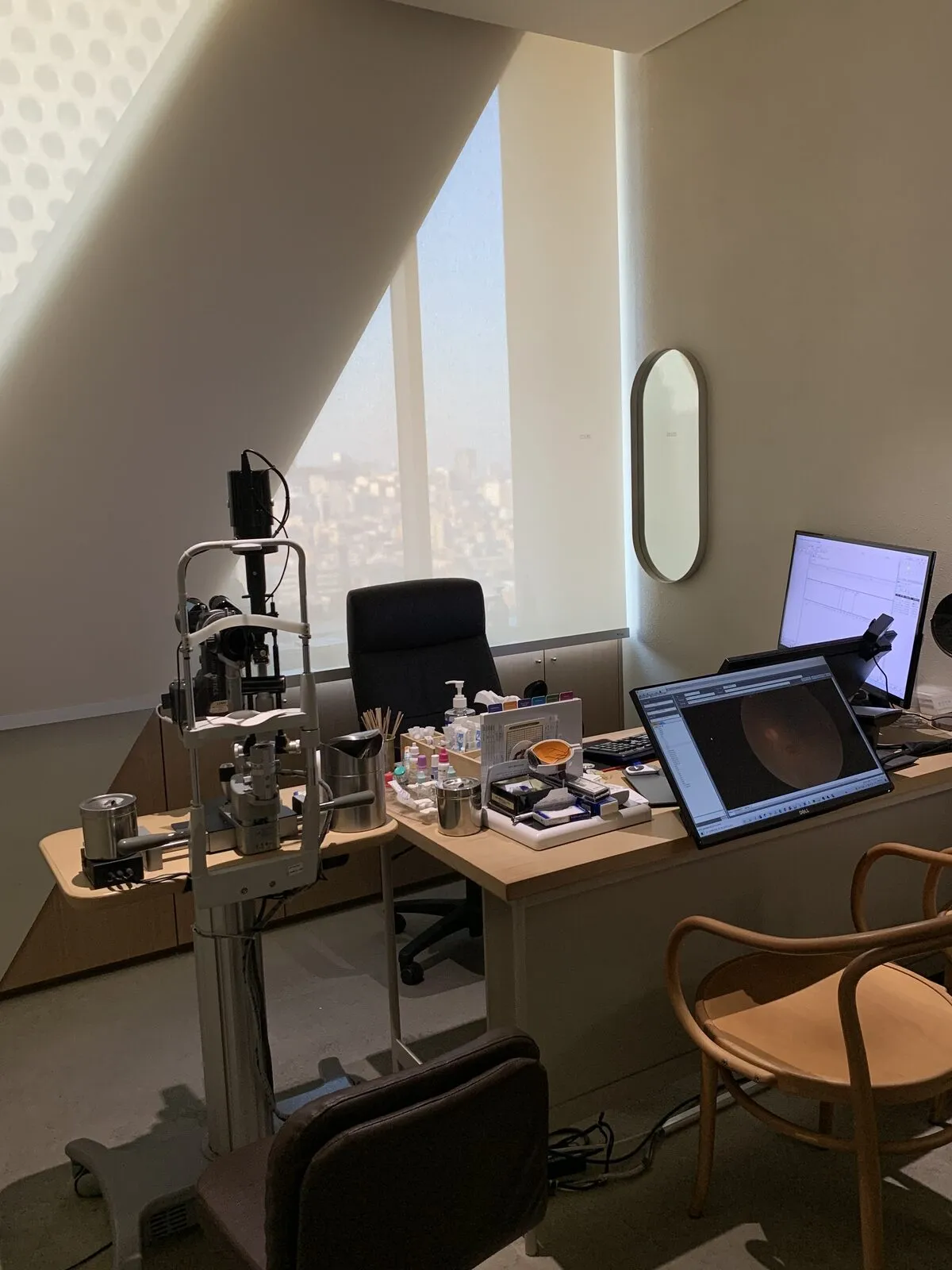
Your days in Seoul, with glasses in your bag
You land at Incheon, and the clinic is about 70 minutes away, a one-minute walk from Sinnonhyeon Station on Gangnam-daero. Your contacts have been out for the number of days agreed in the consultation, so you're traveling in glasses. Pack a spare pair, because you'll wear them every day of this trip.
The day of your arrival matters more than people expect. The clinic is open until 21:00 on Fridays and until 14:00 on Saturdays, and it's closed on Sundays and public holidays. If you land on a Saturday afternoon, nothing can start until Monday morning. On exam day, the dilating drops usually blur close-up vision for several hours, so leave the afternoon free and don't plan to read fine print.
The operation takes about 15 to 20 minutes per eye. Afterward you rest at your hotel. Our partner hotel is the O'Cloud Hotel in Seocho-gu. Most surgeons ask you to wear a shield over the eye while you sleep for the first nights, and a contact lens doesn't come anywhere near the operated eye while you're in Seoul.
How many days to stay before flying home gets set in your consultation, and the post on how long to stay in Korea for cataract surgery shows how those days are usually laid out.
The Healing Eye Clinic English home page lists the procedures we offer and how to reach us before you travel. If someone helping you plan reads Korean, our Korean site has a page on premium lens implants with more on the implant types.
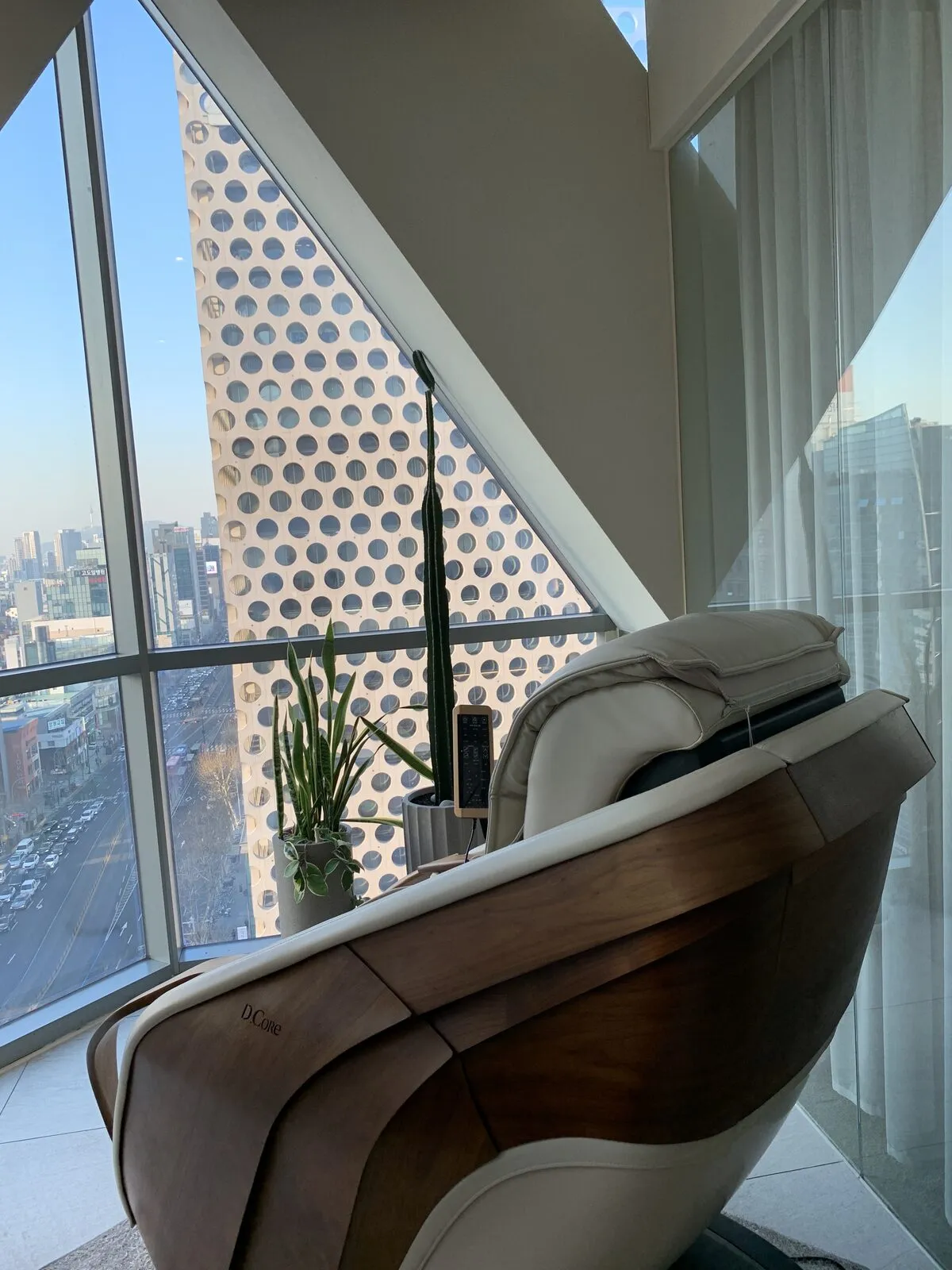
Infection, scratches and dry spots: the risks of going back too early
The complication eye surgeons watch for most closely after cataract surgery is infection inside the eye. It's rare, but it can threaten sight. A contact lens holds bacteria against the surface of the eye, and an incision that hasn't fully sealed gives them a way in. That's the main reason for the wait.
There are also less serious problems. A healing surface is easier to scratch, and a lens edge or a fingernail can do it. Dry eye is common for weeks after surgery, and a contact lens soaks up the tear film you're short on, so it can feel gritty or blur by mid-afternoon. Separately, some people notice their vision clouding again months or years later. That's usually haze forming on the capsule behind the implant. It isn't the cataract coming back, and it has nothing to do with contacts.
Some people should expect to wait longer than the usual four to six weeks:
- you're still on anti-inflammatory drops or the eye is still red
- you had dry eye before surgery or it got worse afterward
- you have diabetes or another condition that can slow healing
- you have a history of corneal infection or wore lenses overnight
Healing speed differs from person to person, so the green light for contacts comes from an eye exam, not from the calendar.
Looking after the eye once you're home
The first weeks at home are mostly about leaving the eye alone. Keep to the drop schedule you leave Seoul with, and set phone reminders so the time difference doesn't throw you off. Don't rub the eye, even when it itches. Most surgeons also ask you to stay out of pools, hot tubs and the sea, and to skip eye makeup, for the first couple of weeks.
When the eye has settled and you want contacts again, book a new fitting with your local optometrist or ophthalmologist rather than ordering your old brand. Tell them you have a lens implant and bring your surgery record with the implant details. The corneal surface near the incisions can be shaped a little differently from before, so the fit may change along with the power.
See an eye doctor near you the same day if any of these happen:
- pain that gets worse instead of better
- vision that gets worse after it had been improving
- increasing redness, or discharge from the eye
- a sudden shower of floaters, flashes of light, or a shadow spreading across your vision
Because the same surgeon handles your exam, surgery and aftercare at our clinic, your measurements and surgery record stay with one doctor. If something worries you after the flight, send a photo of the eye and a line about what you're feeling on WhatsApp, and for anything on the list above, see a local eye doctor first. The day-by-day recovery brief covers what's normal in the first weeks. If you're organizing this for a parent, the companion's guide for families covers what to watch for after the trip.
Presbyopia and Cataract Surgery Together: Fixing Two Problems in One Operation go further into what usually comes next.
Where I stand on contacts after a lens implant
Contacts after cataract surgery are fine once the eye has healed, and for many people they become optional. What I don't want is a lens going back in during week two because a meeting or a holiday made it convenient. If your cornea or your work means you'll keep wearing contacts, I'd rather we plan the implant around that from the start.
To begin, send a photo of your contact lens box label or lens prescription on WhatsApp with your surgery date, planned or past, and ask whether contacts still belong in your plan. The WhatsApp consultation is free. We're at 470 Gangnam-daero, 10–11F, Gangnam-gu, Seoul.
— Dr. Kim Sun-young, Medical Director
Frequently asked questions
Can a contact lens damage my lens implant?
No. The implant sits inside the eye, behind the iris, while a contact lens rests on the outside surface of the cornea. They never touch. The reason to wait after surgery is the healing cornea and incisions, not the implant.
Can I sleep in contacts after cataract surgery?
Overnight wear raises the risk of corneal infection in any eye, and an eye that has had surgery is not one to take chances with. Most eye doctors advise daily wear only, with the lenses out before sleep, even once you've been cleared to wear them again.
Are colored or cosmetic contacts treated differently?
No. They're medical devices like any other contact lens, so the same healing wait applies. Have them fitted by an eye-care professional with your new measurements, and never share them or buy them without a fitting.
Do I need a full contact lens fitting, or just a new power?
A full fitting. The power has changed because of the implant, and the curvature near the incisions can be slightly different, which affects how a lens sits. Ordering your old brand with a new number skips the part that checks the fit.
Can I keep wearing a contact in my other eye between the two operations?
Usually yes, until that eye needs to be measured for its own implant. It then has to come out for a set number of days so the cornea can return to its natural shape. Confirm the number of days at your consultation so you can plan around a stretch in glasses.
Questions about your own case or available dates? English interpreter on site.
Ask us on WhatsAppMessage us on official LINE / WhatsApp for a special offer
Your exact candidacy and cost are confirmed in a free 1:1 consultation.