Is LASIK Worth It? Often Yes, If Your Eyes and Trip Fit
Is LASIK worth it if you fly to Seoul for it? A Gangnam eye surgeon on which eyes it suits, how many days to plan, and follow-up once you're home.

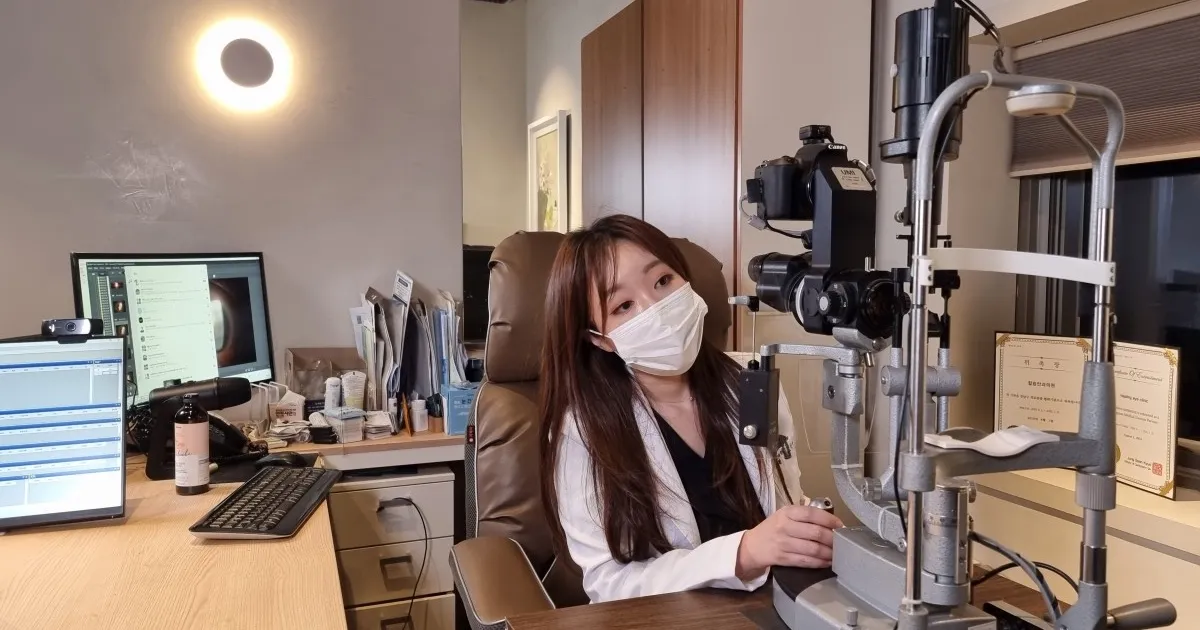
Dr. Kim Sun-young, Director
Cornea · Glaucoma · Cataract
Medically reviewed byDr. Kim Sun-young, Director· Medical Director
Edited by: Dr. Kim Sun-young
Contents
Is LASIK worth it? For adults whose prescription has barely changed over the past year and whose corneas measure thick and even, Clear LASIK usually is, with about ten minutes of surgery for both eyes and most people back to daily life within one to two days. The worry that stops most people abroad is follow-up after the flight home, which is why one dedicated surgeon handles your exam, surgery and aftercare here, start to finish.
I'm Kim Sun-young, Medical Director of Healing Eye Clinic in Gangnam, and my specialty is cornea, glaucoma and cataract.
For a traveler, worth it has two halves: whether your eyes suit the operation, and whether your trip can hold the exam, the surgery and the next-day check.
Is LASIK worth it for your eyes, or should you look elsewhere?
LASIK tends to be worth it for stable nearsightedness or nearsighted astigmatism, with enough corneal thickness and an even topography map. Thin or irregular corneas, a prescription that is still moving, significant dry eye or frequent blows to the face point to another procedure or another year.
| Your situation | Usually worth the trip? | What the exam looks at |
|---|---|---|
| Stable myopia or astigmatism, cornea thick and even | Often yes, within the LASIK family | Thickness, topography, prescription history |
| Thin cornea, or a map hinting at keratoconus | Flap-based LASIK is a poor fit; LASEK or ICL get compared | Thickness map, topography pattern |
| Strong prescription | Sometimes; ICL may fit better | How much tissue the correction would remove |
| Noticeable dry eye | Settle the dryness first, then reassess | Tear film |
| Prescription still changing, pregnant or breastfeeding | Not yet | Change over the last year |
| Glare and halos bother you at night | Custom LASIK may be worth discussing | Pupil size, higher-order aberrations |
| Combat sports or frequent eye impact | A flapless method may suit better | Job and hobbies |
If you can find your row but aren't sure of it, send two things on WhatsApp: a photo of your latest prescription (an older one too, so the change shows) and the dates you're considering.
Two rows deserve their own reading. If your glasses are very strong, how strong is too strong for LASIK walks through the limit, and if your eyes already burn by mid-afternoon, LASIK with dry eyes covers what changes.
What does the pre-op exam actually decide?
The exam decides which procedure, if any, fits your eyes. It measures corneal thickness, corneal topography, pupil size, tear film and how stable your prescription has been, and any one of those can change the plan even when the other four look fine.
Thickness matters because LASIK reshapes tissue under a thin flap, and the cornea left behind has to stay strong for decades. Topography shows the shape of the front surface as a colour map. An even curve from centre to edge is reassuring; one area steepening ahead of the rest can be an early sign of keratoconus, where flap-based LASIK is usually avoided.
Pupils and aberrations decide something subtler. People with large pupils in dim light, or with pronounced higher-order aberrations, are the ones who most often notice halos when driving at night. Personal Custom LASIK analyses those aberrations and designs the correction with night vision and contrast in mind, though eyes with few aberrations often do just as well with standard LASIK.
The U.S. Food and Drug Administration's page on when LASIK is not for you covers much the same ground: an unstable prescription, pregnancy or hormonal changes, thin corneas, large pupils, dry eyes and contact sports.
How many days does a LASIK trip to Seoul need?
Plan a few days. The detailed exam, the surgery and a next-day check with the same surgeon all have to fit, and exam and surgery can often happen on the same visit. The exact number of days, and how long to stop contact lenses beforehand, is confirmed in consultation.
A few facts make the planning concrete. The clinic is at 470 Gangnam-daero, 10–11F, a one-minute walk from Sinnonhyeon Station and about 70 minutes from Incheon Airport. Hours are Monday to Thursday 10:00–18:30, Friday 10:00–21:00 and Saturday 10:00–14:00, with lunch from 13:00 to 14:00. Sundays and public holidays are closed, so if the day after your surgery lands on a Sunday, the next-day check moves, and your flight should move with it.
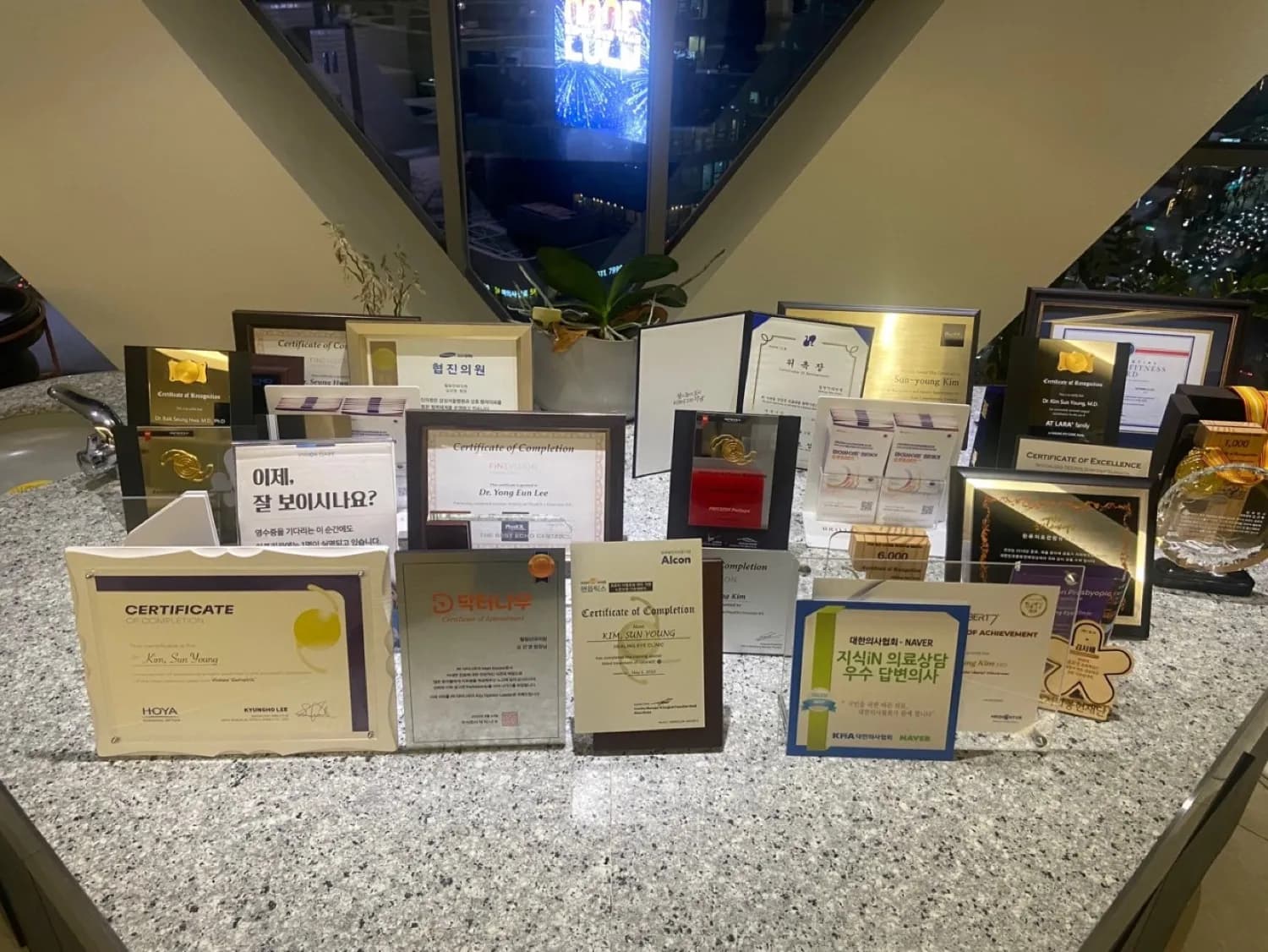
The Friday evening hours help people who land on a Friday afternoon. Interpreters for English, Japanese and Traditional Chinese are on site, so the exam results and the surgical plan are explained in a language you follow before you decide anything. Healing Eye is registered with Korea's Ministry of Health and Welfare as an institution for international patients, and the partner hotel is the O'Cloud Hotel in Seocho-gu, if you'd rather not search for a room yourself.
Keep the second half of the trip quiet. For the first one to two weeks you'll use the prescribed drops on schedule and avoid rubbing your eyes, saunas, swimming and eye makeup, so a jjimjilbang night or a beach stop belongs on a different trip.
Risks and side effects when home is a flight away
Most people feel dryness, slight tearing or grit for a few hours, and some dryness lasts weeks; artificial tears usually manage it. Less often there's night glare, a slight over- or under-correction, or vision that drifts back. Flap problems are uncommon, and rubbing your eyes early is the easiest way to invite one.
The FDA's guidance on what to expect after LASIK describes the same pattern: discomfort and fluctuating vision early on, and a prompt call to your eye doctor if pain or worsening vision appears instead of fading. Recovery speed and the final result differ from person to person, and whether your eyes are suitable at all is decided at the in-person exam.
Distance is the real limit here. If something feels off three weeks after surgery, your next-day check in Seoul is long past, and the first person to look may be an ophthalmologist near home.
None of that makes complications impossible. It means there's a plan for them.
If the risk part is the one keeping you up at night, put it into one message: send the question you'd ask first, plus your current prescription, on WhatsApp.
Back home: follow-up when your surgeon is in Seoul
Follow-up runs on two tracks once you've flown home: regular check-ups and the lifetime policy on the Seoul side, and a local ophthalmologist for anything that can't wait. Set up the local side before you leave, while nothing is worrying you yet.
The U.S. Centers for Disease Control and Prevention's advice for medical travelers is practical here: get copies of your medical records and arrange follow-up care at home before you travel. For LASIK, that means your pre-op measurements (thickness, topography, prescription), the type of procedure and your drop schedule. A local eye doctor reading those records starts from facts instead of guesswork.
Keep the first two weeks' rules going at home: drops on time, no rubbing, no swimming or sauna, no eye makeup for the advised period. Severe pain, vision that gets worse rather than better, or a red eye with discharge are reasons to see a local doctor the same day, because nobody can examine your eye from Seoul. If your vision drifts months or years later, LASIK/LASEK revision starts with finding the cause.
When LASIK isn't the answer
Sometimes LASIK isn't worth it for your eyes while correcting your vision still is. Perfect Healing LASEK works on the surface without a flap and suits thinner corneas or frequent impact, with a longer, more uncomfortable recovery.
An implantable lens (ICL) corrects vision without reshaping the cornea, which is why it comes up for strong prescriptions; ICL versus LASIK for high myopia lays out that comparison.
The alternative changes the trip as well. LASEK's slower recovery means more days of blurry, scratchy vision to plan around, so the worth-it question gets asked again with the new calendar in hand.
If a parent or partner reads Korean, they can follow along on the Clear LASIK page of our Korean site, which describes the same procedure.
When you're ready to test the trip, send a photo of your latest prescription and the dates you could fly on WhatsApp.
Frequently asked questions
Can I have the LASIK exam and the surgery on the same trip?
Often, yes. Exam and surgery can often happen on the same visit, though some eyes need adjustment after the detailed exam. Allow a few days so the next-day check fits before your flight; the exact count is confirmed in consultation.
Does LASIK hurt?
Numbing eye drops are used, with no injection, and during surgery most people feel only mild pressure. For a few hours afterwards dryness, slight tearing and a foreign-body sensation are common, and they usually settle soon.
Is Custom LASIK worth it over Clear LASIK?
Not for everyone. Personal Custom LASIK analyses higher-order aberrations and is designed with night vision and contrast in mind, which matters most for people bothered by glare and halos. If your eyes show few aberrations, standard LASIK or LASEK may do well on their own.
Will my vision stay the same years after LASIK?
When suitability is judged with accurate testing and the prescription is stable at surgery, results tend to last. Eyes still change with age, and some vision can drift back, so regular check-ups matter. A revision is possible for some eyes after a detailed exam.
What should I bring to the first LASIK appointment in Seoul?
Bring your current glasses, your latest and an older prescription, details of the contact lenses you wear and when you stopped, and a list of eye conditions or medications. Your flight times help too, so the next-day check is planned before you leave.
Message us on official LINE / WhatsApp for a special offer
Your exact candidacy and cost are confirmed in a free 1:1 consultation.