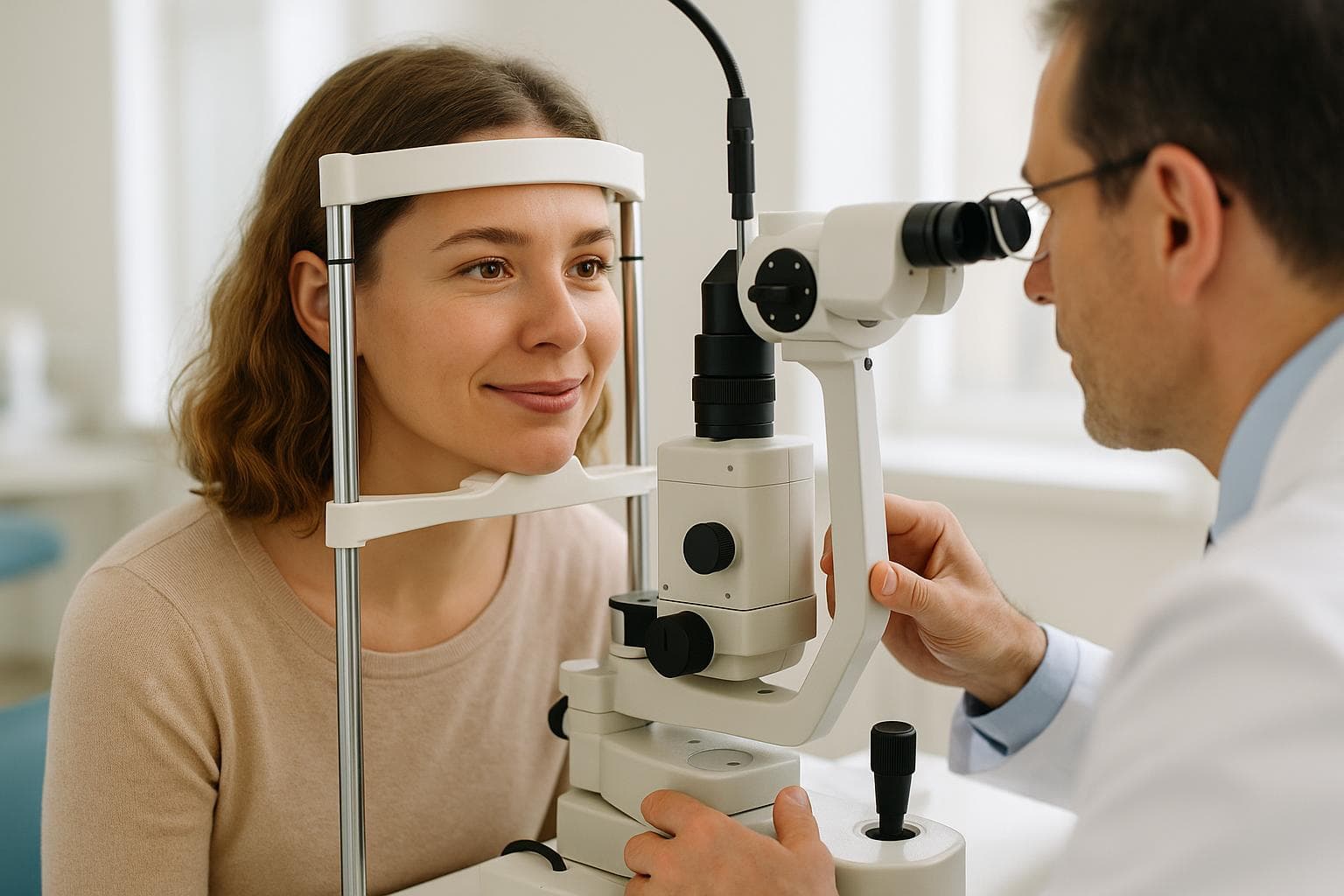
Is There a LASIK Age Limit? What I Actually Tell My Patients
Patients ask me almost daily about the LASIK age limit. Here's the honest answer on how young is too young, what happens after 40, and why your age alone never decides it.

Dr. Kim Sun-young, Director
Cornea · Glaucoma · Cataract
Contents
"Dr. Kim, I'm 38 — is it already too late for me to get LASIK?"
She had clearly been worrying about this for a while before she typed it. And on the same afternoon I'd answered a 20-year-old asking the opposite question: "Am I too young?" Both of them assumed there was a single magic age, a gate that opens and shuts. There isn't. So let me give you the answer I give in the exam room, which is more useful than a number.
The "LASIK age limit" is really about stability, not birthdays
When people search for a LASIK age limit, they're picturing a rule like a driving licence. The truth is quieter: your eyes have to have stopped changing.
In your teens and very early twenties, the eyeball can still be lengthening, which is why a prescription keeps creeping. If I reshape a cornea that's chasing a moving target, the correction I make today may be wrong in two years. That's not a good trade for an irreversible procedure.
There's no universal age that qualifies or disqualifies you. What I look for is a prescription that has held steady for about a year, plus a cornea healthy enough to support the correction.
So when a 19-year-old asks me, my first move isn't to check the calendar. It's to compare this year's glasses prescription with last year's. If they match, age was never the obstacle.
Too young: why I sometimes say "wait"
I've gently turned people away, and they're often surprised. A student in her first year of university came in keen to be glasses-free before an exchange semester. Her numbers had jumped noticeably in eighteen months. Operating then would have meant a real chance of her needing a touch-up — or glasses again — soon after.
For younger eyes that are still shifting, especially in children, laser surgery is the wrong tool entirely. There I'd raise something like our dream lens (ortho-k) programme, which reshapes the cornea overnight without surgery and can be stopped at any time. Reversible options suit a moving prescription far better than a permanent one.
The twenties and thirties: usually the widest window
This is the stretch where most of my refractive patients sit, and for good reason. The prescription has typically settled, the cornea is healthy, the tear film is robust, and presbyopia hasn't arrived yet. If your eyes are otherwise suitable, you generally have the most procedures open to you — Clear LASIK, Custom LASIK, SMILE, LASEK — and the decision comes down to your cornea and lifestyle rather than your age.
It's worth saying that "settled" still has to be measured. I've seen people in their early thirties whose prescription nudged again after a pregnancy or a big change in screen habits, so I check rather than assume.
After 40: the presbyopia conversation
This is the part patients most often haven't braced for, so I'm always upfront about it.
LASIK fixes the focusing power of your cornea for distance. Presbyopia is a separate, completely normal change where the lens inside your eye stiffens and near focus gets harder — and it shows up for everyone somewhere around the mid-forties, regardless of whether you've had LASIK.
So a 46-year-old can have flawless distance vision after LASIK and still reach for reading glasses for a menu. That's not a failed surgery; it's two different mechanisms. What I do instead is plan around it. Sometimes that means standard correction and accepting readers for close work. Sometimes it means discussing a blended approach. And sometimes, if presbyopia is already significant, a lens-based solution serves you better than laser.
Fifties and beyond: the question shifts to the lens
There's no upper age at which I refuse to look. But once you're well into your fifties, the more meaningful question is often the lens inside the eye, not the cornea on the outside.
If an exam shows the early haze of a cataract starting to form, reshaping the cornea would be solving the wrong problem — you'd correct your focus now and still need lens surgery later. In those cases I'll often steer the conversation toward a lens-based procedure, where we treat the actual source. This is exactly why I won't decide anything from your age alone.
The honest limitation
Here's what I can't do, and won't pretend to: I cannot tell you over a message whether your age plus your eyes add up to a green light. Two 35-year-olds can walk in with identical prescriptions, and I'll clear one for surgery and send the other home — because one has a generous corneal thickness and a healthy tear film, and the other doesn't.
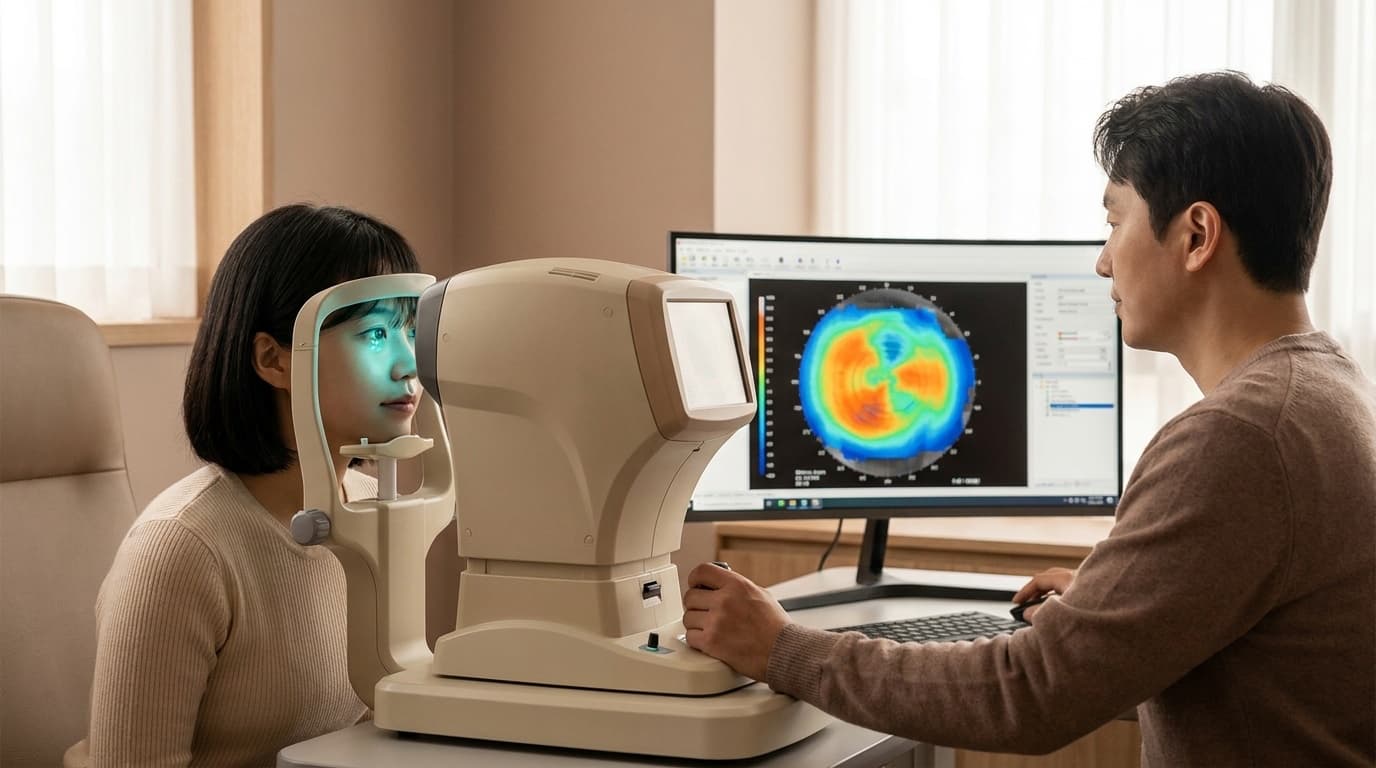
Age is one line in a longer report. I need to measure your corneal thickness and topography, confirm your prescription really has been stable, check your tear film and pupil size, and look at the lens inside. Only then can I responsibly say yes, not yet, or let's choose a different procedure. If anyone guarantees you a result based purely on being "the right age," I'd be cautious.
Planning a visit from abroad
If you're weighing this from another country, a few practical notes. Plan for at least 3 days and 2 nights in Seoul, mostly because the next-day check-up matters and you shouldn't fly the same day you have surgery. We're a one-minute walk from Sinnonhyeon Station in Gangnam, and roughly 70 minutes from Incheon Airport. You'll also need to stop wearing contact lenses for some days before the exam, and soft and hard lenses differ — so message us first so the trip isn't wasted.
And one thing I want every overseas patient to know: at Healing Eye, international patients pay exactly the same fee as Korean patients. No tourist mark-up, ever.
You can write to me first, for free, on our official WhatsApp or LINE, in English. Send your age, your current prescription, and how long it's been steady. I'll give you an honest first read — and if your eyes aren't ready, or a different procedure fits you better, I'll say so plainly.
— Dr. Kim Sun-young, Medical Director, Healing Eye Clinic
Frequently asked questions
Is there a strict minimum age for LASIK?
Most surgeons, myself included, want you to be at least 18, and ideally your prescription should have stayed roughly stable for about a year. The number on your ID matters less than whether your eyes have stopped changing. I have turned away 19-year-olds whose prescription was still drifting, and operated comfortably on people in their early twenties whose numbers had been flat for two years.
Is 40 too old for LASIK?
No. I operate on patients in their forties regularly. The honest catch is presbyopia — the near-focus change that arrives for everyone around the mid-forties. LASIK can correct your distance vision beautifully and still leave you needing reading glasses, because those are two different problems. I explain this clearly before we proceed so there are no surprises.
What is the oldest age you would do LASIK?
There is no hard cut-off, but somewhere in the fifties and beyond, the more important question becomes the lens inside your eye, not the cornea. If early cataract is forming, a lens-based procedure often makes far more sense than reshaping the cornea. We check this during the exam rather than guessing from your birth year.
Can teenagers under 18 ever get LASIK?
Only in rare medical situations, and not for ordinary nearsightedness. A young eye is usually still changing, so operating early often means the prescription returns. For children with progressing myopia we discuss other tools, such as dream lenses (ortho-k), instead of laser surgery.
Does my age change which procedure I should get?
It can. Younger eyes with stable prescriptions have the widest range of options. From the mid-forties onward I weigh presbyopia into the plan, and later still I consider whether the lens itself is the better target. Age is one input among several — corneal thickness, prescription, and tear film all matter just as much.
Message us on official LINE / WhatsApp for a special offer
Your exact candidacy and cost are confirmed in a free 1:1 consultation.