
Presbyopia Correcting Lens Surgery Korea Cost: What You're Actually Paying For, Per Eye
Presbyopia correcting lens surgery Korea cost, per eye and per lens: what our quotes include, what moves the number, and how to compare offers honestly.

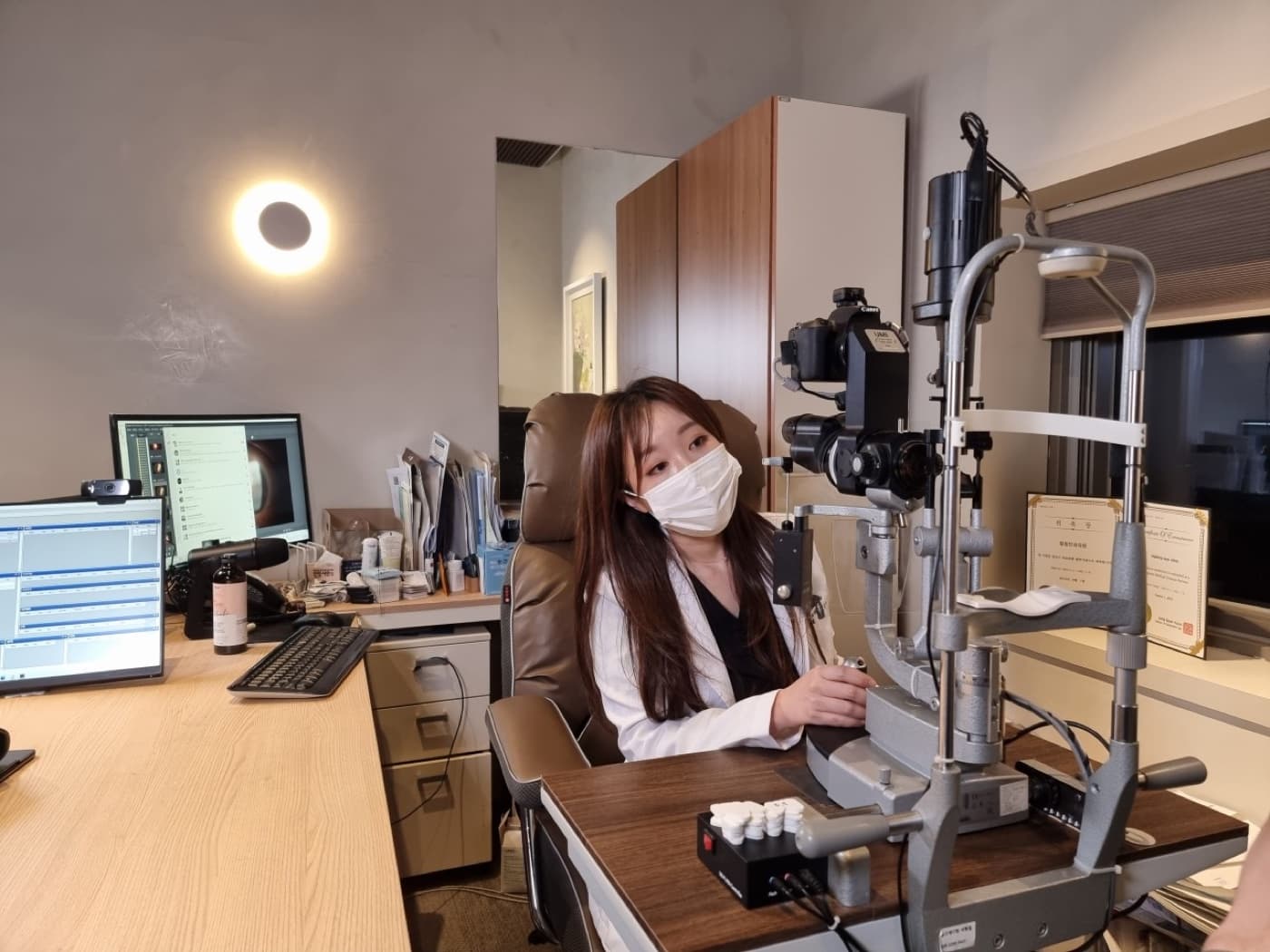
Dr. Kim Sun-young, Director
Cornea · Glaucoma · Cataract
Contents
A patient in Melbourne emailed me last spring with one line: "Three Seoul clinics quoted me three completely different numbers for the same surgery. Are they even quoting the same thing?" They were not. One had quoted a monofocal lens, one a trifocal per eye, one a package for both eyes with the exam bundled in. Same words, three different products.
Presbyopia correcting lens surgery Korea cost is best understood as one dominant variable plus a short list of small ones: the intraocular lens (IOL) you and I choose accounts for most of the number, and everything else — exam, surgery time, medication, follow-up — is comparatively stable. If you understand the lens line item, you can compare any two quotes in Seoul in about five minutes.
In presbyopia-correcting lens surgery, you are not buying an operation — you are buying a lens, and the lens is most of the price.
What a per-eye quote at our clinic actually includes
Our figures are published per eye, because the two eyes are separate decisions. Some patients do both in one trip; some space them a few days apart; a few do one eye and wait. A per-eye number lets you build the total honestly instead of being handed a package you cannot take apart.
What sits inside the quoted lens price: the surgery itself (roughly 15–20 minutes per eye), the surgeon's time, theatre and equipment, the implanted lens, post-operative medications, and the scheduled follow-up visits during your stay in Seoul. What sits outside it: the ₩150,000 full precision exam (currently reduced from ₩400,000), any separate treatment your eyes need before surgery — dry eye management is the common one — and, of course, your flights and hotel.
Our lifetime guarantee policy means lifelong check-ups and a responsibility guarantee with the surgeon who operated on you, under our 1:1 dedicated surgeon system. That matters for cost in a way patients underestimate: when a clinic hands you off to whoever is on shift at your follow-up, small problems get re-quoted as new consultations. I explain how we build a quote line by line in our breakdown of what a Seoul eye surgery price includes, and I would ask any clinic you are considering for the same level of itemization.
The lens table: what each option costs per eye, and who it tends to suit
These are our published per-eye prices. I have added what each lens is for, because a price list without that context is how patients end up paying more for a lens that fits them worse.
| Lens (per eye) | Price | Character | Where it tends to fit |
|---|---|---|---|
| Monofocal IOL | ₩1,250,000 | Single focal distance | Cataract solved, readers still needed; strong choice for heavy night drivers |
| Eyhance / Eyhance Toric | ₩2,500,000 | Enhanced monofocal, extended focus | Wants crisp distance plus some intermediate, accepts readers for fine print |
| LISA tri / LISA tri Toric | ₩3,000,000 | Trifocal family | Broad near–intermediate–far range at our lowest premium tier |
| FineVision | ₩4,000,000 | Trifocal | Balanced range; toric version ₩4,500,000 for astigmatism |
| Intensity | ₩4,000,000 | Multi-focal-zone design | Patients wanting wide range across several working distances |
| LENTIS | ₩6,000,000 | Segmented multifocal | Selected cases where the segmented optic suits the eye |
| Synergy | ₩7,000,000 | Combined EDOF + multifocal | Strong near demand, accepts a higher chance of night halos |
Building your real both-eye total
Toric versions and astigmatism
If you have meaningful corneal astigmatism, an ordinary premium lens will leave it uncorrected and your near vision will disappoint you no matter how much the lens cost. Toric versions exist for this reason. Note that our LISA tri Toric and Eyhance Toric are priced identically to their non-toric versions, while FineVision Toric adds ₩500,000. Astigmatism, in other words, does not automatically inflate your quote here — but it absolutely changes which lens I recommend.
What moves your number besides the lens
Four things, in order of how often they matter:
One eye or two. Obvious, but half of the quotes I see patients comparing are both-eye totals set against per-eye figures. Always normalize before you compare.
Whether you need the lens at all. If your natural lens is still clear and presbyopia is the only issue, presbyopic LASIK or LASEK at ₩2,290,000 for both eyes, or presbyopic Clear LASIK at ₩3,000,000 for both eyes, is a different and less expensive route. It is not a substitute for cataract surgery, and it suits a narrower band of prescriptions and corneas — but for a 47-year-old with clear lenses, it deserves a serious look. The full mechanics of doing both problems in one operation are in our article on combined presbyopia and cataract surgery, and the procedure itself is documented on our presbyopia and cataract treatment page.
Pre-surgical treatment. An unstable tear film distorts biometry, and distorted biometry means lens power error — which is the single most common reason a premium lens disappoints. If your exam shows significant dry eye, I will treat it first. That adds days and modest cost, and it is not optional.
Time in Seoul. Exam and consultation, surgery, next-day check. Most patients build this into a single visit; some split the two eyes by a few days. Hotel nights are part of your true cost even though no clinic quotes them.
Why we charge international patients the same as Korean patients
Same Price for All is a written policy here, not a courtesy. The number on our published price list is the number a Korean office worker from Sinnonhyeon pays and the number you pay flying in from Sydney or Frankfurt. Interpreter support in English, Japanese and Traditional Chinese is included, not surcharged.
I hold that line for a practical reason. The moment a clinic prices foreigners differently, the quote stops being a clinical document and becomes a negotiation — and negotiated quotes drift toward whichever lens carries the fattest margin. If my recommendation cannot survive the fact that you pay the same as everyone else, it was not a clinical recommendation.
A quote that changes based on your passport is a sales figure, not a treatment plan.
How to compare three Seoul quotes honestly
Ask each clinic these five questions in writing:
- Which specific lens, by brand name, and why that one for my eyes? "Premium multifocal" is not an answer. Our head office keeps a Korean-language comparison of the premium intraocular lenses we use if you want to see the platforms side by side.
- Is that price per eye or for both?
- Is the precision exam included, and what happens to that fee if I'm told I'm not a candidate?
- Who performs the surgery, and will that same surgeon see me at every follow-up?
- What is the written policy if the refractive result lands off target — a laser enhancement, a lens exchange, or nothing?
If the trade-off between glasses independence and night-vision quality is still unclear to you, read our honest surgeon's comparison of multifocal and monofocal IOLs before you commit to a price tier. And if you want the lens economics laid out in more detail than this article allows, our guide to multifocal lens implant pricing in Korea goes deeper into the per-platform differences.
The cost of choosing the wrong lens
This is the part price comparison sites leave out. A premium lens implanted into an eye that should not have received one is the most expensive outcome in this entire article, because the money is spent and the daily experience is worse.
Multifocal and EDOF lenses split or stretch incoming light. That is how they give you near and far from one lens, and it is also why some patients notice halos or starbursts around headlights, reduced contrast in dim conditions, and an adaptation period that can run weeks to months. Most patients settle. Some do not. A small number need a laser enhancement or, rarely, a lens exchange — real surgery with real risk. Clouding of the capsule behind the lens can also develop later and require a brief laser procedure. Every intraocular operation carries risks including infection, inflammation, swelling and pressure changes; these are uncommon but they are not zero, and no surgeon can promise you a particular level of vision.
I will decline to implant a multifocal lens when the macula or optic nerve is unhealthy, when the cornea is irregular or suggests keratoconus, when dry eye is destabilizing the measurements, or when your work involves night driving. We do not perform retina or glaucoma surgery here — if the exam finds disease in those areas, I will tell you plainly and refer you rather than sell you a lens.
Send me your recent prescription and any past eye records before you book flights. I would rather tell you by email that the numbers point toward a different procedure than have you cross the world to hear it in my chair.
More on this, answered separately: Presbyopia Surgery Cost in Korea: Laser or Lens, by Age
— Dr. Kim Sun-young, Medical Director, Healing Eye Clinic, Sinnonhyeon, Seoul
Frequently asked questions
How much does presbyopia correcting lens surgery in Korea cost in total?
At our clinic the lens surgery itself is priced per eye, and the published range runs from ₩2,500,000 per eye for an Eyhance lens up to ₩7,000,000 per eye for a Synergy lens, with trifocal options such as LISA tri at ₩3,000,000 and FineVision at ₩4,000,000. A monofocal lens, which corrects the cataract but leaves you in reading glasses, is ₩1,250,000 per eye. Add the ₩150,000 full precision exam, and double the lens figure if you are doing both eyes. So a realistic both-eye total sits somewhere between roughly ₩5.1 million and ₩14.1 million depending entirely on which lens your measurements support.
Do international patients pay more than Korean patients at Healing Eye?
No. Our policy is Same Price for All: the number an international patient is quoted is the same number a Korean patient sees on our price list. There is no foreigner surcharge, no interpreter fee, and no separate 'medical tourism package' price. Interpreter support in English, Japanese and Traditional Chinese is part of the service, not a line item. You can check the published figures yourself on our price list before you ever email us.
Is the follow-up care included, and what happens after I fly home?
The quoted lens price includes the surgery, the medication protocol and the scheduled post-operative checks during your stay in Seoul. Our lifetime guarantee policy means lifelong check-ups and a responsibility guarantee with the same surgeon who operated on you, which matters most for patients who cannot simply drop in. After you fly home, we continue follow-up by LINE or WhatsApp, and we will ask you to have a local eye exam at set intervals and send us the results. If something needs to be examined in person, you would need to plan a return trip or be seen locally — that travel cost is yours, and you should budget for the possibility.
Why is one multifocal lens ₩3,000,000 and another ₩7,000,000?
The price difference is the lens platform itself, not the skill of the surgery or the length of the operation. Premium lenses differ in how they split or stretch light, how much intermediate range they give, how they behave at night, and what astigmatism-correcting versions exist. More expensive does not mean better for you — a heavy night driver may do better with a lower-priced enhanced-monofocal or a monofocal than with the most expensive trifocal. I choose the lens from your biometry, corneal topography, pupil size and tear film, and I will recommend a cheaper lens without hesitation when the measurements point there.
Who should not have a presbyopia-correcting multifocal lens?
I advise against multifocal lenses when the macula or optic nerve is not healthy, when the cornea is irregular or shows signs of keratoconus, when dry eye is significant enough to destabilize the measurements, or when a patient drives at night for a living. Very demanding perfectionists who cannot tolerate halos around lights are also poor candidates, and I would rather say that at the exam than after surgery. We do not perform retina or glaucoma surgery here, so if the exam finds macular or optic nerve disease, I will tell you clearly and refer you rather than proceed. Being turned down for a premium lens does not mean you cannot have cataract surgery — it usually means a monofocal is the safer plan.
Can I get presbyopia corrected without lens surgery if I don't have a cataract?
Sometimes, yes. For patients in their 40s and 50s whose natural lens is still clear, presbyopic LASIK or LASEK is an option at ₩2,290,000 for both eyes, and presbyopic Clear LASIK at ₩3,000,000 for both eyes. That is considerably less than a both-eye premium IOL and avoids intraocular surgery, but it does not remove a lens that will eventually cloud, and it suits a narrower range of prescriptions and corneas. The precision exam decides which door is actually open to you; some patients qualify for both and choose based on age and cataract progression.
Message us on official LINE / WhatsApp for a special offer
Your exact candidacy and cost are confirmed in a free 1:1 consultation.