Signature SMILE Pro Korea and reading glasses after 40
Signature SMILE Pro Korea pages describe SMILE with a brand label. A surgeon explains how it works, who it suits, and what it can't do for reading.

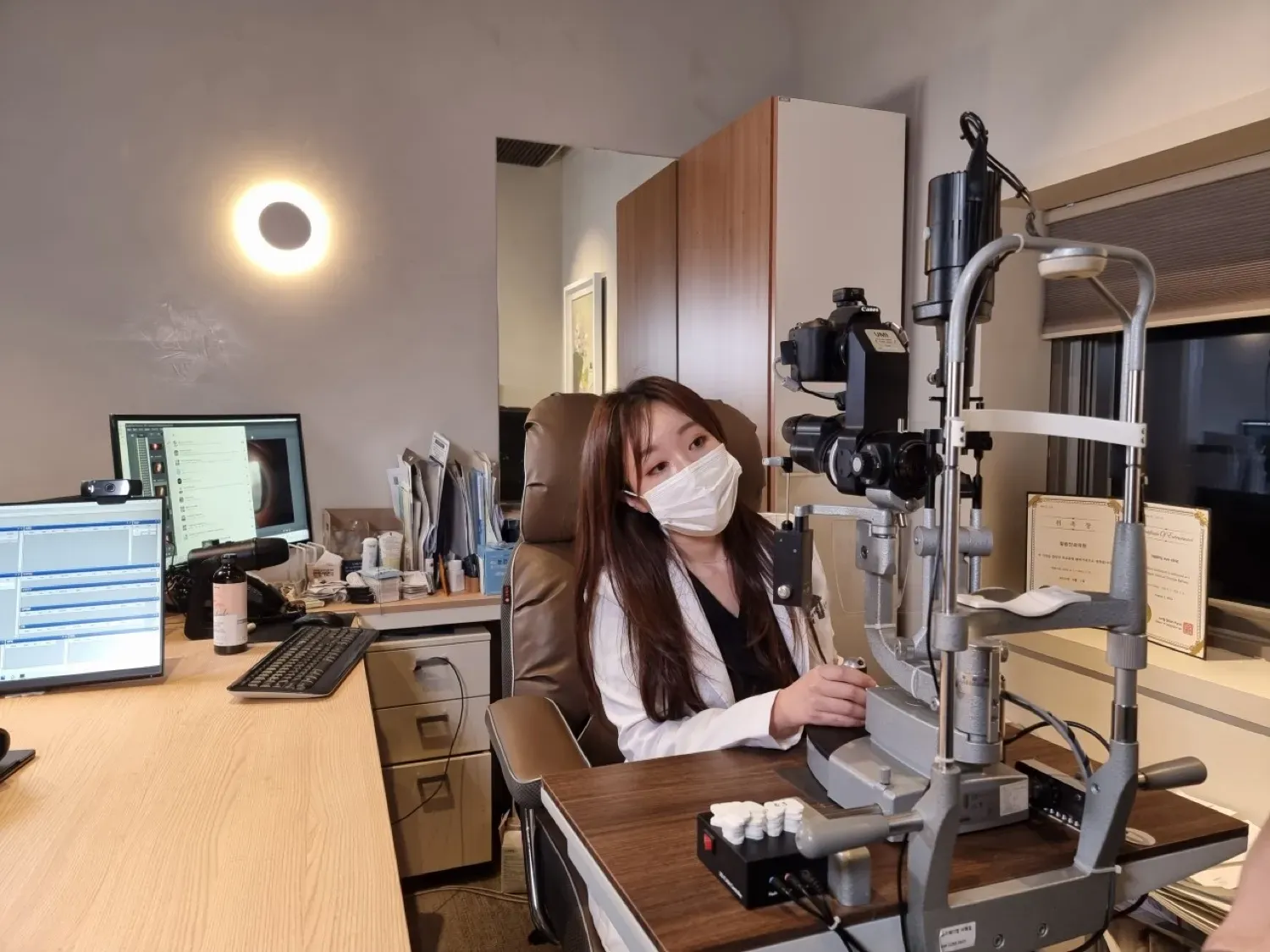
Dr. Kim Sun-young, Director
Cornea · Glaucoma · Cataract
Medically reviewed byDr. Kim Sun-young, Director· Medical Director
Edited by: Dr. Kim Sun-young
Contents
Signature SMILE Pro Korea pages are describing SMILE Pro, a laser correction for nearsightedness and astigmatism done through a 2-to-4 mm opening in the cornea, with "Signature" added as a clinic's own label. If you're in your mid-40s, the question to settle before you fly to Seoul is whether you'll land back home seeing the road clearly and still squinting at your phone. On my own list the procedure is called SMILE, and it sits next to presbyopic LASIK and LASEK for people in their 40s and 50s, so the choice can follow your eyes instead of a product name.
I'm Dr. Kim Sun-young, Medical Director of Healing Eye Clinic in Seoul, and "should i do my lasik in Thailand or Korea" is a question I can only half answer from my side of the map.
I'm Kim Sun-young, Medical Director of Healing Eye Clinic in Gangnam; my specialty is cornea, glaucoma and cataract, and the cornea is the tissue SMILE works on.
What surprises many people over 40 is that correcting distance vision can take something away. If you're nearsighted, you've probably been reading your phone by pushing your glasses up onto your forehead. That trick works because your nearsightedness focuses close objects for you. Correct the nearsightedness and the trick goes with it.
If you're past 40, send your current glasses or contact lens prescription on WhatsApp, along with how far from your face you hold your phone when your glasses are off, and ask whether SMILE alone makes sense at your age. Measuring that distance with a tape takes a minute, and it shows you how much of your reading you already do without lenses.
What does "Signature" add to SMILE Pro?
As a medical term, nothing. "Signature" is a branding word a clinic attaches to its version, so the useful move is to ask that clinic what it changes.
A brand name can still stand for a real protocol, and clinics name things to tell them apart. So when a Signature SMILE Pro Korea listing catches your eye, keep in mind that the questions deciding your result don't depend on the name: is your prescription stable, is your cornea thick and regular enough, and what happens to reading vision at your age.
I've written separately about what SMILE Pro changes and what it leaves the same, and about how the many SMILE names used in Korea map onto each other.
What I offer is listed as SMILE. I don't list a "Pro" or a "Signature" version, and I'd rather you know that before you message us.
How SMILE works, from your side of the laser
Numbing drops go in first, so what most people feel is pressure. A femtosecond laser then shapes a thin disc of tissue, called a lenticule, inside the cornea, and the surgeon removes it through a 2-to-4 mm opening. Taking out that disc changes the cornea's curve, which corrects the nearsightedness and astigmatism. Reinstein and colleagues described the technique and its early results in detail in the journal Eye and Vision in 2014.
Because the front of the cornea is opened only through that small incision, there's relatively less disruption at the surface of the eye. That's why SMILE is associated with relatively less dryness, and why its structural strength suits people who play sports. The procedure takes about ten minutes for both eyes, and most people are back to daily life in one to two days. If you want the full sequence of surgery day, the step-by-step account of SMILE in Korea covers it.
In the first day or two, vision after SMILE can be slightly softer for some people than after LASIK, and it sharpens over the following days. Plan your first evening in Seoul around rest, not sightseeing.
Why does reading get harder after 40, and can SMILE help with it?
SMILE doesn't treat it. Reading gets harder because the lens inside your eye stiffens with age and loses its ability to change focus up close. That's presbyopia, and it happens whether or not your cornea has been reshaped. SMILE works on the cornea, so it leaves the aging lens as it is.
Here's how that plays out. Say you're -3.00 D and 46. Today you read your phone with your glasses off. After SMILE corrects you for distance, the road signs are sharp, and you'll likely need reading glasses for the phone. Some people are happy with that trade. Others feel they've swapped one pair of glasses for another.
There are other paths. Presbyopic LASIK and LASEK, which are on my treatment list for people in their 40s and 50s, aim to give you more usable near vision. Not everyone adapts to it, and depth perception can feel different, so it is usually tried with contact lenses first.
If you're in your 50s and an exam shows the natural lens is already starting to cloud, reshaping the cornea may not be the right step at all. In that case, lens surgery that corrects presbyopia during cataract surgery with a multifocal lens is the conversation to have.
Who SMILE suits, and who I'd point elsewhere
SMILE tends to fit eyes with stable nearsightedness, with or without astigmatism, and a cornea that is thick enough and regular on its map. It also suits people whose work or sport puts their eyes at risk of knocks, and people who worry about dryness.
Stability comes first. The US Food and Drug Administration's patient guidance treats a glasses or contact lens prescription that changed within the past year as a reason to hold off on laser vision correction, and the same thinking applies to SMILE.
I'd steer you away from SMILE, at least for now, if your corneal map shows irregularity or signs of keratoconus, if your dry eye is already severe, if you're pregnant or breastfeeding, or if you're farsighted, since SMILE is mainly used for nearsightedness. For a very high prescription, especially with a cornea on the thin side, an implantable lens (ICL) is worth comparing alongside SMILE.
ICL corrects vision with a lens placed inside the eye and leaves the cornea's shape alone, though like any surgery inside the eye it carries its own small risks, such as raised eye pressure or, over the long term, earlier cataract. If SMILE isn't right for you, I'll say so clearly and explain the alternatives.
What are the risks, and what if they show up after you fly home?
Like any laser vision correction, SMILE can leave you with dry eyes, glare or halos at night, or a correction that lands a little over or under target. Most early symptoms fade over weeks to months, and how your eyes respond is individual. What to plan for is where you'll be when you need a check.
Risks and side effects to know
In the first days, a gritty or watery feeling and light sensitivity are common. The US FDA's guidance on what to expect after laser vision correction mentions dryness and glare or halos in the early period, and for most people these settle as the cornea heals.
Less often, dryness lasts longer and needs ongoing treatment, or the correction falls short or overshoots enough that glasses or a later enhancement come up. Rarely, the lenticule doesn't separate cleanly during surgery, or inflammation develops at the layer inside the cornea where the disc was removed; both are managed best by the surgeon who knows what was done.
See an eye doctor the same day, wherever you are, if pain gets worse instead of better, vision drops suddenly, or the eye turns red with discharge. Whether SMILE suits you is decided at the in-person exam.
On our side, the surgeon who examines you is the one who operates and follows up, and you can read how that 1:1 dedicated-surgeon system is set up on our English homepage.
How many days in Seoul should you plan for SMILE?
Plan for the exam, the surgery and an early check afterward; the exact number of days depends on your exam, so confirm it at your consultation before you book flights. How long to leave out contact lenses before the exam is also something to confirm then, since lenses change the corneal shape the measurements rely on.
We're at 470 Gangnam-daero, one minute from Sinnonhyeon Station. Hours are Monday to Thursday 10:00 to 18:30, Friday until 21:00, Saturday 10:00 to 14:00, with lunch from 13:00 to 14:00, and we're closed on Sundays and public holidays. The Friday late hours can help if you land in the afternoon. Exam results and the surgical plan are explained with an English interpreter, so you understand both before deciding.
And if you've been reading forum threads, the SMILE questions people ask on Reddit may cover the ones still on your list.
When your travel window is clearer, send it on WhatsApp along with the date and report of your most recent eye exam, and ask the one thing that would change your mind about going ahead. That report also shows you how much your prescription has moved lately, which is the first thing SMILE depends on.
Frequently asked questions
Does SMILE hurt?
Numbing drops are used, so most people describe pressure and a moment where vision dims while the eye is held steady. Some scratchiness for a few hours afterward is common, and it usually eases by the next day.
Can SMILE correct astigmatism?
Yes, SMILE corrects myopic astigmatism along with nearsightedness. Higher amounts need accurate alignment during treatment, and whether yours falls within range is part of the exam.
Can I still have cataract surgery later if I have SMILE now?
Yes. SMILE doesn't rule out cataract surgery later in life. As with other laser corrections, keep your pre-surgery prescription and measurements, because the lens calculation for a future cataract operation is more accurate when the surgeon knows what your cornea looked like before.
When can I exercise or swim after SMILE?
Light activity often resumes within days, but swimming, saunas and eye rubbing are usually avoided for a period after any laser vision correction. Your surgeon gives you the time frame for your eyes before you leave Seoul.
Are both eyes done on the same day?
SMILE is usually done on both eyes in one session, and the procedure takes about ten minutes for the pair. Your exam can still turn up a reason to plan it differently.
Message us on official LINE / WhatsApp for a special offer
Your exact candidacy and cost are confirmed in a free 1:1 consultation.