Is LASIK painful? What the first 24 hours really feel like
Is LASIK painful? Numbing drops mean pressure, not pain, during surgery; the sore hours come later. Here is the timeline and who should wait.

Dr. Kim Sun-young, Director
Cornea · Glaucoma · Cataract
Medically reviewed byDr. Kim Sun-young, Director· Medical Director
Edited by: Dr. Kim Sun-young
Contents
Is LASIK painful? For most people the procedure itself is not, because numbing drops do the work and what you feel is pressure, while the sore, gritty hours come afterward and ease as the day goes on. If you're flying in, the worry is usually recovery before the flight home, and that is easier to plan once you know the timeline below. At Healing Eye in Gangnam, Clear LASIK is handled by one dedicated surgeon from the first exam through aftercare, and the same surgeon checks your recovery the next day.
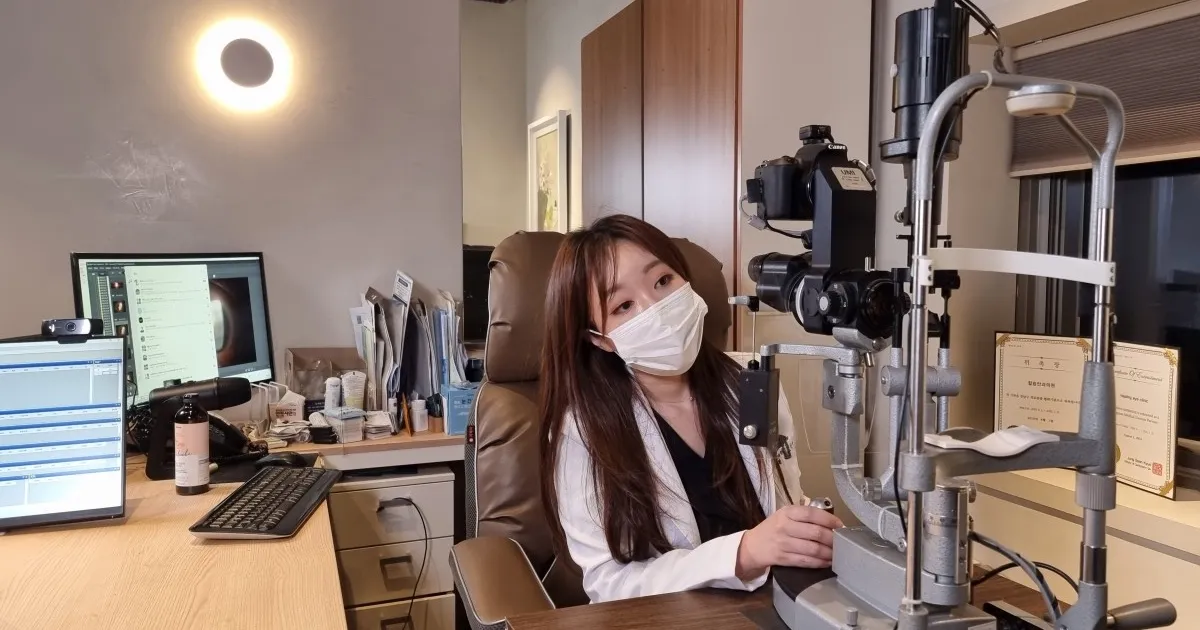
I'm Dr. Kim Sun-young, Medical Director at Healing Eye Clinic in Seoul, where I work in cornea, glaucoma and cataract care, and this is what I explain when patients ask about pain in the consultation room.
If you want to know how many days to plan around the exam and the next-day check, send your travel dates and a photo of your latest prescription on WhatsApp.
What does LASIK feel like while it is happening?
Numbing drops are the only anaesthetic. There is no injection, and most people feel a mild sense of pressure instead of sharp pain. Both eyes together take about ten minutes.
When someone types "is lasik painful" into a search box, they usually mean three different things: the procedure, the first night, and the week after. I'll take them in that order. The pressure comes mainly while the thin corneal flap is created and lifted. The laser time that follows is brief, and the flap is laid back down without stitches. The U.S. Food and Drug Administration's patient guidance also describes numbing drops and some pressure during the procedure.
People who feel anxious tend to read pressure as pain. Knowing in advance what each step feels like takes a lot of that away.
The first 24 hours, hour by hour
The sore part is the few hours after surgery: dryness, slight tearing and a feeling that something is in the eye. These usually settle soon, and most people see clearly from the next day.
| When | What you may feel | What helps |
|---|---|---|
| First hours after surgery | Dryness, tearing, foreign-body sensation | Rest with your eyes closed, no rubbing |
| That evening | Gritty or watery eyes, often easing | Prescribed drops on schedule |
| Next day | Clearer vision for most people | The follow-up check with the same surgeon |
The one thing that really hurts, and also does harm, is rubbing. A freshly laid flap needs a little time to settle, so "don't rub" is the rule I repeat most. If an itch is bothering you, a prescribed drop is the answer.
Which parts of recovery stay uncomfortable?
Dryness is the main one. In the first one to two weeks, temporary dryness is common and is managed with artificial tears and the drops you are prescribed. Saunas, swimming and eye makeup are usually off the list for the advised period.
Risks and side effects to know
Dry eye is also why I measure the tear film before surgery rather than after. Together with corneal thickness, corneal topography and pupil size, it tells me whether the eye will cope with the days after a flap-based procedure. If you're planning a flight, the practical side is covered in flying after LASIK. Contact lens stop days and the length of stay are confirmed at your consultation.
When pain is a warning, and who should wait
Discomfort that fades hour by hour is expected. Pain that grows instead of fading, a sudden drop in vision, or strong redness with light sensitivity is a reason to contact the clinic or a local ophthalmologist without waiting. The American Academy of Ophthalmology and the FDA both list dry eye, thin or irregular corneas and unstable prescriptions among the reasons LASIK may not suit someone.
In my own exam, these findings change the plan:
- A thin cornea, or a topography map showing irregularity or signs that suggest keratoconus. LASEK or an implantable lens (ICL) is usually safer than flap-based LASIK.
- Significant dry eye, pregnancy or breastfeeding, or a prescription that hasn't stabilised. The timing may need to change.
- Frequent strong impact to the eyes, as in combat sports. A flapless method may suit better.
How much it hurts also varies from person to person, and I can't predict pain thresholds from an exam. For more on the numbers behind safety, see the four numbers I check first.
If you have a recent prescription card or eye exam report, send a photo on WhatsApp along with the window you're considering.
Does LASEK or SMILE hurt more than LASIK?
Surface procedures such as LASEK tend to be sorer for longer, because the surface of the cornea itself has to heal. The American Academy of Ophthalmology describes the same pattern. How long the soreness lasts is laid out in LASEK pain, day by day, and the full comparison is in LASEK vs LASIK, explained by the surgeon.
SMILE works through a 2–4 mm micro-incision, and daily life usually resumes in one to two days. Which one fits depends on corneal thickness and lifestyle more than on pain, and SMILE vs LASIK for people flying in walks through that choice.
Planning the trip around the sore hours
The clinic is a one-minute walk from Sinnonhyeon Station and about 70 minutes from Incheon Airport, so the sore evening can be spent close by. On Fridays the clinic is open until 21:00, and English, Japanese and Traditional Chinese interpreters are on site for the exam and surgical plan.
Clear LASIK recovers quickly enough for a short trip, but I suggest allowing a few days for the detailed exam and the post-op check. How that fits a work calendar is in LASIK in Korea: nights in Seoul versus days off, and why LASIK is so common in Korea explains why the routine is familiar to Korean clinics.
To start, send a photo of your latest prescription and the dates you're thinking of on WhatsApp. The team replies on WhatsApp about how the exam, the surgery day and the next-day check can sit inside your trip, so you can book flights around them.
Frequently asked questions
Will I be awake during LASIK?
Yes. Numbing drops are used instead of an injection, and the procedure for both eyes takes about ten minutes. During it you feel mainly a mild sense of pressure.
What should I do if my eye itches in the first days?
Use the drops you were prescribed and artificial tears as advised, and keep your hands away from the eye.
Do anxious people feel more pain?
Anxiety tends to make pressure feel sharper, so it helps to hear each step explained before the day. Pain tolerance differs between people, and it cannot be measured in advance.
How many days should I plan in Seoul?
Clear LASIK recovers quickly, but a few days are worth allowing for the detailed exam and the post-op check. Contact lens stop days and the exact length of stay are confirmed at your consultation.
Which eyes should not have flap-based LASIK?
Thin corneas, irregular topography or signs suggesting keratoconus, significant dry eye, pregnancy or breastfeeding, and unstable prescriptions all call for a different plan or different timing. The exam decides which applies.
Message us on official LINE / WhatsApp for a special offer
Your exact candidacy and cost are confirmed in a free 1:1 consultation.