
Korea vs Japan LASIK Quality: What Actually Differs, and What Doesn't
Korea vs Japan LASIK quality, compared by a Seoul surgeon: one clear option table, the trade-off each choice asks for, and who should not fly for surgery.

Contents
"I live in Nagoya, I speak decent Japanese, and I could have this done twenty minutes from my apartment. So why would I get on a plane to Seoul?"
That came from a 31-year-old Australian teacher last spring, and it is one of the fairest questions I get. She had about -5.25 with 1.75 diopters of astigmatism, had priced surgery in two Japanese clinics, and wanted to know whether flying here bought her anything real or just a nicer waiting room.
Korea vs Japan LASIK quality, assessed honestly, differs far less between the two countries than it does between two clinics on the same street in either one. Both countries train ophthalmologists to a high standard, both regulate excimer and femtosecond platforms, and the lasers themselves come from the same handful of German, Swiss, American and Japanese manufacturers. What changes an outcome is who reads your corneal topography, how much of your correction is designed around your specific eye, and whether anyone is still responsible for you three months later. So the useful question is not "which country." It is "which of my realistic options asks for a trade-off I am willing to make."
Country is a weak predictor of surgical quality; screening rigor, treatment design, surgeon continuity and aftercare access are the strong ones.
What "quality" means once you strip out the marketing
When I audit my own results, I look at four things, and you can ask any clinic in Seoul or Tokyo about all four in a single email.
Screening rigor. How many patients does the clinic decline? A practice that operates on nearly everyone who walks in is not being generous, it is skipping a step. I want corneal thickness and topography, pupil size in the dark, tear film quality, intraocular pressure and endothelial cell count before I say yes to anyone. The findings that make me refuse are specific and I list them plainly in my breakdown of who is a LASIK candidate and who is not — read that before you book any flight, because if your topography shows early keratoconus, no country's laser will fix that.
Treatment design. Two eyes with the same -3.00 prescription do not focus light identically. Higher-order aberrations, pupil diameter and optical zone choice decide how your vision looks in a dim parking garage, not just how you read a chart at noon.
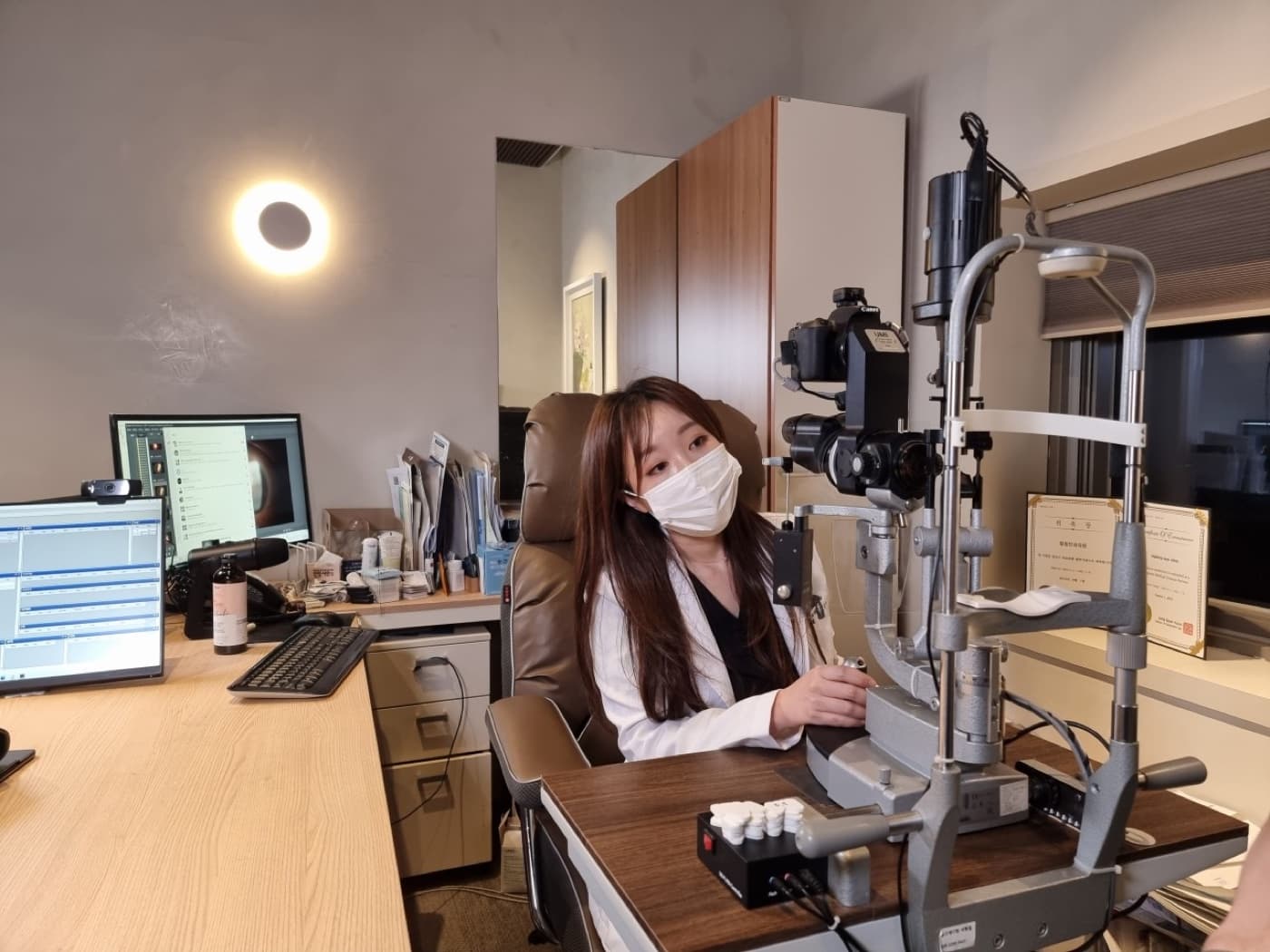
Surgeon continuity. In some high-volume practices in both countries, the doctor who examines you is not the doctor who operates. Our policy is one dedicated surgeon from exam through surgery to aftercare, because the person who read your scans should be the person holding the laser.
Aftercare. This is where flying abroad genuinely costs you something, and I will come back to it.
Your four realistic options, side by side
| Option | Suits you if | The trade-off it asks | Don't choose it if |
|---|---|---|---|
| Laser surgery at home in Japan | You want your surgeon reachable by train for the next two years, and your Japanese is good enough for a complication conversation | Usually a narrower menu at one clinic; you compare fewer designs and price transparency varies | Your exam there showed borderline findings and no one offered you a second reading of the topography |
| Flap-based Personal Custom LASIK in Seoul | Adequate corneal thickness, stable prescription, and you want the fastest return to normal life | A flap exists for life; recovery is quick but you must fly with the discipline to use drops and attend follow-up remotely | You do judo, boxing, rugby or heavy manual work with eye-impact risk |
| Flapless Clear SMILE LASIK in Seoul | Moderate myopia with a cornea that supports lenticule extraction, and you want no flap | Slightly slower sharpening of vision in some patients; astigmatism design is less finely tunable than wavefront LASIK | Your correction or corneal shape falls outside SMILE's candidacy range |
| Stay in glasses and contacts for now | Prescription still moving, dry eye unresolved, or you simply are not ready | You keep the daily cost and hassle of lenses | Contact lens intolerance is already damaging your corneal surface and quality of life |
I include that last row on purpose. "Not yet" is a legitimate medical plan, and I give it to patients most weeks.
Where Korea and Japan genuinely differ
Volume, and what volume does to you
Korea performs a very high number of refractive procedures relative to its population. That has two edges. The upside is real: surgeons here see unusual corneas often, and equipment cycles get refreshed because competition is fierce. The downside is equally real: a market this competitive also produces fast-lane clinics where the consultation is a sales conversation and the exam is thin. Volume is not a quality claim. It is a reason to look harder at how a specific clinic screens.
Money, and what the number actually contains
Patients arriving from Japan usually tell me their local quotes were higher, but they also tell me the quotes were structured differently — per eye, in tiers, with the exam and drops itemized separately. Comparing the headline figure alone is how people end up surprised. I go through exactly what sits inside a Korean quote and what quietly gets added in my analysis of whether LASIK is really cheaper in Korea.
Our published figures, both eyes
Aftercare: the honest asymmetry
If you have surgery in Nagoya and your eye stings badly on day nine, you go see your surgeon. If you had it in Seoul, you message us and we arrange a video review — and I still cannot put your eye behind a slit lamp from 1,100 km away. We provide lifelong check-ups and stand behind our work, but before I operate on someone who lives abroad I want a named ophthalmologist near their home who can examine them at short notice. Knowing what is normal on each day helps enormously here, which is why I walk every traveling patient through the day-by-day LASIK recovery timeline before they fly home.
Flap or no flap matters more than Korea or Japan
Once you accept that both countries can do this well, the decision that actually shapes your result is which procedure fits your cornea. Flap-based Personal Custom LASIK gives me a fast recovery and the ability to design around your higher-order aberrations. That aberration work is not cosmetic: large pupils plus a standard optical zone is the classic recipe for halos, and I explain that mechanism in detail in my piece on LASIK and night driving glare. If you box, do contact sports, or work where something can strike your eye, flapless Clear SMILE LASIK removes the flap variable entirely — back to daily life in one to two days for most patients — and our Korean head office page on 3세대 클리어스마일라식 sets out how it works.
Neither is free of consequence. Dry eye that needs treatment for three to six months, temporary night glare, fluctuating vision in the first weeks, and the possibility that some myopia drifts back and you need an enhancement later are all genuine outcomes, not fine print. I would rather you hear that from me now than discover it in week two.
Who should not fly to Seoul for this
I will say this as directly as I can. Do not book the trip if your prescription has shifted meaningfully in the past twelve months, if a previous exam raised keratoconus or an irregular topography pattern, if your cornea is too thin to leave a safe residual bed, if you have active severe dry eye or an uncontrolled autoimmune condition, if you are pregnant or breastfeeding, or if your diabetes is not well controlled. Do not book it if your schedule has no slack — a delayed surgery date because your tear film needs treatment first is a good outcome, not a wasted trip. And do not book it if there is no eye doctor near your home who can see you on a bad day.
How I would decide, in your shoes
Send both clinics — the one near you and the one abroad — the same three questions: what would make you refuse to operate on me, who performs my surgery, and what happens if I need re-treatment in two years. The answers will separate the two options faster than any country comparison. Then get a full diagnostic exam somewhere serious, because your cornea will narrow the menu more than your budget will.
The teacher from Nagoya, for the record, did have surgery here — after we treated her dryness for six weeks first. That delay was the most important part of her plan.
If you send me your existing exam data, I will tell you honestly whether the flight is worth taking, including when the answer is no.
— Dr. Kim Sun-young, Medical Director, Healing Eye Clinic, Sinnonhyeon, Seoul
Frequently asked questions
Is LASIK quality genuinely higher in Korea than in Japan?
I would not claim that, and I think anyone who does is selling something. Both countries have well-trained corneal surgeons, regulated laser platforms and strong safety records, and the lasers themselves come from the same small group of international manufacturers. In my experience the variation between two clinics in the same city is much larger than any average difference between the two countries. What you should compare is the depth of the pre-op exam, who actually performs your surgery, how the correction is customized, and what aftercare you get months later.
How many days do I need in Seoul for laser vision correction?
The core schedule is 1 night, 2 days: a full diagnostic exam in the morning, surgery that afternoon if your results support it, and a post-op check the next day, after which you can fly. Most people are back to ordinary daily life in one to two days after Clear SMILE LASIK, but vision fluctuates for weeks and dryness can linger for months. If your flight home is non-negotiable and there is no room in the schedule for a delay, that is a reason to reconsider the trip, not a detail to squeeze.
What happens if something goes wrong after I fly home?
This is the honest weak point of any surgery abroad, and you should plan for it before you book. We follow international patients by video call and messenger after they leave, and our policy includes lifelong check-ups and a responsibility guarantee, but I cannot examine your cornea through a screen. Before I operate on someone who lives overseas, I want to know which ophthalmologist near their home can see them at short notice for an infection, a pressure spike or a flap problem. If no such doctor exists in your city, having the surgery close to home may genuinely be the safer choice.
Do international patients pay more than Korean patients?
No. Our policy is the same price for everyone, so an international patient pays exactly what a Korean patient pays for the same procedure. Our published figures include a full exam at ₩150,000, Premium LASIK and LASEK at ₩1,990,000 for both eyes and Clear SMILE LASIK at ₩2,700,000 for both eyes. What you should still budget separately is flights, accommodation, and any extra add-on such as corneal cross-linking if your exam indicates it.
Who should not have laser vision correction at all?
A prescription that has shifted meaningfully in the past year, topography suggesting keratoconus or a forme fruste pattern, a cornea too thin to leave a safe residual bed, active or severe untreated dry eye, uncontrolled autoimmune disease, poorly controlled diabetes, and pregnancy or breastfeeding all put laser surgery off the table for now or permanently. Very large pupils with demanding night driving needs are not an absolute barrier, but they change what I am willing to promise about night vision quality. I turn away patients in the exam room every week, and flying in from abroad does not change that answer. That is exactly why the diagnostic exam has to come before any surgical booking.
Should I choose SMILE or LASIK if I'm traveling for surgery?
It depends on your cornea and your life, not on your itinerary. Flapless Clear SMILE LASIK, our SMILE procedure, removes the small risk of late flap displacement, which matters if you do contact sports or heavy physical work, while flap-based Personal Custom LASIK gives me finer control over higher-order aberrations and astigmatism design. Both have candidacy limits, and both carry real risks including dry eye, night glare and the possibility of regression needing enhancement later. I decide with you after seeing your topography, corneal thickness, pupil size and tear film, and if neither suits your eyes I will say so.
Message us on official LINE / WhatsApp for a special offer
Your exact candidacy and cost are confirmed in a free 1:1 consultation.