
LASIK in Korea: A Seoul Surgeon's First-Timer Guide — Including When I Say No
LASIK in Korea, explained by a Gangnam eye surgeon: how it works, who it suits, the exam findings that mean no, surgery day, recovery and real costs.

Dr. Kim Sun-young, Director
Cornea · Glaucoma · Cataract
Contents
"Flights are booked — five days in Seoul. Will you tell me straight if I'm not a good candidate?" — email from a patient in Melbourne, three weeks ago
LASIK in Korea is what most of my international patients ask for by name, usually after ten or fifteen years in contact lenses that quietly stopped being comfortable. I answered that email in two lines: five days is usually workable, and yes, I will tell you — because a real share of people who fly here for laser surgery are better served by a different procedure, or by staying in glasses a while longer. What follows is what I actually say in the consultation room, in order: what the surgery does to your eye, which version suits which cornea, what the exam can rule out, what surgery day feels like, and what the year afterward looks like.
What LASIK actually does — and what "4th-generation" changes
LASIK creates a thin flap in the cornea, lifts it, uses an excimer laser to reshape the tissue underneath so that light focuses on your retina without glasses, and then repositions the flap. Nothing is added. Tissue is removed, which is why corneal thickness is arithmetic rather than opinion, and why the same prescription is safe in one eye and unwise in another.
Fourth-generation Clear LASIK does not change that principle; it changes the engineering around it. The flap is designed thinner and more uniform, and the laser profile is built from your own exam data instead of a standard pattern. A more uniform flap tends to mean steadier visual quality and a shorter settling period. The procedure detail, candidacy and recovery timeline are laid out on our 4th-generation Clear LASIK treatment page, and if you want the version our Korean patients read, the head office publishes a deeper Korean-language Clear LASIK explanation. Laser time is around ten minutes for both eyes, and most patients are back to ordinary daily life in one to two days.
LASIK removes corneal tissue to change your focus — so your cornea's thickness and shape, not your wishes, decide what is possible.
Clear LASIK, Custom LASIK, SMILE or LASEK: your cornea chooses, not you
Patients often arrive having already picked a procedure from a forum. I read the exam first and then tell them which options their eye allows. If your pupils open widely in the dark, if you drive at night for work, or if you have meaningful astigmatism, I pay more attention to higher-order aberrations and often design the correction using wavefront mapping — that approach is described on our Personal Custom LASIK page. If the idea of carrying a corneal flap for life bothers you, or your work involves impact, the flapless option deserves a serious look: see our SMILE flapless surgery page.
| Option | Flap? | Typically considered when | Main trade-off |
|---|---|---|---|
| Clear LASIK (4th gen) | Thin, uniform flap | Adequate corneal thickness; you want the quickest return to daily life | The flap exists for life; impact-heavy sports need discussion |
| Personal Custom LASIK | Flap | Large pupils, night-driving demands, astigmatism, notable aberrations | More measurement, and the result leans heavily on design quality |
| SMILE | No flap; lenticule removed through a small incision | You want to avoid a flap; moderate myopia | Narrower astigmatism range; early visual settling can feel more gradual |
| Perfect LASEK | No flap; surface treatment | Thinner corneas, impact-exposed occupations | Surface healing is slower and the first days are more uncomfortable |
| EVO ICL | No laser on the cornea; lens implanted | High myopia beyond safe laser range, thin cornea, dry eye | Intraocular surgery, higher cost; the lens can be removed or exchanged |
The exam is the appointment that actually matters
What we measure, and why it takes hours
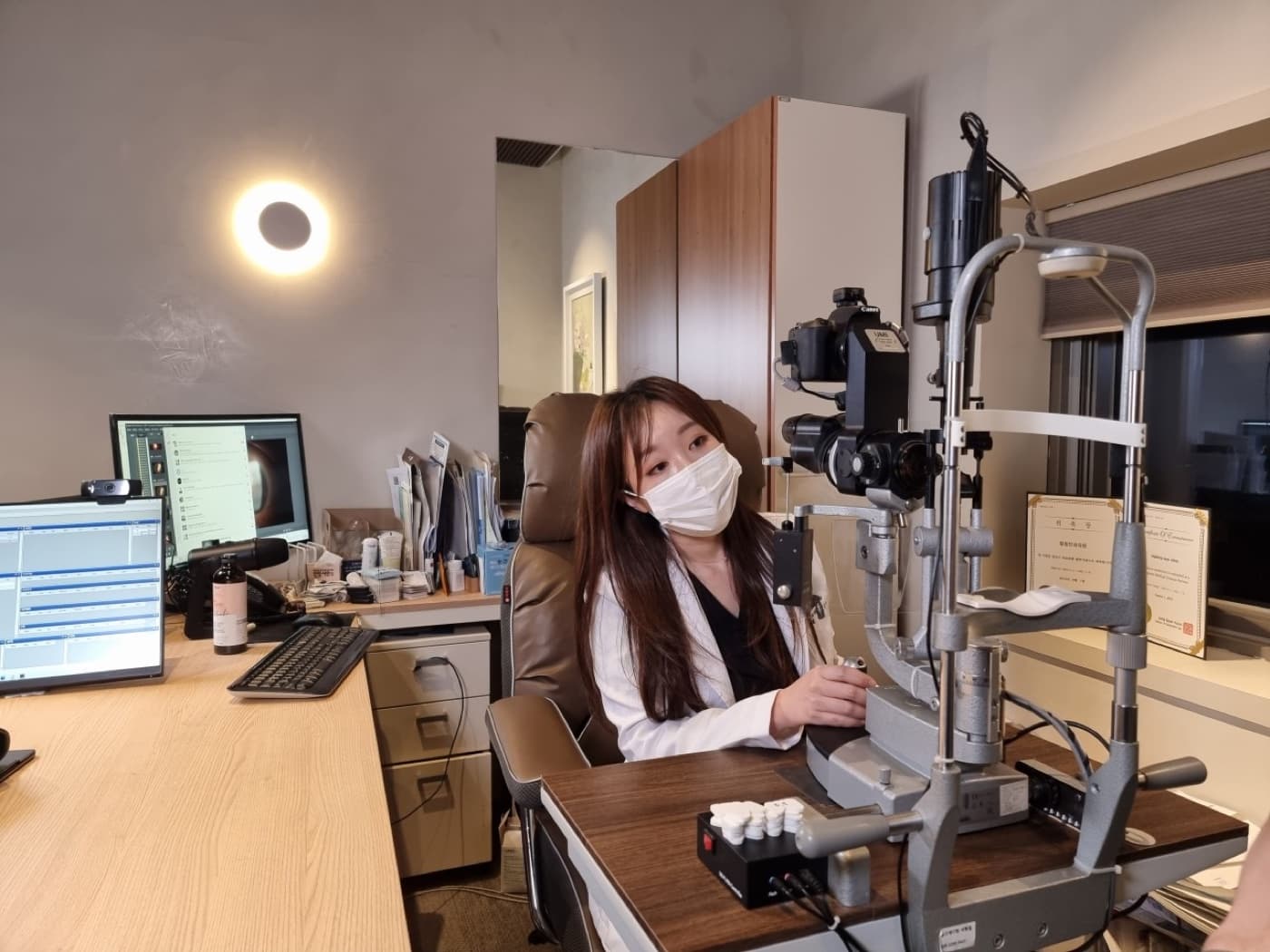
A good outcome begins in the exam room, not the laser room. I assess corneal thickness and topography, pupil size in dim light, tear film quality, intraocular pressure and even the corneal endothelial cells. I calculate how much healthy cornea remains after the planned flap and correction, look for subtle irregularity or early signs of keratoconus, and factor your dark-adapted pupil into the optical zone design. Please stop soft contact lenses before you come — we'll tell you exactly how long based on your lens type, because a lens-warped cornea gives a false map and a false plan.
Who I turn away
I decline surgery for suspicious or irregular topography and suspected keratoconus, for corneas too thin to leave a safe residual bed, for prescriptions that are still changing year to year, during pregnancy or breastfeeding, and where significant dry eye or ocular surface disease is not under control first. Some autoimmune conditions and poorly controlled diabetes also put me off. I've written up the specific findings behind those refusals in our honest guide to LASIK candidacy, and it is worth reading before you book a flight. Nobody should be told that everyone qualifies — they don't.
Surgery day in Seoul, hour by hour
You arrive, we repeat key measurements, and I confirm the plan on the screen with you. Anesthetic drops go in, your eyelashes and lids are draped, and you lie under the laser looking at a fixation light. You'll feel pressure and something cold; you will not see the surgery happening. Laser time is roughly ten minutes for both eyes, and the whole visit runs a few hours with preparation, rest and the first post-op check.
Then comes the part people underestimate. For the rest of that day your eyes water, light feels harsh, vision is milky, and you badly want to sleep — so sleep. Someone should take you back to your hotel; you are not driving, and you should not be reading your phone in a taxi. You'll wear shields at night for the first nights and start a fixed schedule of drops. Most patients wake up on day one seeing far better than they did the previous morning, with fluctuation through the day.
The first week, the first year, and what can drift
Back to daily life in one to two days is realistic for Clear LASIK, but "daily life" is not "finished healing." Expect dryness, some fluctuation in sharpness, and halos or starbursts around headlights and neon at night — these usually ease over weeks to months, though a small number of patients keep some awareness of them. Screens, gyms, swimming pools and makeup all come back on a schedule, not all at once; I map the whole thing out in our day-by-day LASIK recovery timeline so you know what week three is supposed to feel like.
Dry eye is the symptom that most often shapes someone's first three months, and if your tear film was already borderline before surgery it deserves an honest conversation first — that is the subject of my frank discussion of LASIK and dry eye risk. Over years, some eyes regress toward myopia, more often in higher prescriptions. If that happens and enough healthy cornea remains, a re-correction can be considered; the limits of that are explained on our LASIK and LASEK revision page. Regression is uncommon, but it is not zero, and I would rather you hear it from me now than from a forum in five years.
Fast recovery and finished healing are two different dates — plan your travel around the first, and your expectations around the second.
What LASIK in Korea costs, and what the number includes
Our published vision correction prices
The useful question is never "how much" but "how much for what." Ask whether the diagnostic exam, medications, post-op visits and any additional treatment such as cross-linking are inside the quoted figure, and whether the price changes once a surgeon looks at your scans. I break down where the money actually goes in my analysis of whether LASIK is cheaper in Korea. A flight and a hotel do not make surgery a bargain if the plan was wrong for your eye.
How many days to book, and who looks after you at home
Five days in Seoul is my comfortable minimum: exam, surgery, at least one post-op review, and a spare day. We're about 70 minutes from Incheon Airport and one minute from Sinnonhyeon Station, with Japanese, Traditional Chinese and English interpreters on site, so you'll understand your own data before you consent to anything. One surgeon stays with your case from exam through surgery to aftercare, and our policy includes lifelong check-ups and a post-surgical responsibility guarantee. Once you're home, we continue follow-up by video call or messenger, and I ask every international patient to arrange one local eye exam in their own city a few weeks out — distance is not a reason to skip a slit-lamp check.
If you take one thing from this: come for the exam with your mind genuinely open about which procedure you'll leave with. The patients who do best here are the ones who wanted good vision, not a particular surgery — and I will always tell you when the honest answer is to wait, or to choose something else.
— Dr. Kim Sun-young, Medical Director, Healing Eye Clinic, Gangnam
Frequently asked questions
How many days should I stay in Seoul for LASIK?
I ask international patients to plan around five days as a comfortable minimum. Day one is the full diagnostic exam, which takes a few hours because we are measuring corneal thickness, topography, pupil size, tear film, pressure and endothelial cells rather than just your prescription. Surgery is usually possible the following day if the findings are clean, and I want to see you at least once more before you fly. Clear LASIK recovery is quick — most people are back to ordinary daily life in one to two days — but eyes are unpredictable enough that I do not like having no spare day in the schedule.
Is LASIK in Korea cheaper than at home, and do foreigners pay more?
International patients at our clinic pay exactly the same published price as Korean patients — that is clinic policy, not a promotion. Clear LASIK for both eyes is ₩2,700,000 and Premium LASIK & LASEK is ₩1,990,000, with the full diagnostic exam at ₩150,000. Whether that is cheaper than your home country depends entirely on what your local quote includes, and comparing a headline number against a package is how people get surprised. I would rather you read our price list and ask what is excluded than assume anything.
What are the real risks of LASIK, honestly?
The common ones are dry eye for weeks to months, fluctuating vision in the early period, and halos or starbursts around lights at night, which usually ease but do not always disappear entirely. Less common but real: undercorrection or overcorrection, regression of the effect over years, flap-related problems, and inflammation under the flap that needs prompt treatment. The rare and serious concern is corneal instability, which is why I refuse surgery on eyes with suspicious topography or insufficient residual cornea. No surgeon can promise you a specific level of vision, and any clinic that does is telling you something they cannot know.
Does the surgery hurt?
Anesthetic drops are used, so during the roughly ten minutes of laser time most patients describe pressure and a cold, strange sensation rather than sharp pain. The evening afterwards is the part people remember: watering, light sensitivity, a gritty or foggy feeling, and a strong wish to sleep, which is exactly what I want you to do. Discomfort levels differ between people, and surface procedures such as LASEK are noticeably more uncomfortable in the first days than LASIK. I do not describe any surgery as painless, because that is not a promise anyone can make for your nervous system.
What happens if my vision drifts back after a few years?
Laser correction reshapes the cornea, but it does not stop your eyes from changing with age, screen habits or, in some cases, continuing myopic progression. A degree of regression happens in a minority of patients, most often in higher prescriptions. If it does, options include glasses for specific tasks or a re-correction procedure, but enhancement is only possible when enough healthy cornea remains — it is not automatically available. That is one reason I am conservative about how much tissue I use at the first surgery, and why our follow-up policy includes lifelong check-ups.
Can I have LASIK if I have dry eyes or a strong prescription?
Mild dry eye can often be treated and stabilized before surgery, and we do that first rather than operating through it. Significant, poorly controlled dry eye is a reason for me to steer you toward a different plan, because laser surgery temporarily reduces corneal nerve function and can make symptoms worse before they settle. Very high myopia, or a prescription that would leave too little residual cornea, is another common reason I recommend an implantable lens such as EVO ICL instead. I would rather change the plan than force your eye to fit the procedure you arrived asking for.
Message us on official LINE / WhatsApp for a special offer
Your exact candidacy and cost are confirmed in a free 1:1 consultation.