Vision Correction Surgery Pre Op Exam: What I Measure Before I'll Agree to Operate
Vision correction surgery pre op exam explained by a Seoul surgeon: what I measure, how long it takes, who it rules out, and how to prepare before you fly.

Dr. Kim Sun-young, Director
Cornea · Glaucoma · Cataract
Contents
Last month a woman in Melbourne emailed me: "I've booked four nights in Seoul. Can I do the exam in the morning and the surgery in the afternoon?" It is the most common question I get from overseas patients, and the honest answer is that sometimes yes, often no — and the exam itself is the only thing that can tell us which.
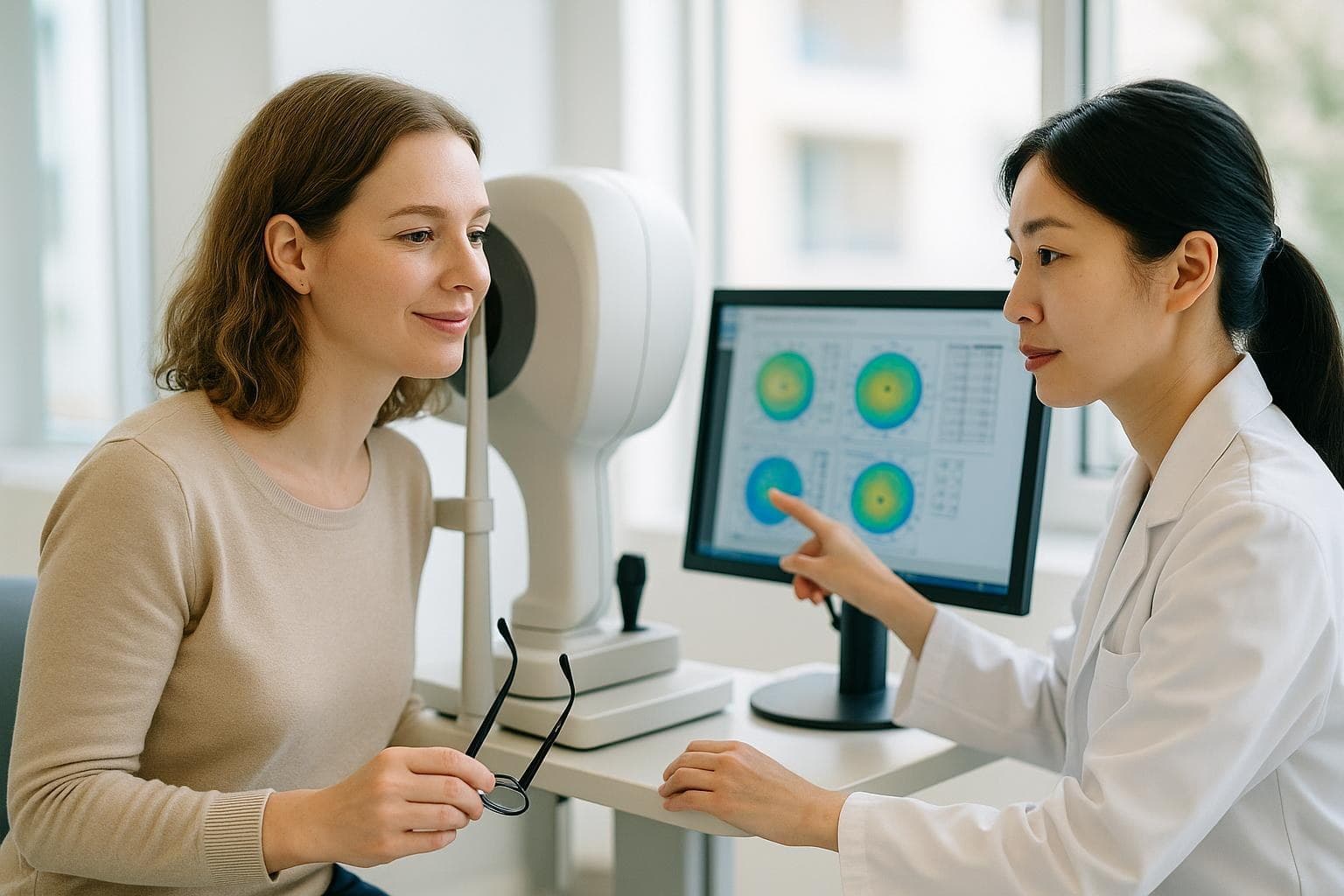
A vision correction surgery pre op exam is not paperwork you clear on the way to the operating room; it is the part of the process that decides everything else. It determines whether you can have surgery at all, which procedure your eyes actually support, what a realistic range of outcomes looks like for you specifically, and which risks you personally carry more of than the average patient. At our clinic it takes two to three hours, involves a dozen or so separate measurements, and ends with me sitting down with you and your interpreter to go through the numbers before anyone books anything.
The exam is not the gateway to surgery — it is the decision about whether surgery should happen at all, and with which method.
What a vision correction pre-op exam actually measures
Patients often expect something like an optometry appointment with extra steps. It isn't. A refraction tells me what lens power corrects your eye today; it tells me almost nothing about whether it is safe to reshape that eye.
The four numbers I look at first
Corneal tomography. Not just the front surface map, but the back surface and the thickness distribution across the whole cornea. This is where early keratoconus and subtle irregularity show up, and it is the single most important screen for laser surgery. A cornea that looks perfectly normal on a standard eye chart can show a pattern here that means I will not use a laser on it.
Corneal thickness and calculated residual bed. I need to know how much tissue your correction would consume and how much structural cornea remains afterwards. Thin corneas, or high prescriptions in average corneas, can fail this calculation even when everything else is fine.
Mesopic pupil size. Measured in dim light, because that is when halos and starbursts happen. Large dark-adapted pupils don't automatically exclude you, but they change how I design the treatment zone and they change what I tell you to expect at night.
Tear film quality. Break-up time, staining, and meibomian gland function. Laser surgery temporarily disturbs corneal nerves, and an ocular surface that is already struggling before surgery will struggle more afterwards.
The tests most people don't expect
Intraocular pressure, corneal endothelial cell count, anterior chamber depth and white-to-white diameter (essential if an implantable lens is on the table), a cycloplegic refraction with dilating drops, and a dilated examination of your retina and optic nerve. That last one matters: high myopes have thinner, more stretched retinas, and I would rather find a peripheral change before surgery than after. The diagnostic platforms we run these on are listed on our Korean head office's equipment page if you want to check the devices against what your clinic at home uses.
Stop wearing contacts before the exam — the step that ruins the most trips
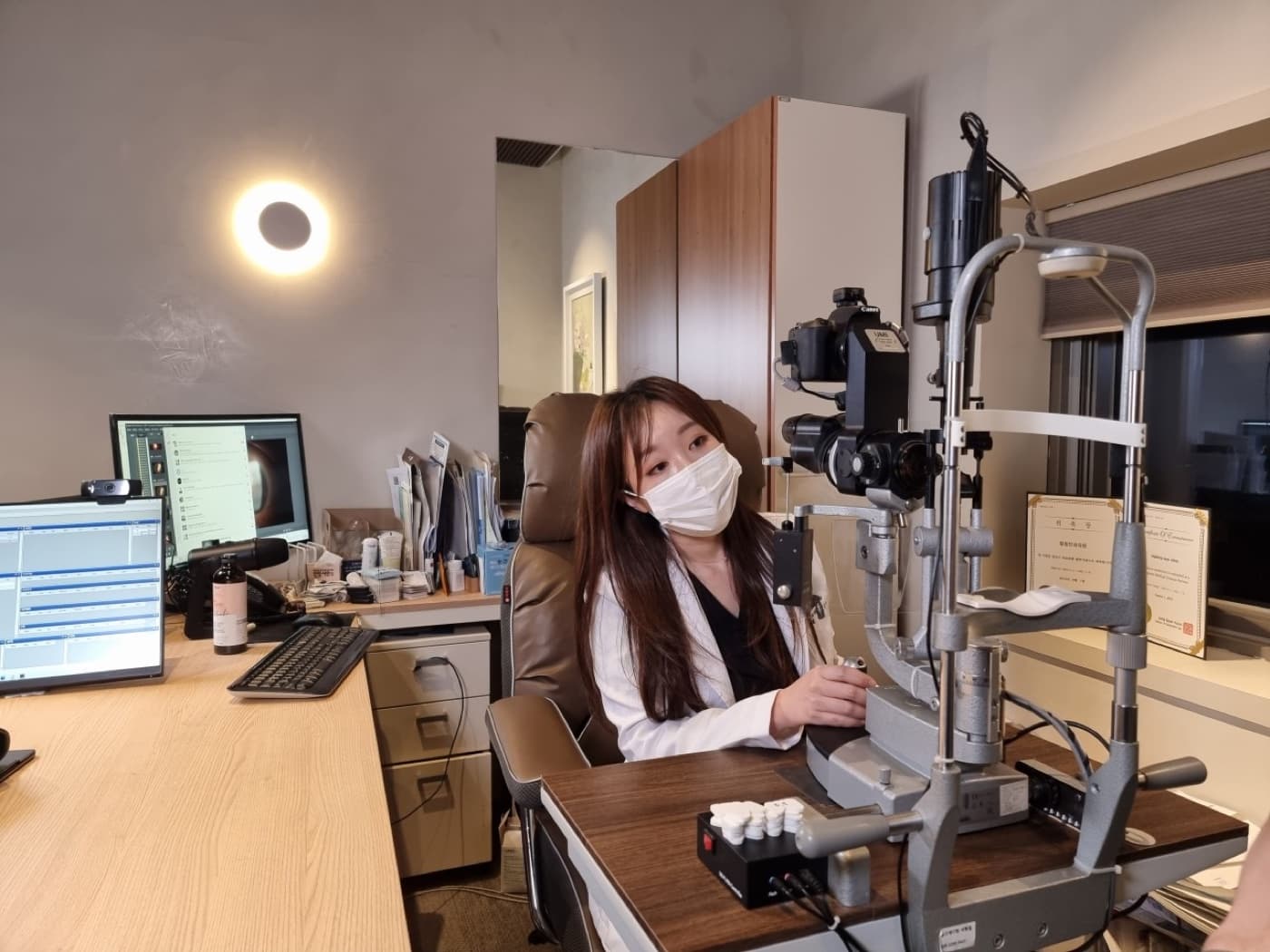
Contact lenses mechanically mold the cornea. Measure too soon after wear and the topography can look irregular when the eye is healthy, or look deceptively smooth when it is not. Either way I am planning surgery on a cornea that is not the real one.
| Lens type | Minimum time out before the exam |
|---|---|
| Soft spherical (daily / monthly) | 1 week |
| Soft toric (astigmatism) | 2 weeks |
| Rigid gas permeable (hard) | 3 weeks, often longer |
| Ortho-K / overnight reshaping lenses | 4 weeks minimum, sometimes several months |
If you arrive having worn lenses on the flight, I will usually still run the exam so you know your baseline — but I may have to repeat the topography later in the week, and that can cost you your surgery slot. The reasoning behind each of these intervals, including what to do if you genuinely cannot function in glasses, is in our guide on when to stop wearing contacts before an eye exam.
What exam day actually looks like
You arrive at our Sinnonhyeon clinic, and a technician works through the imaging and measurement sequence first — this is the bulk of the time. Dilating drops go in partway through, which means blurry near vision and light sensitivity for roughly four to six hours afterward. Bring sunglasses and don't plan to read or drive.
Then I see you. We go through your actual numbers, in your own language, with a Japanese, Traditional Chinese, or English interpreter present. I tell you what I would do, what I would not do, and why. If your data supports two reasonable options, I say so rather than pretending there is one obvious answer. Our walkthrough of the free consultation process covers what that conversation includes and what to bring to it.
One thing I'd flag for travelers: schedule the exam for your first full day in Seoul, not the day before your flight home. It leaves room for a repeat measurement, a second opinion within our team, or simply thinking about it overnight.
Who the exam rules out — and why that's the whole point
Not everyone is a candidate, and any clinic that implies otherwise is selling rather than examining. I decline or defer surgery for:
- Tomographic signs of keratoconus or an unstable cornea. An absolute stop for laser correction.
- Insufficient residual corneal thickness after the planned ablation.
- A prescription that has shifted meaningfully in the last 12 months, or patients too young for their refraction to have settled.
- Pregnancy or breastfeeding — hormonal shifts move refraction and worsen dry eye. We wait.
- Significant untreated ocular surface disease, which has to be treated and rechecked first.
- Shallow anterior chamber or low endothelial cell count, which can rule out an implantable lens even when the cornea would be fine for laser.
- Early cataract, glaucoma, or a retinal finding. These change the plan entirely; glaucoma and retinal conditions are assessed and referred appropriately before any refractive discussion continues.
Saying no is not a failure of the exam. It is the exam working.
How the results translate into a procedure
Once the data is in, the choice becomes much narrower than the internet suggests. Adequate corneal thickness with a moderate prescription and a healthy tear film usually points toward fourth-generation Clear LASIK, where most patients are back to daily life in one to two days. A very high prescription, a thin cornea, or a significant dry eye burden often points instead toward an implantable collamer lens, which leaves the cornea unreshaped and can be removed if circumstances ever require it.
Neither is risk-free. Laser correction carries dry eye that can persist for months, night glare and halos, undercorrection or overcorrection that may need an enhancement, and — rarely — flap complications or corneal ectasia. Implantable lenses carry their own profile: intraocular pressure elevation, endothelial cell loss over time, cataract formation, glare, and the possibility of a second procedure to reposition or exchange the lens. I go through both lists with every patient, because the exam determines which list applies to you. If you are still weighing the options in principle, our first-time guide to choosing between vision correction procedures lays out the trade-offs.
What the exam costs
After the exam: surgery, follow-up, and the flight home
If we proceed, the same surgeon who examined you performs the surgery and sees you for aftercare — that 1:1 arrangement exists precisely so nothing gets lost between the exam room and the operating room. You will be checked the day after surgery, and typically again before you leave Korea. Drop schedules, shield use, and the things you genuinely must avoid in the first weeks are set out in our head office's pre- and post-operative precautions.
On flying: cabin air is dry and unkind to a healing ocular surface, and I want a post-op check before you board rather than after you land. Our article on flying after LASIK goes through the timing in more detail. Follow-up doesn't end at the airport — we continue reviewing your progress in your own language once you're home.
If you take one thing from this: book the exam as a decision point, not a formality. I would far rather tell you honestly in Gangnam that your cornea isn't suited to laser correction than have you fly home with a result neither of us can undo.
— Dr. Kim Sun-young, Medical Director, Healing Eye Clinic
Frequently asked questions
How long does the pre-op exam take, and can I have surgery the same day?
The full examination takes roughly two to three hours, because several of the tests have to be repeated and cross-checked rather than done once and accepted. For many laser candidates, surgery the following day is realistic once the results and the consultation are complete. Same-day surgery is sometimes possible but I don't plan a trip around it, because dilating drops, borderline measurements, or a finding that needs a second look will push the schedule. If you are considering an implantable lens, assume a longer gap, since the lens is ordered to your specific measurements.
How long before the exam do I need to stop wearing contact lenses?
As a working rule I ask for at least one week out of spherical soft lenses, around two weeks out of soft toric lenses, three weeks or more out of rigid gas permeable lenses, and four weeks or longer out of ortho-K lenses. Contacts press on and reshape the cornea, so topography taken too soon after wear can look abnormal when the eye is fine, or look normal when it is not. If you cannot manage glasses for that long, tell me in advance and we will plan around it rather than take measurements I cannot trust. Coming in still wearing lenses is the single most common reason an overseas trip has to be rescheduled.
What findings would make you say no to surgery?
Corneal tomography that suggests keratoconus or an unstable, irregular cornea is an outright stop for laser surgery, as is insufficient residual corneal thickness after the planned treatment. A prescription that has shifted meaningfully in the past year, pregnancy or breastfeeding, active ocular surface inflammation, and uncontrolled autoimmune disease are reasons to wait rather than proceed. For implantable lenses, a shallow anterior chamber or a low corneal endothelial cell count can rule the procedure out. If I find glaucoma or a retinal problem, that condition has to be assessed and managed first, and I will refer you appropriately.
Does the exam cost extra if I don't end up having surgery?
Our published full examination fee is ₩150,000, reduced from ₩400,000, and international patients pay exactly what Korean patients pay. You are not committed to anything by having the exam, and I would rather you paid that fee and flew home without surgery than had a procedure your measurements didn't support. Many patients use the exam precisely as a second opinion after being told elsewhere that they were or weren't a candidate. You keep your results either way.
Will my eyes be dilated, and can I do anything afterwards that day?
Yes, part of the exam requires dilating drops so I can examine the retina and optic nerve and obtain a cycloplegic refraction. Your near vision will be blurry and you will be light-sensitive for roughly four to six hours afterwards, so bring sunglasses and don't plan to drive or read fine print. Sightseeing that involves screens, shopping tags, or bright afternoon sun is uncomfortable rather than dangerous. I usually suggest scheduling the exam in the morning and keeping the rest of the day loose.
I've already had an exam at home. Do I have to repeat it in Seoul?
Please send the reports in advance, because they are genuinely useful for planning and for comparing your prescription stability over time. But I will still run our own full examination before surgery, since I have to operate on measurements taken on our equipment with our calibration and our protocols. Devices and measurement conditions differ enough that mixing data sets is not something I am willing to do for a surgical plan. Think of your home exam as valuable history rather than a substitute.
Message us on official LINE / WhatsApp for a special offer
Your exact candidacy and cost are confirmed in a free 1:1 consultation.