Dry Eye Treatment: 4 Everyday Habits That Keep Your Eyes Dry
Dry eye treatment in Korea starts with habits: a Seoul eye surgeon on blinking, air flow, eyelid hygiene and sleep — and when plugs or serum drops help.

Dr. Kim Sun-young, Director
Based on Dr. Kim's video
Korean audio · plays muted — tap the speaker for sound, CC for subtitles
The short answer
- Artificial tears relieve dryness for roughly 30 minutes; they don't treat the cause.
- Blink fully and firmly: a complete blink spreads fresh tears and squeezes oil from the eyelid glands that stop tears evaporating.
- Turn air-conditioning and heater vents away from your face, use a humidifier, and wear goggles on bikes or scooters.
- Clean your eyelids and lashes daily — blocked oil glands and eyelid mites are a common hidden cause.
- Short or shallow sleep sharply reduces tears; if that can't be fixed, punctal plugs or autologous serum drops are the faster route.
Key moments
Tap a moment to jump the video there
I'm Dr. Kim Sun-young, medical director of Healing Eye Clinic in Gangnam, Seoul. I trained in ophthalmology at the Catholic Medical Center and was a clinical professor of cornea and cataract at Uijeongbu St. Mary's Hospital, so the surface of the eye is home ground for me. "Doctor, I've been staring at my computer and my eyes are so dry — artificial tears will fix it, right?" Yes, I say. For about 30 minutes.
Many patients put drops in dozens of times a day and still feel gritty, tired and blurry. Dry eye treatment starts with the habits that keep drying your eyes — change four of them, and many people no longer need to carry drops everywhere.
Habit 1: not blinking fully
When we concentrate on something, we blink far less. Looking at a monitor or a phone, the blink rate drops well below normal. Hold your eyes open for more than about 10 seconds and they start to sting — that's the tear film drying up, the same reason you lose a staring contest.
Just as important is how you blink. When I watch dry-eye patients closely, many don't close their eyes all the way — halfway, loosely, barely. Tears collect along the lower lid. A complete blink pulls that tear up and sweeps it across the eye, forming a fresh tear film.
A firm blink also squeezes the 20–30 meibomian glands along each lid. Their oil spreads over the tears as a thin layer that slows evaporation — it's what makes healthy eyes look bright. If you rarely close fully, the oil stays in the glands, thickens and hardens (meibomian gland dysfunction). Then even a hard squeeze produces nothing; the glands need warm compresses and expression to clear the old oil. A full blink also pumps tears out through the drain at the inner corner, so fresh tears can flow in.
Practice blinking on purpose: close until you feel the lids touch, squeeze gently, then open. Incomplete blinking improves with practice — this is in the textbooks. Contact lens wearers are especially prone to half-blinking, because the lens keeps the eye from feeling dry.
Habit 2: ignoring air flow and humidity
Air-conditioning in summer and a heater in winter feel lovely when they blow straight at you. Simply turning the vent away from your face improves dry eye more than most people expect. A humidifier in dry winter months makes a real difference, too.
Wind matters: on a bicycle, motorbike or electric scooter, wear goggles — the difference with and without them is large. In the bedroom, a wardrobe full of clothes means lots of fine dust. If you have allergies, both the allergy and allergy medicines dry the eyes (the same way they dry your nose), so reduce exposure: keep the wardrobe out of the bedroom if you can, shake out clothes, wash bedding often.
Ask Dr. Kim's team about your eyes
Interpreters on site · same price as Korean patients
Habit 3: skipping eyelid hygiene
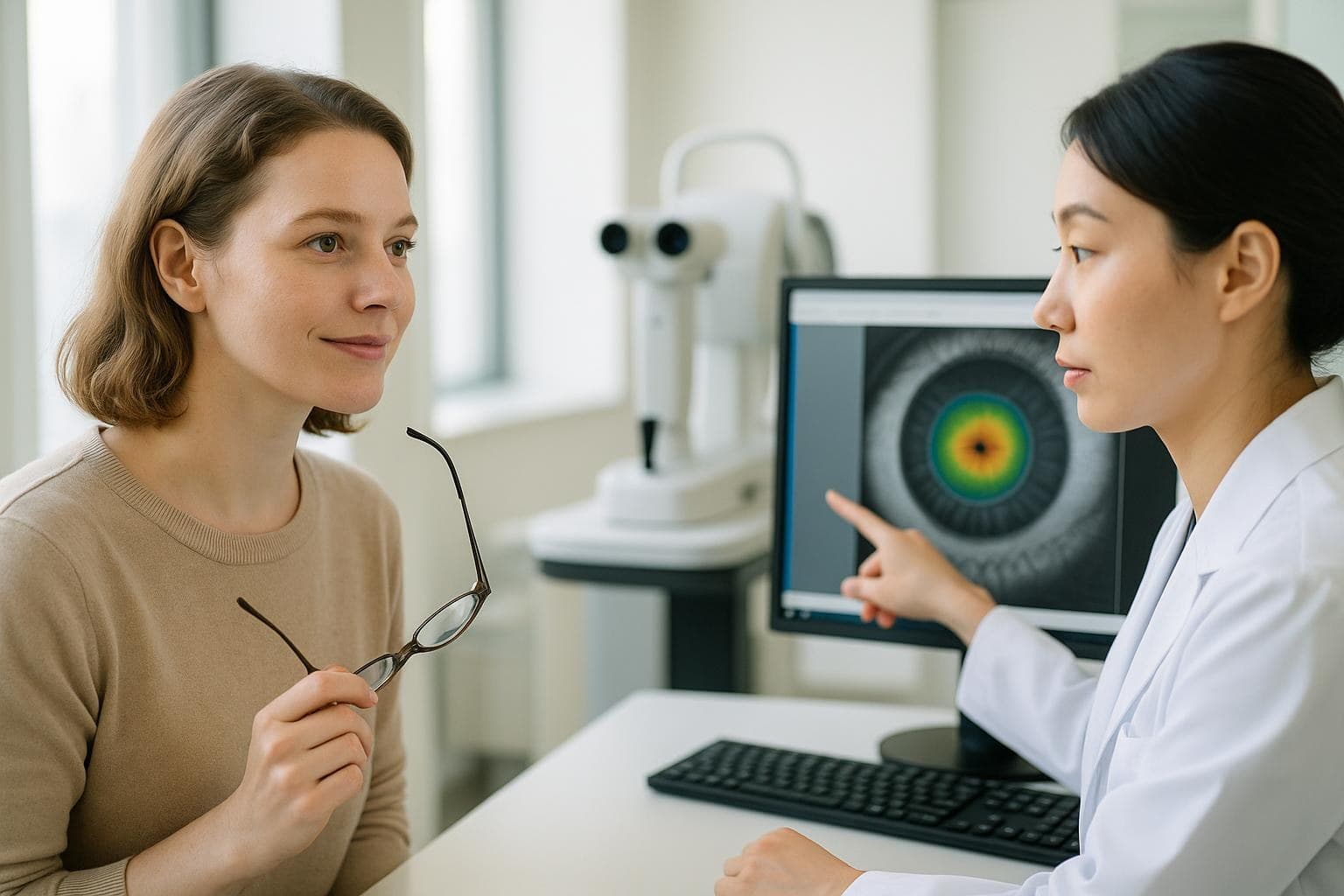
When I examine dry-eye patients, many have red, inflamed lid margins, recurrent styes, flakes between the lashes, and glands that release thick yellow oil when pressed. These patients feel their dryness severely — and lid cleaning alone can treat much of it.
Eyelid mites (Demodex) live on the skin of the face and lids, and they become very common with age. Flakes at the lash line feed them, block the oil glands and cause inflammation; inflammatory substances then reach the eye and make it sting. Men who don't wear makeup often tell me, "I don't need to wash my eyelashes." You do — lashes need shampoo, just like your hair.
Habit 4: poor sleep
Two sleep problems affect dry eye.
Not sleeping enough. People who say "I sleep fine — about five hours" almost always have very low tears. Sleep deprivation sharply reduces tear production; good sleep alone can resolve dryness. When I see patients with almost no tear film under the microscope, nearly all of them have sleep problems.
Sleeping with the eyes partly open. You can't know unless someone watches you. In the clinic, I see a crescent-shaped scratch along the lower cornea. Ask someone at home to check or take a photo. If your lids don't close fully at night, use an eye ointment, eyelid tape or a sleep mask.
When habits aren't enough
Some causes are hard to change. Sleep disorders are difficult to treat, deep sleep naturally decreases with age, and in women, tears drop as hormones decline after menopause. For these patients, I don't wait for the sleep problem to be solved — I go straight to treatments that increase the tears on the eye:
- Punctal plugs — tiny plugs that keep your own tears on the eye longer. I explain them in detail in punctal plugs for dry eye.
- Autologous serum drops — eye drops made from your own blood.
- Meibomian-gland care and IPL for blocked oil glands, part of the Dry-Eye Clinic program.
If you're considering vision correction and already have dry eye, read severe dry eye and vision correction and when contacts stop working first.
Dry eye treatment at Healing Eye
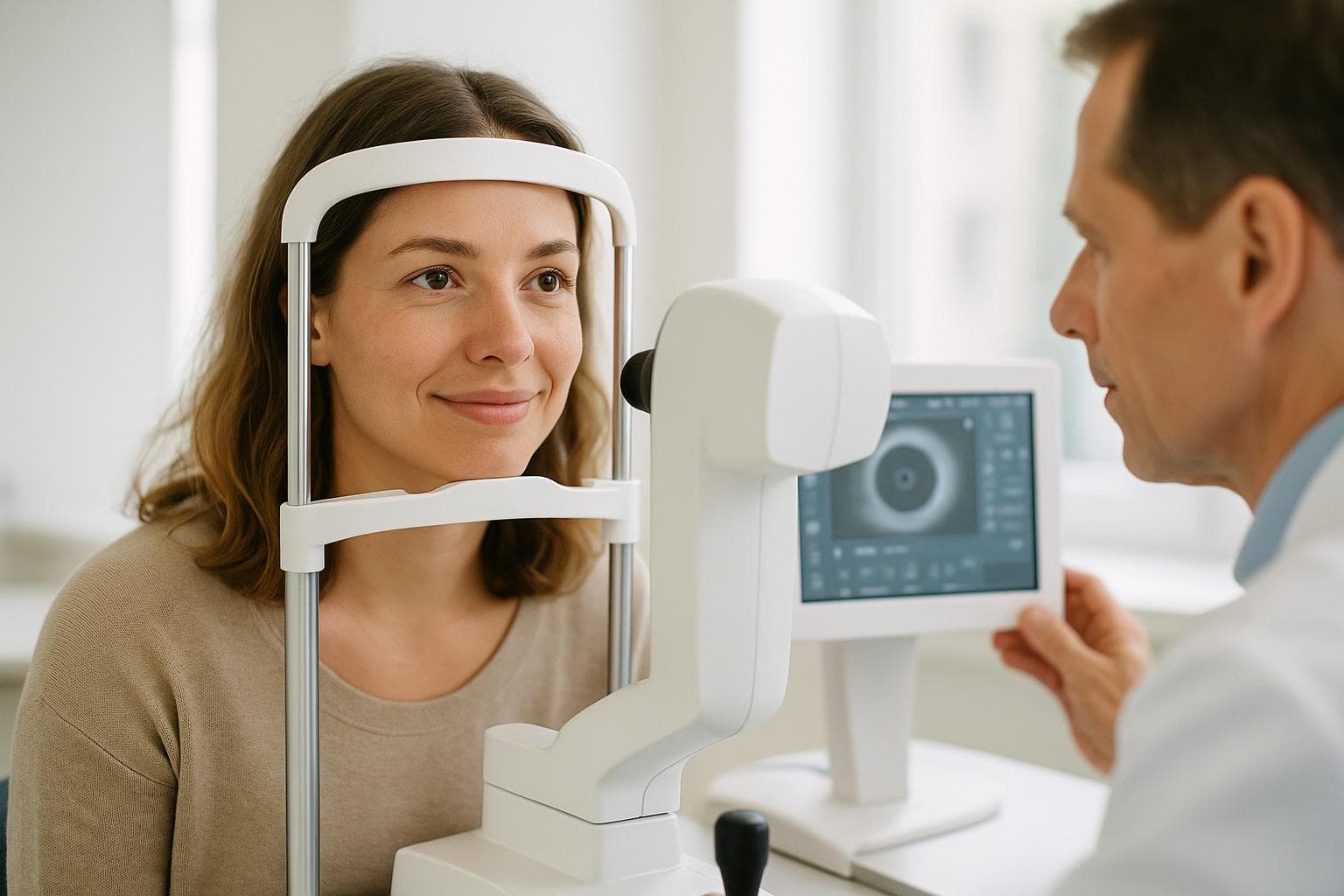
The plan — and the cost — depends on what is causing your dryness: tear quantity, blocked oil glands or lid inflammation, and which combination of punctal plugs, autologous serum, meibomian-gland care and IPL you need. It is set after the exam. Foreign patients pay the same price as Korean patients.
What to do next
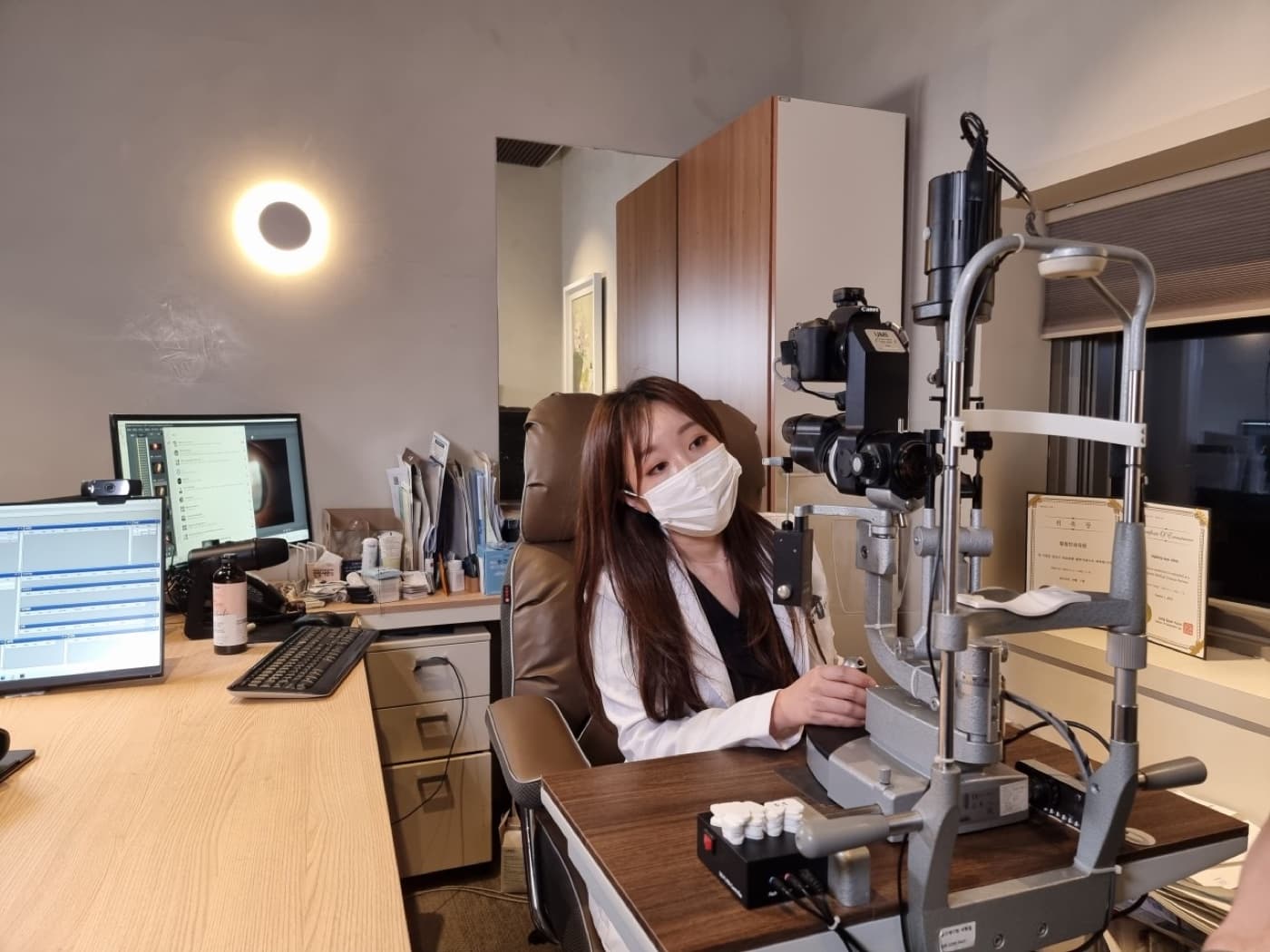
Start with the two easiest changes — full blinks and daily lid cleaning — and turn the vents away from your face. If after a few weeks your eyes still feel dry, have the cause checked rather than buying more drops. At Healing Eye, the same doctor examines you, treats you and follows up, interpreters are on site, and foreign patients pay the same price as Korean patients. Send me your symptoms first, and I'll tell you what I'd check.
Procedures in this video

Questions patients ask
Why don't artificial tears fix my dry eye?
One drop gives relief for about 30 minutes. Artificial tears are mostly lubricant and lack the protective components of real tears, so they ease symptoms without changing why your eyes are dry. Fixing the habits behind dryness usually helps more.
What is meibomian gland dysfunction?
There are about 20–30 oil glands along each eyelid. Each firm blink pushes oil onto the tear film, which stops tears evaporating and makes the eye look bright. If you don't blink fully, the oil thickens, blocks and hardens. Warm compresses and expressing the glands clear the old oil.
Can I be sleeping with my eyes open?
More people do than realize it. In the clinic I see a crescent-shaped scratch on the lower cornea. Ask someone at home to check or take a photo. If your eyes stay partly open, use an eye ointment, eyelid tape or a sleep mask at night.
What treatments does Healing Eye offer for dry eye?
Treatment starts with finding the cause. Depending on the exam, the Dry-Eye Clinic uses punctal plugs, autologous serum drops, meibomian-gland care and IPL. The cost depends on the combination you need, and foreign patients pay the same price as Korean patients.
About the doctor

Dr. Kim Sun-young, Director
Cornea · Glaucoma · Cataract
- MS, Catholic Univ. College of Medicine · Ophthalmology specialist, Catholic Medical Center
- Clinical Professor (Cornea & Cataract), Uijeongbu St. Mary's Hospital
- Best Resident Award, Seoul St. Mary's (2009) · Minister of Health & Welfare Award (2008)
- 108th Korean Ophthalmological Society Research Award · KDCA epidemiology citation
- Member — Korean Ophthalmological Society (KOS), KEEDS, KCLSS & ESCRS
What patients say on Google
4.8
217 reviews
Dr. Kim's articles on this topic

Patients who came from abroad
More videos from Dr. Kim
Videos are in Korean; many have English subtitles.
More from Dr. Kim TV
 19:03Watch
Choosing a Cataract Lens in Korea: Why the Priciest IOL Isn't Always Right
 9:16Watch
How to Choose a Cataract Surgeon in Korea: 3 Things I'd Check First
 9:18Watch
Hyperopia Surgery in Korea: Yes, Farsighted Eyes Can Have LASIK or LASEK
 11:50Watch
Life After Cataract Surgery: The Changes Nobody Warns You About
Not sure which one fits your eyes?
Send your prescription or questions — Dr. Kim's team replies in English.