Hyperopia Surgery in Korea: Yes, Farsighted Eyes Can Have LASIK or LASEK
Hyperopia surgery in Korea: a Seoul eye surgeon on why farsighted LASIK and LASEK now work, why centering matters, and the hidden hyperopia to check.

Dr. Kim Sun-young, Director
Based on Dr. Kim's video
Korean audio · plays muted — tap the speaker for sound, CC for subtitles
The short answer
- Hyperopic LASIK and LASEK used to give poor results; with wider treatment zones and lasers that center on the eye's visual axis, they now work well.
- Centering is critical in farsighted eyes, because the visual axis often sits far from the pupil center — choose a clinic that treats on the visual axis.
- In your 20s, a cycloplegic (eye-relaxing) exam is essential to find hidden hyperopia — but the full hidden amount should not all be corrected.
- Expect more dry eye and some regression in the first year; for higher hyperopia I recommend LASEK with a wide zone, not SMILE.
Key moments
Tap a moment to jump the video there
I'm Dr. Kim Sun-young, medical director of Healing Eye Clinic in Gangnam, Seoul. I'm a cornea and cataract specialist — I trained at the Catholic Medical Center and taught as a clinical professor at Uijeongbu St. Mary's Hospital — and farsighted eyes are a group I especially like to treat, because so many of them arrive already discouraged. "Every clinic told me hyperopia can't be done with LASIK" is something I hear again and again. Some patients have searched for years.
So let me say it plainly: hyperopia surgery with LASIK or LASEK is possible today, and it can work very well — but it is more demanding than myopia surgery, and it should be done with the right equipment and the right measurements.
What high hyperopia does to everyday life
Highly farsighted people often see fine as children. In the late teens and twenties, near vision starts to struggle; by the thirties, distance drops too. Without strong reading glasses, a phone screen is hard to read.
Those glasses are thick and heavy, slide down the nose, and feel out of place at a young age. Many people wear a weaker pair than they need because the full strength is too thick — and then the eyes work overtime for every near task, which brings eye strain and often headaches. When they ask for help, they may be told that nothing can be done, or that they should have a lens replacement. In your 20s and 30s, lens replacement takes away focusing ability you still have, so I don't consider it the right first answer at that age.
Why many clinics still say no
Ask a clinic why it doesn't do hyperopic LASIK, and you usually hear two reasons:
- "It regresses — in a year or two you'll be back where you started." Older lasers treated a narrow zone. A wider zone regresses less, and modern lasers can treat much wider, which has improved results a lot.
- "The quality of vision may get worse." In farsighted eyes, the true visual axis is often far from the center of the pupil. Older software simply centered on the pupil, so the correction was placed off-center — like wearing crooked glasses. Vision could actually get worse.
Once lasers learned to find and treat on the visual axis, results changed. Some doctors formed their opinion in the old days and never restarted.
Hyperopic correction steepens the center of the cornea by treating the periphery. That's why centering matters far more than in myopia: even a small offset can make vision look distorted, blurry or doubled.
Ask Dr. Kim's team about your eyes
Interpreters on site · same price as Korean patients
What about SMILE for hyperopia?
SMILE has only recently begun to receive approval for hyperopia, and it is at an early stage. Its software for finding the eye's center still doesn't match LASIK and LASEK. For farsighted eyes, I recommend LASIK or LASEK.
LASEK was once thought unsuitable too, because of regression. That changed as excimer lasers improved. For hyperopia above about +3 D, I recommend Premium LASEK, because the treatment needs to be made very wide, and LASEK lets me do that while keeping the cornea strong. For lower hyperopia, 1day LASIK is also an option.
The equipment question: center on the eye, not the pupil
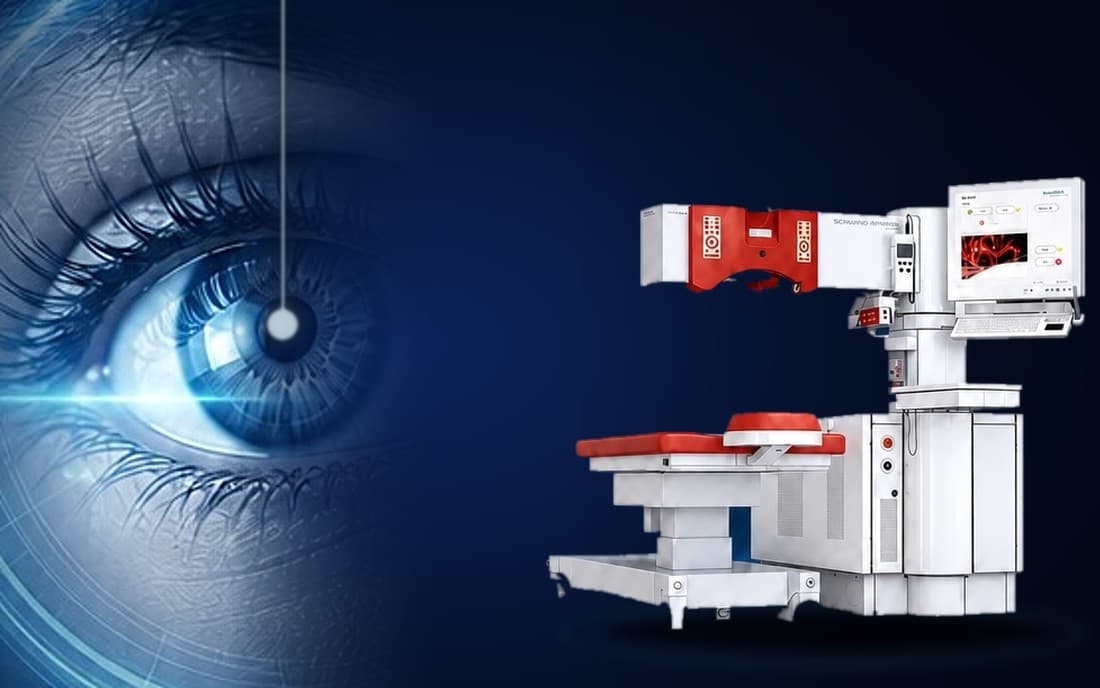
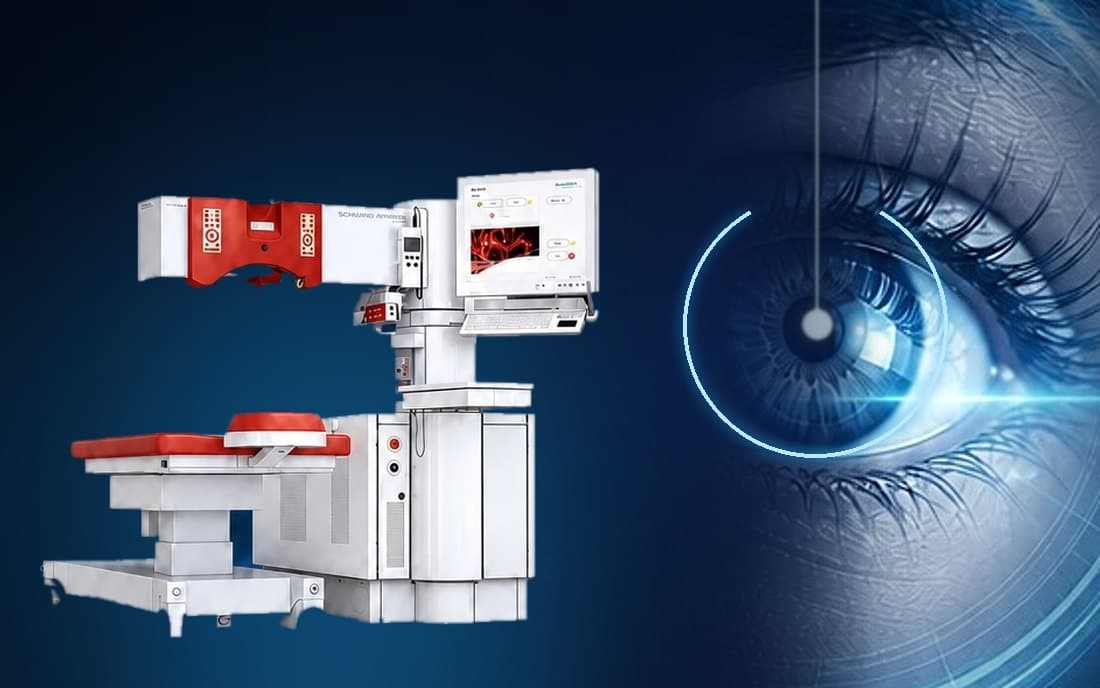
When I see patients who had surgery elsewhere, a fair number of clinics still seem to center on the pupil. For myopia that's often forgiving at first. For hyperopia it isn't. Ask whether the clinic uses a system that finds the visual axis. At Healing Eye, LASIK and LASEK are done on the SCHWIND AMARIS Red 1050, with SCOUT measurements to guide the centering.
Hidden hyperopia: the measurement that decides the result
Young farsighted eyes have strong focusing power, and they use it constantly. That effort hides part of the prescription. Someone who reads well with +3 glasses may turn out, after relaxing drops (a cycloplegic exam), to have +6 or +7 D.
Here is the trick: you must find that hidden hyperopia, but you must not correct all of it. Those eyes are used to focusing hard; remove the whole hidden amount and the patient becomes nearsighted. Choosing the right amount is the real skill in this surgery.
Most of my hyperopic patients are very happy simply to be free of thick glasses. Some say they wish it were a little sharper, or that it drifted slightly. I tell everyone that up front, because hyperopic results are less predictable than myopic ones.
Two things to expect in the first year
- More dry eye than after myopic LASIK. The steeper center makes it harder for tears to spread smoothly, and treating the periphery affects more corneal nerves. I treat dry eye thoroughly for the first year; by about a year most nerves have regenerated.
- Some regression. The eye tries to smooth the treated edge, and the surface layer thickens again. Medication can reduce this, but regression is still more common than in myopia. If needed, our revision center handles touch-ups — see LASIK enhancement and regression.
Hyperopia surgery at Healing Eye (both eyes)
1day LASIK / Premium LASEK ₩1,990,000 (regular ₩2,190,000) · full exam ₩150,000. Foreign patients pay the same price as Korean patients.
Two questions to ask before you book
- Is my hyperopia above +3 D? Higher hyperopia needs a wider treatment and more experience.
- How flat is my cornea? Results are better in flatter corneas. Hyperopic correction steepens the cornea; if your corneal curvature (K) is around 46 and you correct +3 D, it ends near 49. I like it to stay at or below about 49 after surgery — beyond that, dry eye and regression increase.
If you're older and presbyopia has started, the plan may be different; very high hyperopia after about 45 is where presbyopia-cataract lens surgery can make more sense, as I explain in SMILE LASIK risks. For everyone else, the answer comes from a careful pre-op exam, including the cycloplegic test.
At Healing Eye, the same doctor does your exam, surgery and follow-up, interpreters are on site, and foreign patients pay the same price as Korean patients. If you've been told "no" before, send me your numbers — it may not be the final answer.
Procedures in this video

Questions patients ask
Can farsighted people have LASIK or LASEK?
Yes. Older lasers gave poor results in hyperopia, which is why many clinics still say no. Modern lasers can treat a wider zone and center the treatment on the eye's visual axis, and hyperopic LASIK and LASEK now give good results in suitable eyes.
Is SMILE an option for hyperopia?
SMILE has only recently begun to be approved for hyperopia, and its software for centering is not yet at the level of LASIK and LASEK. For farsighted eyes I recommend LASIK or LASEK.
Why did my hyperopia come back after surgery?
Often it didn't come back — it was hidden. Young farsighted eyes focus hard all the time, which masks part of the prescription. If that hidden hyperopia wasn't measured with a cycloplegic exam, it appears later and looks like regression. Real regression can also happen in the first year as the surface thickens again.
How much does hyperopia surgery cost at Healing Eye?
LASIK and LASEK are ₩1,990,000 for both eyes (regular ₩2,190,000), and the full exam is ₩150,000. Foreign patients pay the same price as Korean patients.
About the doctor

Dr. Kim Sun-young, Director
Cornea · Glaucoma · Cataract
- MS, Catholic Univ. College of Medicine · Ophthalmology specialist, Catholic Medical Center
- Clinical Professor (Cornea & Cataract), Uijeongbu St. Mary's Hospital
- Best Resident Award, Seoul St. Mary's (2009) · Minister of Health & Welfare Award (2008)
- 108th Korean Ophthalmological Society Research Award · KDCA epidemiology citation
- Member — Korean Ophthalmological Society (KOS), KEEDS, KCLSS & ESCRS
What patients say on Google
4.8
217 reviews
Dr. Kim's articles on this topic

Patients who came from abroad
More videos from Dr. Kim
Videos are in Korean; many have English subtitles.
More from Dr. Kim TV
 19:03Watch
Choosing a Cataract Lens in Korea: Why the Priciest IOL Isn't Always Right
 9:16Watch
How to Choose a Cataract Surgeon in Korea: 3 Things I'd Check First
 11:26Watch
Dry Eye Treatment: 4 Everyday Habits That Keep Your Eyes Dry
 11:50Watch
Life After Cataract Surgery: The Changes Nobody Warns You About
Not sure which one fits your eyes?
Send your prescription or questions — Dr. Kim's team replies in English.