Multifocal Lens Cataract Surgery: 4 Reasons Fewer Doctors Recommend It
Multifocal lens cataract surgery in Korea: a Seoul cataract surgeon on why fewer doctors recommend it — cost, experience, equipment — and who it suits.

Dr. Kim Sun-young, Director
Based on Dr. Kim's video
Korean audio · plays muted — tap the speaker for sound, CC for subtitles
The short answer
- Multifocal lenses are not avoided because they are bad lenses — the barriers are cost, clinic structure, experience and equipment.
- A multifocal splits light between distance, intermediate and near, so it needs a healthy cornea and retina to stay sharp.
- Success depends on selecting the right eye, the right lens and hitting the target power within about ±0.5 D.
- That requires detailed retinal and corneal imaging, pupil and visual-axis measurement, and the option of a laser touch-up.
- Choose by fit, not by price: the lens that suits your eyes and the system behind it decide the result.
Key moments
Tap a moment to jump the video there
I'm Dr. Kim Sun-young, medical director of Healing Eye Clinic in Gangnam, Seoul. My training is in cornea and cataract — at the Catholic Medical Center and later as a clinical professor at Uijeongbu St. Mary's Hospital — and I'm a member of the European Society of Cataract & Refractive Surgeons (ESCRS). Patients often sit down and say: "Everyone says multifocal lenses are wonderful. But nobody I know has one, and some friends told me not to — the glare is terrible. Is something wrong with them?"
It's a reasonable worry. My view is clear: multifocal lenses can change a life by reducing dependence on glasses. The reasons they aren't more widespread have little to do with how good the lenses are — and a lot to do with cost, experience and equipment. Knowing those reasons helps you judge whether one is right for you.
How a multifocal lens works
Old cataract lenses gave one focus and couldn't correct astigmatism. Patients didn't even know a lens was being implanted; the operation was simply "removing the cloud". Then toric and multifocal lenses arrived, and cataract surgery began to correct presbyopia and astigmatism too.
A diffractive multifocal splits incoming light: roughly half goes to distance, a quarter to intermediate, a quarter to near. If the cornea and retina are healthy, this split still gives sharp vision at every distance — close to how many people saw in their 30s. Among eye surgeons themselves, attitudes have shifted; many now say they would choose a premium lens for their own eyes.
Reason 1: cost
Multifocal lenses are not covered by public health insurance — not in Korea, and not in Japan, the US or most of Europe, where private insurance covers part at most. Even countries that pay for almost all medical care, like the UK or Australia, don't pay for premium lenses, while monofocals are widely covered.
Because the goal is better quality of vision rather than treating disease, multifocals are seen more like LASIK — a personal choice. So mostly people with a strong wish to be free of glasses, and the means to pay, choose them. Wherever you live, cost remains the biggest barrier.
Reason 2: not every clinic offers them
New lens research comes mostly from university hospitals, yet university hospitals rarely implant multifocals. That isn't because the lenses are bad. University hospitals exist to treat serious and complex disease; many of their patients have retinal or optic nerve problems that rule out a multifocal anyway. Multifocal patients need long, detailed consultations and close follow-up, which is hard to provide in a fast-paced teaching hospital where residents assist.
When I trained in a university hospital, I never did a LASIK operation. Premium refractive cataract surgery belongs to the same world as LASIK — making good eyes better — and is mostly done in specialized private eye clinics.
Ask Dr. Kim's team about your eyes
Interpreters on site · same price as Korean patients
Reason 3: it takes experience to choose
The operation itself is the same as with a monofocal. What differs is the decision: which lens, which power, and whether to use one at all. Monofocal results are similar almost everywhere; multifocal results depend on choosing the right lens for the right patient and meeting their expectations.
- The final prescription must land within about ±0.5 D. Miss that, and even the finest lens disappoints.
- I need to know your pupil size and position, your visual axis, your cornea, your retina and macula — and your job, hobbies and daily distances.
- I must also recognize the eyes that should not have a multifocal.
New lenses keep arriving, each with different strengths, so learning never stops. Without experience and equipment, a doctor may reasonably recommend only monofocals, because a poorly matched multifocal can be worse than a monofocal. Sadly, I often meet people who weren't told other options existed and now regret a lens that left them in reading glasses.
A multifocal that is mismatched to the eye can give a worse result than a monofocal. That risk is why careful selection matters more than the lens brand.
Reason 4: the equipment it requires
A standard cataract operation needs a measurement of eye length, corneal curvature and the surgical machine. A multifocal needs much more:
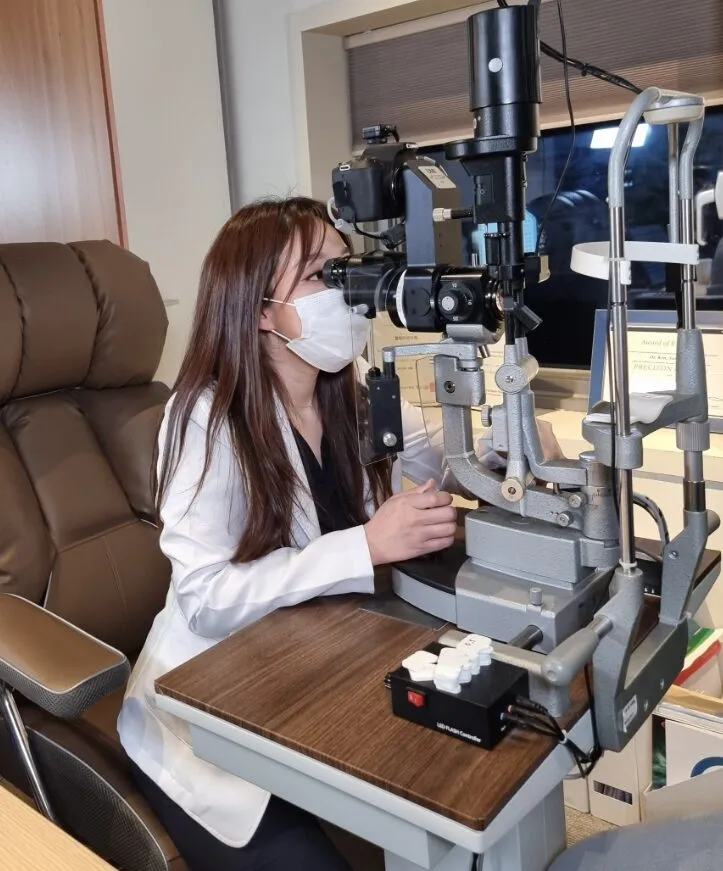
- Detailed retinal imaging. A diffractive multifocal in an unhealthy macula looks faint and dim. A high-resolution OCT and sharp retinal photographs catch small problems that a basic scan misses — even through a dense cataract.
- Several corneal topography devices, repeated until they agree. I check for irregular astigmatism, the true astigmatism axis including the back surface of the cornea, and whether different machines give consistent readings.
- Pupil size and visual-axis offset. Some lens designs don't suit an eye whose visual axis sits far from center; others don't suit very small pupils.
- Accurate refraction and high-end power calculation, because the margin for error is small.
- An operating microscope that tracks eye rotation, so a toric lens's axis isn't twisted when you lie down.
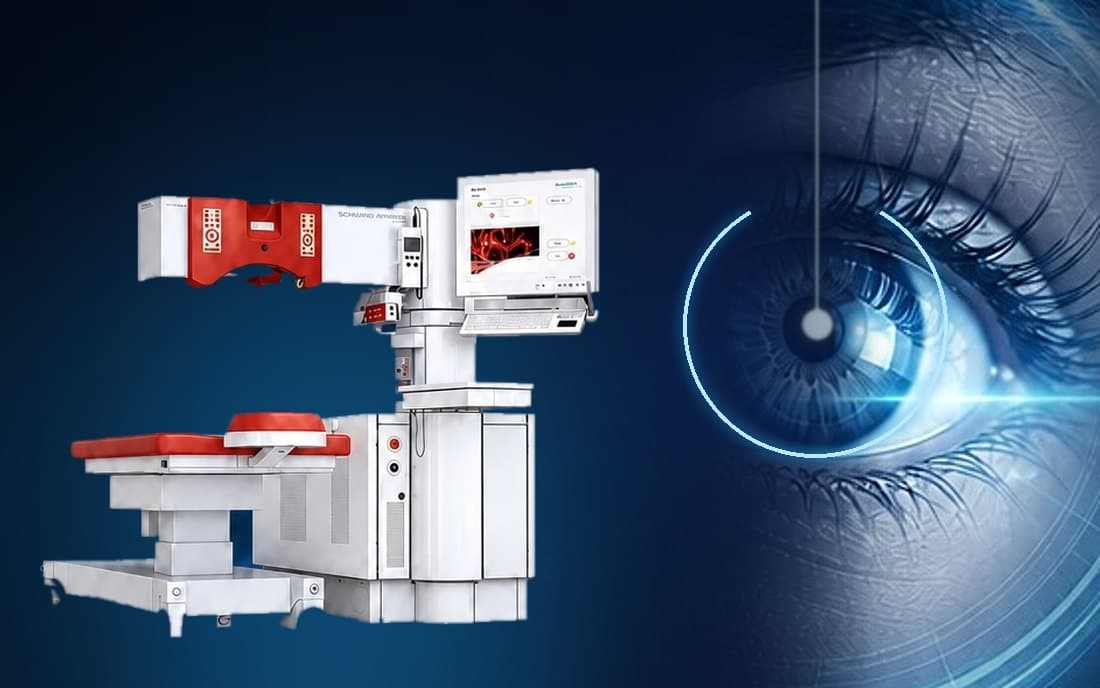
- LASIK or LASEK for fine-tuning, if a small prescription remains.
At Healing Eye we keep adding equipment for exactly these reasons — I feel confident recommending a multifocal only when all of it is in place. LASIK and LASEK touch-ups are done in-house with 1day LASIK or Premium LASEK.
Multifocal lenses at Healing Eye (per eye)
LISA tri / LISA tri Toric ₩3,000,000 (high-power ₩6,000,000) · FineVision ₩4,000,000 · FineVision Toric ₩4,500,000 · Intensity ₩4,000,000 · LENTIS ₩6,000,000 · Synergy ₩7,000,000 · full exam ₩150,000. Foreign patients pay the same price as Korean patients.
What to know before you choose
Don't compare price lists and ask for the most expensive lens. Ask instead:
- Are my cornea and retina healthy enough for a lens that splits light?
- Which lens suits my pupil, visual axis and daily distances — and why?
- How will you measure my eye, and what happens if a small prescription remains?
If you get clear answers, a multifocal can deliver excellent results. For a comparison of lens families, see the monofocal vs multifocal table I draw for patients and multifocal vs monofocal IOL; for what's included in the price, see presbyopia lens surgery cost and the presbyopia & cataract page.
At Healing Eye, the same doctor does your exam, your surgery and your check-ups, interpreters are on site, and foreign patients pay the same price as Korean patients. Send me your eye reports, and I'll tell you honestly whether a multifocal is realistic for you.
Procedures in this video

Questions patients ask
Why do some people say not to get a multifocal lens?
Usually because of glare and halos, or a friend who wasn't happy. In my experience, problems mostly come from the wrong eye or the wrong lens being chosen, or the power being slightly off — not from the lens itself. Careful selection prevents most of them.
Who should not have a multifocal lens?
Eyes with retinal or macular disease, an irregular or unhealthy cornea, very small pupils, or a visual axis far from the center may do poorly with a diffractive multifocal. Some of these eyes can still have a refractive multifocal or an enhanced monofocal.
What happens if the power is slightly off after a multifocal lens?
Multifocals tolerate very little residual error, so a small leftover prescription may need fine-tuning with LASIK or LASEK. Healing Eye does both, so the touch-up can be done by the same team.
How much is multifocal cataract surgery at Healing Eye?
Per eye: LISA tri ₩3,000,000, FineVision and Intensity ₩4,000,000, FineVision Toric ₩4,500,000, LENTIS ₩6,000,000 and Synergy ₩7,000,000. The full exam is ₩150,000. Foreign patients pay the same price as Korean patients.
About the doctor

Dr. Kim Sun-young, Director
Cornea · Glaucoma · Cataract
- MS, Catholic Univ. College of Medicine · Ophthalmology specialist, Catholic Medical Center
- Clinical Professor (Cornea & Cataract), Uijeongbu St. Mary's Hospital
- Best Resident Award, Seoul St. Mary's (2009) · Minister of Health & Welfare Award (2008)
- 108th Korean Ophthalmological Society Research Award · KDCA epidemiology citation
- Member — Korean Ophthalmological Society (KOS), KEEDS, KCLSS & ESCRS
What patients say on Google
4.8
217 reviews
Dr. Kim's articles on this topic




Patients who came from abroad
More videos from Dr. Kim
Videos are in Korean; many have English subtitles.
More from Dr. Kim TV
 19:03Watch
Choosing a Cataract Lens in Korea: Why the Priciest IOL Isn't Always Right
 9:16Watch
How to Choose a Cataract Surgeon in Korea: 3 Things I'd Check First
 11:26Watch
Dry Eye Treatment: 4 Everyday Habits That Keep Your Eyes Dry
 9:18Watch
Hyperopia Surgery in Korea: Yes, Farsighted Eyes Can Have LASIK or LASEK
Not sure which one fits your eyes?
Send your prescription or questions — Dr. Kim's team replies in English.